The Itchy Nightmare That Won’t Go Away: 7 Hidden Triggers Turning Your Skin Against You
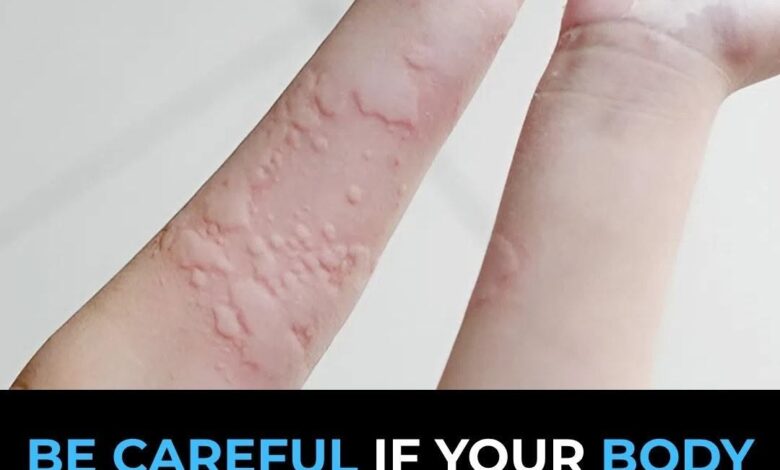
You wake up in a cold sweat, your skin crawling with an agonizing, uncontrollable fire. You look in the mirror and are met with a sight that sends shivers down your spine: raised, angry, red welts spreading like a map of misery across your face, arms, and trunk. You didn’t eat anything strange, you haven’t changed your soap, yet your body has declared total war on itself. What is happening? You are suffering from urticaria, and the secret, silent trigger behind your suffering is likely hidden in plain sight, waiting to strike again when you least expect it.
Urticaria, commonly known as hives, is far more than a temporary annoyance—it is a sophisticated, systemic alarm bell ringing within your body. These elevated, itchy lesions can appear as tiny, localized patches or expand into large, terrifying plaques that cover your entire torso. While they are usually harmless in the short term, their recurrent nature can be profoundly debilitating, stripping away your sleep, your focus, and your confidence. At the heart of this biological chaos are the mast cells. When these sentinel cells sense a threat, they release a deluge of histamine and other chemical mediators into your bloodstream. This triggers a localized emergency: fluid leaks from your capillaries, causing that distinct, puffy swelling we recognize as the hive.
The hallmark of this condition is its cruel, elusive character. One moment, a welt appears; hours later, it vanishes without leaving a trace, only to reappear in a completely different area, leaving you feeling like you are playing a losing game of “whack-a-mole” with your own immune system. But hives are often accompanied by a more sinister counterpart: angioedema. This is not just skin-level irritation; it is a deep-tissue swelling that targets the sensitive areas of the body—your lips, eyelids, feet, and hands. When this swelling migrates to the throat or tongue, the situation shifts from uncomfortable to life-threatening. It is a medical emergency that can compress your airway and demand immediate intervention.
To understand why your skin is reacting this way, we must look at the clock. Acute urticaria is the most common form, typically lasting less than six weeks and usually linked to a clear, identifiable culprit. However, when the outbreaks persist beyond that six-week threshold, you enter the grueling territory of chronic urticaria. This is often “spontaneous” or idiopathic, meaning it seems to emerge from the ether, leaving both the patient and the physician hunting for a ghost. In these cases, the body’s own immune system may be misfiring, erroneously attacking your mast cells as if they were invaders, leading to a cycle of inflammation that can last for months or even years.
But sometimes, the cause is physical—what we call inducible or physical urticaria. Your body might be responding to the world around you with a sensitivity that defies logic. Dermographism is perhaps the most bizarre example; your skin reacts to the lightest scratch or friction with a raised, inflamed ridge. Others suffer from cold urticaria, where a drop in temperature causes a full-body breakout. Then there is pressure urticaria, where the mere act of wearing tight clothing causes welts to form at the site of constriction. Even your own internal temperature can be a weapon; cholinergic urticaria causes hives to erupt whenever you break a sweat, whether from an intense workout or a hot, relaxing bath. Sunlight itself can trigger solar urticaria, making the outdoors a danger zone.
The list of common triggers for acute outbreaks is long, but it often starts with what you consume. Allergic reactions to shellfish, tree nuts, eggs, or milk are classic culprits, as are reactions to common medications like antibiotics or even everyday pain relievers like aspirin and ibuprofen. Sometimes, the trigger is invisible—a lingering bacterial infection like strep throat or a viral intruder like hepatitis can act as a catalyst. And while emotional stress is rarely the sole cause, it is an undeniable amplifier. In a vulnerable system, high-stress periods act like gasoline on a fire, turning a mild breakout into an unbearable flare-up.
So, how do you reclaim your skin? The diagnostic journey begins with a meticulous review of your medical history. Your physician will act as a detective, piecing together the timeline of your outbreaks to see if they correlate with specific foods, medications, or environmental exposures. There is no magic “off” switch, but there are powerful tools at your disposal. The cornerstone of treatment is, and remains, the antihistamine. By systematically blocking the histamine receptors, these medications can quell the itching and prevent the formation of new welts. In more severe, stubborn, or inflammatory cases, a short course of oral corticosteroids may be required to bring the immune system back to a baseline state of calm.
However, the most effective medicine is avoidance. If you can identify your trigger—whether it is a specific food, a particular fabric, or a high-stress environment—you have already won half the battle. This requires patience, diligent record-keeping, and a willingness to overhaul small aspects of your daily routine. If you are struggling with chronic, unexplained outbreaks, do not resign yourself to the itching. Keep a diary of your symptoms, track everything you eat, the clothes you wear, and the stress you face. Every clue brings you closer to an answer. Your skin is the largest organ of your body, and when it speaks, it is worth listening to. You don’t have to suffer in silence; with the right awareness, you can stop the hives before they start.