Tragedy at the Air Force Academy: How a Rising Star’s Simple Cough Turned Into a Fatal Nightmare
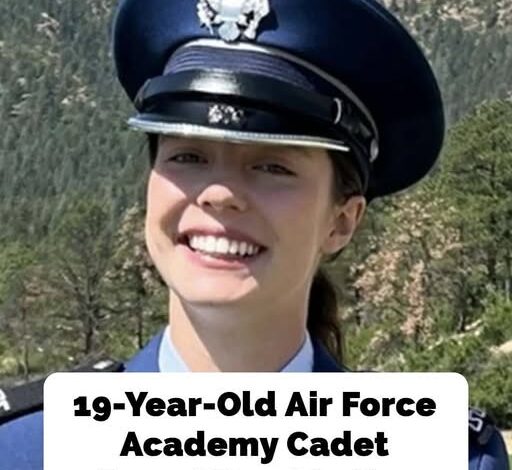
The vibrant life of a promising 19-year-old athlete was extinguished in an instant, leaving a prestigious military institution in shock and a family shattered by an unthinkable loss. Avery Koonce, a standout freshman at the United States Air Force Academy, seemed to have it all—a bright future, academic ambition, and the athletic prowess of a champion. Yet, behind the scenes of her grueling training, a silent, deadly invader was taking hold. What began as a persistent cough spiraled into a catastrophic medical emergency that took her life in her own dorm room, leaving everyone to wonder: how could this happen?
Avery Koonce was more than just a cadet; she was a force of nature. A star athlete from Thrall, Texas, she had spent her high school years shattering records in the 100-meter and 200-meter dashes. Her relentless drive and natural talent eventually led her to the gates of the United States Air Force Academy in Colorado Springs. She wasn’t just there to run; she was there to serve, with dreams of majoring in biology and minoring in kinesiology to become a physical therapist for Air Force pilots. She was a daughter, a sister, and an inspiration to those who knew her.
The nightmare began to unfold in September 2024. On the morning of September 4, fellow cadets found Avery unconscious in her dormitory. Emergency first responders were rushed to the scene, but despite their desperate efforts to revive the 19-year-old, she was declared dead shortly after their arrival. The scene was devoid of any signs of trauma or struggle, leaving the community reeling and authorities scrambling for answers. The suddenness of her passing created an immediate, suffocating silence throughout the academy.
An investigation was launched, and an autopsy performed by the El Paso County Coroner’s Office eventually shed light on the tragic reality. Avery had succumbed to complications from pneumonia—specifically, a rare and aggressive medical event involving paeniclostridium sordelli sepsis. This condition had emerged as a secondary infection, complicating a bout of parainfluenza laryngotracheobronchitis. Essentially, a viral lung infection had weakened her immune system, leaving her body defenseless against a fast-acting bacterial sepsis that invaded her blood and her left lung.
Forensic pathologist Dr. Michael Baden, who reviewed the case, noted that Avery had been suffering from a severe, persistent cough in the days leading up to her death. It appears that the physical demands of her freshman year at the academy may have masked the severity of her condition. According to Dr. Baden, the tragedy was, in many ways, preventable. If the bacterial infection had been identified and treated with antibiotics early on, the outcome could have been drastically different. The bacteria exploited the viral damage in her lungs, turning what many might dismiss as a “bad cold” into a fatal medical crisis.
The news of her passing sent shockwaves through the academy and her hometown. Avery was described by those who knew her as a dedicated, ambitious student who balanced cheerleading, powerlifting, band, and cross-country with academic excellence. Her loss was not just the loss of a cadet; it was the loss of a “bright light,” as her family would later describe her.
A memorial service held at Tiger Stadium in Thrall brought the two worlds together. Around 100 of her Air Force Academy classmates traveled from Colorado to Texas to stand in solidarity with her family and honor her memory. Lt. Gen. Tony Bauernfeind, the USAFA Superintendent, publicly grieved the loss of an “incredible teammate,” emphasizing that although Avery’s time at the academy was brief, her impact on her squadron and the track team was profound and lasting.
In the wake of the tragedy, Avery’s family released a gut-wrenching statement through the academy. “Our daughter, Cadet Avery Koonce, was an incredibly bright light in this broken world. Our lives will forever be diminished because of her absence,” they wrote. They expressed their faith, finding small solace in the belief that she is resting in the arms of her Heavenly Father. They described her as a “perfect daughter” who was deeply loved, and they asked for prayers as they navigated the “incredible darkness” of her loss. Their focus, they noted, was on learning to live with the void she left behind and supporting her brothers through this devastating time.
Avery’s story serves as a haunting reminder of the fragility of life. For young athletes, pushing through pain and fatigue is often viewed as a badge of honor, a necessary sacrifice on the road to greatness. Yet, in the case of this bright young cadet, that very same discipline and resilience may have prevented her from seeking help until it was too late. Her passing leaves a legacy of ambition and dedication, but it also leaves a cautionary note about the importance of listening to one’s own body.
As the Air Force Academy community and the people of Thrall continue to mourn, they do so by celebrating the vibrant spirit that Avery brought into the world. Her dreams of healing others as a physical therapist will remain unfulfilled, but the impact she had on her peers during her short time at the academy will undoubtedly leave a lasting mark. We remember Avery not just for how she died, but for the relentless, spirited way she lived. Her memory stands as a testament to the fact that even the brightest lights can be extinguished too soon, and her story will continue to be a poignant reminder of the importance of vigilance when it comes to our health. Rest in peace, Avery.