The Sleeping Position That Could Be Destroying Your Health: Why You Might Be Lying in the Wrong Direction
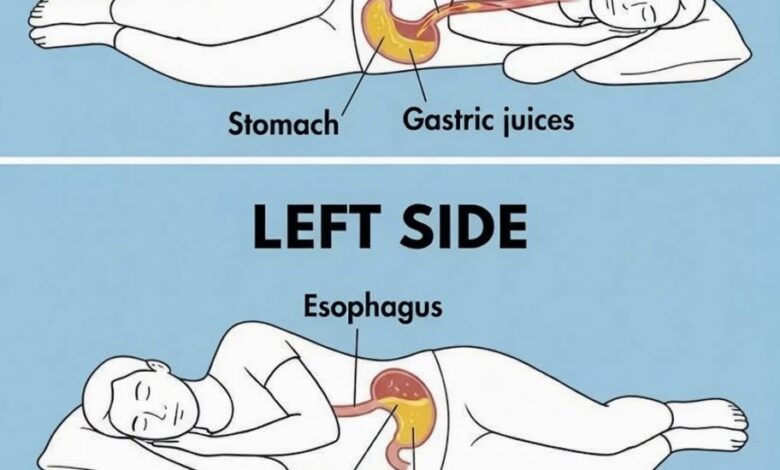
You think your choice of sleeping position is just a matter of comfort, but you could be silently inviting a burning, life-altering medical nightmare into your bedroom every single night. Millions of people unknowingly exacerbate chronic acid reflux and digestive distress simply by choosing to curl up on their right side. This seemingly innocent habit might be the hidden architect behind your persistent heartburn, interrupted sleep, and unexplained morning fatigue. Is your body desperately trying to warn you, or have you been ignoring the most fundamental rule of nocturnal physiology? The truth about your sleep posture is far more significant than you realize.
The way we position ourselves in bed has profound implications for how our internal organs function while we are unconscious. While it is easy to assume that sleeping is a passive activity where the body simply “shuts down,” the truth is that the human digestive system remains highly active. The anatomical structure of your stomach is not symmetrical, a biological reality that becomes incredibly important when you are horizontal. When you lie on your right side, the position of your stomach relative to your esophagus creates an opening that makes it far easier for acidic content to seep upward. This is the physiological trigger for Gastroesophageal Reflux Disease (GERD) and the agonizing, burning sensation known as heartburn.
Conversely, sleeping on the left side utilizes the power of gravity to keep your stomach acid contained within the lower portion of the organ, well away from the sensitive lining of the esophagus. This isn’t just folk wisdom or anecdotal advice; it is a well-documented phenomenon supported by clinical research. For the millions of individuals who wake up with a sour taste in their mouth, a persistent nighttime cough, or the gnawing discomfort of chest pain, the simple act of rolling over might be the most effective, low-cost intervention available. By choosing the left side, you are essentially using your own anatomy as a valve to prevent the backflow of stomach acid.
However, it is crucial to temper this information with nuance. For the vast majority of healthy individuals, sleeping on the right side is not inherently dangerous. It does not cause disease, it does not permanently damage your stomach, and it certainly doesn’t guarantee a lifetime of digestive issues. Our bodies are designed to be dynamic; most of us naturally shift our position dozens of times throughout the night, cycling through a variety of postures that distribute pressure and ensure circulation. The alarm bells should only truly ring for those who already suffer from diagnosed reflux, frequent heartburn, or other digestive sensitivities. If your body is already struggling to manage acid, the “right-side” position is merely adding fuel to an existing fire.
If you are a frequent sufferer of GERD, you are likely all too familiar with the symptoms: the searing sensation of heartburn, the sour taste upon waking, the difficulty swallowing, and the chronic, unexplained hoarseness that makes you sound as if you’ve been battling a cold for weeks. These are not just inconveniences; they are signs that your esophagus is being subjected to chronic acid exposure, which can lead to inflammation and more serious health complications over time. If you experience these symptoms several times a week, relying solely on a change in sleeping position may not be enough. It is essential to consult a healthcare professional to determine if you require clinical intervention.
Beyond just shifting to your left side, there are several evidence-based strategies to protect your digestive health overnight. The most important of these is timing your meals. Consuming a large, heavy meal within two to three hours of lying down is a primary driver of nighttime reflux. When you go to bed with a full stomach, the digestive process is forced to work against gravity, increasing the likelihood that acid will force its way into the esophagus. Furthermore, the composition of your dinner matters. Foods known to trigger reflux—such as alcohol, fatty or fried dishes, spicy cuisine, chocolate, peppermint, and high-caffeine beverages—should be minimized or avoided in the hours before you retire.
Structural modifications can also yield significant benefits. For those with severe reflux, elevating the head of your bed can be a game-changer. By using a wedge pillow or raising the head of the bed frame, you utilize gravity to maintain the acid in the lower part of the stomach. Additionally, maintaining a healthy weight is one of the most effective ways to reduce pressure on the abdomen, which in turn diminishes the force pushing stomach contents upward. Excess abdominal weight creates a physical strain that can override even the best sleeping positions, making weight management a cornerstone of long-term digestive health.
It is also important to recognize when “heartburn” might be something else entirely. While reflux is common, persistent chest discomfort, difficulty swallowing, unexplained weight loss, or a cough that simply will not go away are red flags that demand a prompt medical evaluation. These symptoms can occasionally mimic other conditions, including cardiac issues, making it imperative that you don’t simply “self-diagnose” your way through persistent, uncomfortable symptoms. Relying on an internet search when your body is signaling that something is fundamentally wrong is a gamble that no one should take.
In the final analysis, the conversation about sleeping positions is part of a larger, more important focus on holistic wellness. We are beginning to understand that our bodies function as highly complex, interconnected systems where the smallest change—a shift in posture, a change in meal timing, a modification in diet—can have a cascading effect on our overall vitality. While right-side sleeping isn’t a “health crime” for the healthy individual, it is a significant factor in the quality of life for those already struggling with reflux.
The next time you settle into bed, take a moment to listen to what your body is telling you. If you wake up feeling refreshed and pain-free, your current routine is likely serving you well. If you wake up feeling the burn, why not try a simple change? Roll over to your left side, reconsider the timing of your evening snack, and pay attention to how your body responds over the next few nights. The path to better health is often found in the small, consistent, and conscious choices we make. You have the power to curate your nighttime environment, turning your bedroom into a place of genuine, restorative recovery rather than a theater of chronic discomfort. Listen to the signals, respect the biology, and prioritize the healing rest you deserve.