THE SHOCKING FINAL HOURS OF NOELIA CASTILLO RAMOS
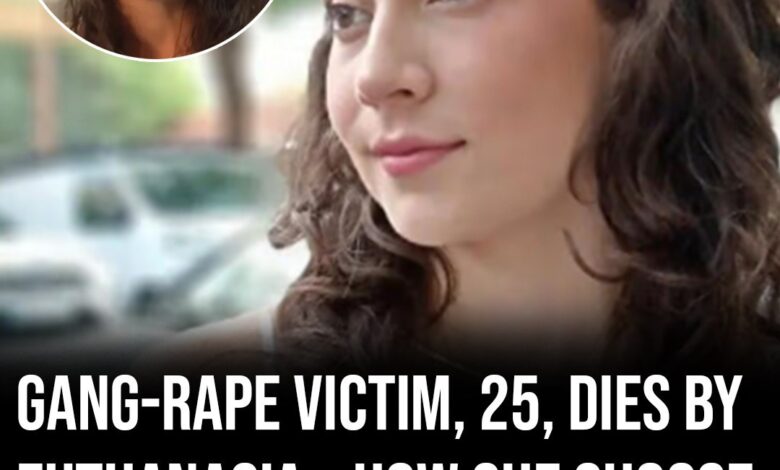
She was only twenty five years old when she made a decision that shattered her family and stunned the entire world to its core. In a room filled with heavy silence and heartbreaking finality, Noelia Castillo Ramos chose to end her own life through legal euthanasia, marking the tragic climax of a battle that reached the highest courts of Europe. Her journey was defined by unimaginable trauma, agonizing physical limitations, and a fierce, public fight for the right to die that pitted daughter against father. Now, the chilling details of her final moments reveal a truth that is far more haunting than anyone imagined.
The story of Noelia Castillo Ramos has resonated far beyond the borders of Spain, igniting a profound global conversation on the intersection of trauma, mental health, and the ultimate boundaries of human autonomy. A native of Barcelona, Noelia spent her final years trapped in a cycle of suffering that many find difficult to comprehend. Her life was marked by systemic failures and personal nightmares, including the harrowing experience of surviving two separate sexual assaults. The first was at the hands of a former partner, while the second occurred while she was under the care of a state run facility in 2022. These brutal events left deep, permanent scars on her psyche.
The aftermath of that second assault led to a desperate suicide attempt in which she jumped from a fifth floor window. While she miraculously survived the fall, the incident left her paralyzed from the waist down, adding a layer of chronic, debilitating physical pain to her already fragile psychological state. Her history with mental health was long standing; she had been diagnosed with both borderline personality disorder and obsessive compulsive disorder at the age of thirteen. For years, she had endured intensive psychiatric care, struggling against a tide of instability that seemed impossible to quell.
Her request for euthanasia transformed her private agony into a high stakes public legal odyssey. Spain had legalized the procedure in 2021 for individuals with serious and incurable conditions, but Noelia’s case was uniquely contentious. Her father launched a relentless, years long judicial campaign to prevent her from following through with her choice. Supported by various conservative legal organizations, he escalated his challenge through the Spanish courts and eventually all the way to the European Court of Human Rights. His argument was rooted in the belief that his daughter was far too vulnerable to make such a final, irreversible decision.
Conversely, Noelia remained steadfast. She maintained that her father’s refusal to accept her agency only deepened her sense of isolation and torment. She saw her choice as an assertion of dignity rather than a surrender to her circumstances. Ultimately, every court involved in the proceedings upheld her right to bodily autonomy, setting a significant and controversial legal precedent that has since been studied by human rights experts around the world.
In the final hours at Sant Camil Hospital in Barcelona, the atmosphere was one of profound, somber finality. Noelia remained remarkably resolute, expressing an intense, desperate need for the peace that had eluded her for over a decade. She viewed the medical procedure not as an act of defeat, but as a reclaiming of her own destiny. She meticulously planned every detail of her final day, choosing to wear her favorite dress and carefully applying makeup, wanting to feel beautiful and in complete control of her image one last time. She kept four personal photographs close to her, tangible artifacts of a life that contained meaning far beyond the trauma that eventually defined her existence.
The deep division within her family highlighted the agonizing complexity of these life and death cases. While her father fought the process until the very last moment, her mother chose a path of pained, silent companionship. She stayed by Noelia’s side through her final night, offering her presence despite her own deep personal opposition to the procedure. Noelia’s own words, shared during the height of the controversy, served as a stark, haunting reminder of the individual at the center of the policy debate: The happiness of a father, a mother, or a sister cannot be more important than the life of a daughter.
Her death has reignited a fierce firestorm over whether modern euthanasia laws sufficiently protect, or perhaps prematurely enable, those with complex psychological histories. Supporters of the right to die argue that denying relief to those suffering from unbearable, chronic mental anguish is a form of institutional cruelty. They believe that if a condition is deemed incurable, the state has a moral obligation to provide a dignified end. Critics, however, are deeply worried about the implications for other vulnerable individuals who might, in moments of despair, feel they have no other options. They fear that such precedents could lead to a society that prioritizes exit strategies over long term, intensive support systems.
For Noelia, the decision was no longer a matter of abstract ethics, medical theory, or legal precedent. It was a singular, deeply personal quest for an end to a cycle of pain that had simply become impossible to bear. She sought a quiet, controlled exit from a world that had, in her view, failed to protect her when she was alive. Her passing serves as a grim reflection of a society struggling to reconcile the rights of the individual with the protective instincts of family and the state. As the debate continues to rage, Noelia’s story remains a testament to the immense, often invisible burdens that many carry in silence, and the desperate, irreversible lengths to which some will go to finally find silence.