THE NIGHTMARE UNDER YOUR FLOORBOARDS THE TRUTH ABOUT WHY SNAKES ARE INVADING YOUR HOME
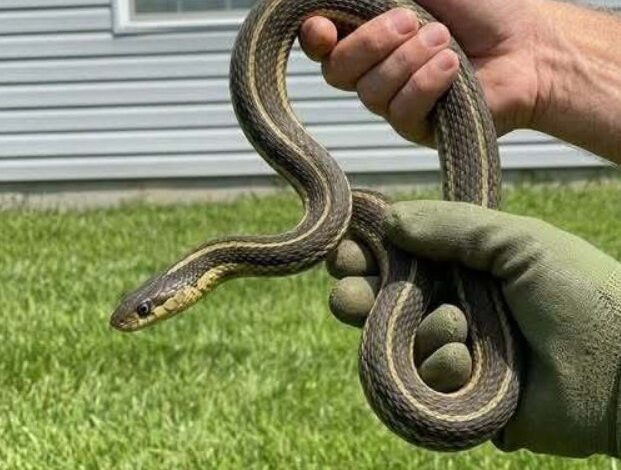
You walk into your basement to grab a box, and in the dim light, you see it—a sinuous, scaly shape slithering across the concrete floor. Panic ignites in your chest, your heart hammering against your ribs as your mind races with terrifying visions of fangs and venom. You are not alone; homeowners across the country are discovering that their private sanctuaries have been breached by uninvited, cold-blooded guests. But why are they here, and what are they really looking for in your living room? The answer is far more shocking and closer to home than you ever dared to imagine.
Finding a snake inside your house is a visceral experience that triggers an ancient, hardwired fear. However, the first rule of survival in this scenario is to suppress the instinct to scream or strike out. Experts in herpetology consistently emphasize that the most effective response is to remain completely motionless and calm. Snakes, by their very nature, are not predatory toward humans; they do not view us as prey, and they certainly do not actively seek out human interaction. In the vast majority of cases, these creatures have entered your home purely by accident, misguided by an intense biological drive to find food, shelter, or respite from the elements.
When you understand the motivation behind their intrusion, the fear often begins to recede, replaced by a logical approach to home management. A home is a fortress of climate-controlled luxury, and to a snake, it is an irresistible labyrinth of quiet, undisturbed spaces. Basements, garages, laundry rooms, and storage areas filled with forgotten boxes serve as the perfect camouflage. If you have been seeing snakes, it is highly probable that your home is inadvertently hosting a buffet of smaller creatures—rodents, crickets, or other insects—that are far more interested in your pantry than you are. By eliminating the food source, you effectively remove the invitation.
Furthermore, consider the environment outside your walls. Snakes are highly sensitive to meteorological shifts. During periods of torrential rainfall, the ground becomes saturated, forcing burrowing creatures to seek higher, drier ground. Similarly, when outdoor temperatures reach blistering extremes or plummet into a deep, bone-chilling frost, the stable, thermal environment of a basement or a crawlspace becomes a literal life-saver for a cold-blooded animal. They are not plotting an invasion; they are engaging in a desperate, evolutionary scramble to maintain their core body temperature. A home often provides that necessary thermal stability, even if the snake has absolutely no intention of setting up a permanent residence.
It is also crucial to demystify the perceived danger. While the fear of snakes is deep-seated, many species that find their way indoors are entirely harmless. In fact, many of these “intruders” are actually beneficial neighbors, as they provide a free, efficient pest control service by keeping rodent and insect populations in check. However, the average homeowner is rarely an expert in identifying the specific markings or behaviors that distinguish a non-venomous gardener from a dangerous threat. Because the risk of error is high, every encounter should be handled with a respectful, distant caution. Never assume you can correctly identify a species while your heart is racing and your adrenaline is surging.
If you happen to lock eyes with a snake in your hallway, the cardinal rule is to keep your distance. Do not attempt to catch it, strike it, or corner it. Most defensive strikes occur when an animal feels that its only path to safety has been blocked. By creating a wide, unobstructed perimeter, you allow the animal the space it needs to potentially retreat on its own. Keep children and pets sequestered in a separate room, and maintain a visual watch from a safe location so you can inform a professional exactly where the creature was last seen.
The most effective removal process is always to call in a specialist. Local animal control agencies or private wildlife relocation professionals have the equipment, the training, and the calm necessary to extract the animal without placing themselves or the homeowner at risk. These experts do not just move the animal; they often provide a professional assessment of how it gained entry. This is the most valuable part of the service, as it allows you to identify the specific structural vulnerabilities that allowed the animal to bypass your home’s defenses in the first place.
This brings us to the critical concept of long-term prevention. If a snake can get in, other, more destructive pests can also enter. Take the time to conduct a thorough perimeter inspection. Use high-quality sealant, steel wool, or fine-mesh hardware cloth to plug gaps around window frames, door thresholds, utility pipes, and ventilation ducts. Snakes do not need a large hole to infiltrate; they can compress their bodies to squeeze through crevices that seem impossibly small. Furthermore, ensure that the exterior of your home is clear of overgrown vegetation, woodpiles, or high grass, as these features provide a highway of cover that leads directly to your foundation.
Sanitation is your greatest weapon in this conflict. A home that is kept clean and free of clutter is far less likely to harbor the insects and rodents that snakes are hunting. Store firewood at least twenty feet away from your foundation and elevate it off the ground. If you have bird feeders or pet food kept outdoors, be aware that these are primary attractants for mice, which will eventually be followed by predators. By managing the exterior environment, you shrink the habitat of the creatures that the snakes are hunting.
In the final analysis, an indoor snake encounter is a manageable situation that demands composure rather than hysteria. Most snakes are simply trying to navigate a world that is becoming increasingly hostile to their survival. They are not malicious, they are not vindictive, and they are not waiting in your walls to harm your family. They are animals responding to biological imperatives. By hardening your home against intrusion, eliminating the food sources that entice them, and treating these animals with the respect that any wild creature deserves, you can coexist with local wildlife without ever having to share your living room with a guest you didn’t invite. Stay calm, stay vigilant, and remember that you hold the keys to your home—and by extension, the power to keep it secure.