The Hidden Danger in Your Bedroom: Why Your Sleeping Position Is Secretly Destroying Your Health
Do you wake up in the middle of the night with a burning sensation in your chest, a sour taste in your throat, or a cough that just won’t quit? You might be meticulously tracking your diet, popping antacids, and avoiding spicy foods, but the true culprit of your misery could be hiding in plain sight: the way you position your body on your mattress. While you focus on what you eat, you are completely ignoring the silent, gravity-defying war happening inside your own stomach. One simple, life-changing shift in your sleeping habits could be the secret to finally silencing the nighttime fire.
Acid reflux is far more than just a passing discomfort; it is a persistent, nightly assault on your esophagus. When the contents of your stomach—including harsh digestive acids—are allowed to migrate upward, they cause inflammation, chronic chest pain, and potential long-term damage to your throat. Most people assume that when they lie down to sleep, they are giving their bodies a chance to recover. In reality, for millions of people, lying flat is the precise moment the trouble begins. When you are horizontal, gravity loses its ability to keep your stomach contents contained, allowing acid to drift freely into the delicate tissues of your esophagus.
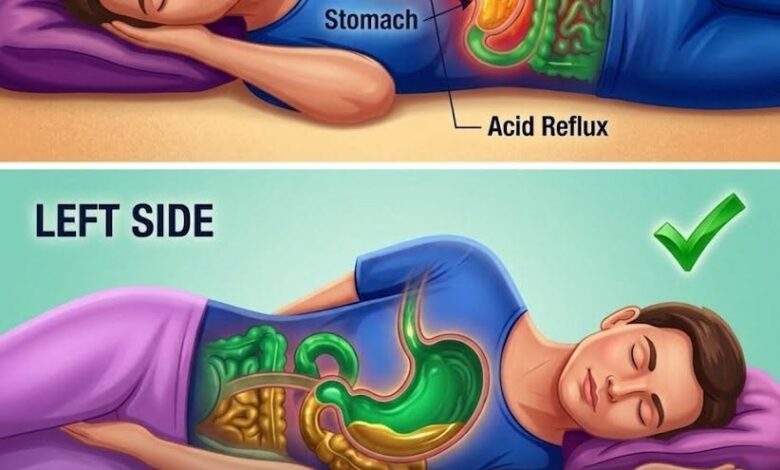
For years, researchers have been obsessed with uncovering why some people suffer from nighttime reflux while others sleep soundly. The answer is surprisingly anatomical. Because of the unique way your stomach is positioned in your body—slightly toward the left side—the side you choose to sleep on actually determines the trajectory of your digestive fluids. When you sleep on your right side, the angle of your stomach allows acid to easily pool toward the esophageal opening. By contrast, sleeping on your left side helps keep the junction between your stomach and esophagus elevated above the level of your stomach’s contents. It is a simple matter of physics, yet it is a strategy that remains bafflingly ignored by most people struggling with chronic heartburn.
This does not mean that left-side sleeping is a magic bullet for everyone. Digestion is a complex, multi-faceted process governed by a variety of inputs, including your current body weight, the composition of your evening meal, your stress levels, and even your habits regarding alcohol or smoking. However, the data is clear: shifting to your left side can significantly decrease the frequency and intensity of reflux episodes. It is a small, low-effort adjustment that requires no expensive equipment or medical intervention, yet it can offer the kind of relief that over-the-counter medications often fail to provide.
The timing of your last meal is equally critical. If you are in the habit of eating large, heavy meals shortly before you head to bed, you are essentially setting a trap for your own digestive system. When you lay down with a full stomach, you are fighting against the natural flow of digestion, forcing your body to work harder to keep contents down. Health experts consistently recommend allowing several hours between your dinner and your sleep to give your stomach ample time to process its contents. This simple change can reduce the pressure on your esophageal sphincter, the muscular gatekeeper that is meant to keep acid out of the throat.
If changing your side doesn’t do the trick, gravity remains your most potent ally. Elevating the head of your bed is a time-tested strategy that has helped countless sufferers reclaim their rest. By raising your upper body, even by a few inches, you create a natural slope that makes it physically difficult for stomach acid to climb back up. Many people find success using wedge pillows, which are designed specifically to support the torso and maintain a consistent, elevated angle throughout the night. It is a strategy that works with your body, not against it, providing a consistent barrier against the midnight burn.
Beyond the physical mechanics of sleeping, it is essential to cultivate a high level of awareness regarding your personal dietary triggers. What works for one person may be a total catastrophe for another. For some, chocolate or caffeine are the primary offenders; for others, citrus fruits or carbonated drinks are the hidden enemies. Keeping a food journal can be a transformative experience, allowing you to identify the specific items that seem to correlate with your worst nights. Once you know your triggers, you can make informed decisions that prioritize your long-term health and your immediate comfort.
It is vital to recognize that persistent, chronic reflux is not a condition to be taken lightly. If you find yourself reaching for medication every single night, or if you are struggling with frequent heartburn, unexplained coughing, or difficulty swallowing, it is time to move beyond self-management and seek professional medical guidance. Chronic gastroesophageal reflux disease, or GERD, can lead to serious, lasting complications if it remains untreated. Your doctor can help you determine if your symptoms are a temporary nuisance or a signal that there is an underlying issue that requires clinical intervention.
Never underestimate the power of a good night’s sleep. Beyond the immediate relief from the burning sensation, addressing your nighttime reflux will have profound impacts on your entire well-being. Poor sleep quality is a known driver of immune dysfunction, metabolic slowdown, and heightened cardiovascular risk. By taking control of your digestion, you are not just silencing the pain; you are investing in the quality of your waking life. Addressing these issues will lead to a more energized, focused, and healthy version of yourself.
Ultimately, your journey toward relief is a puzzle that you must solve piece by piece. There is no singular “cure” for digestive discomfort, but there is a path toward health that involves small, intentional changes. Adjusting your sleeping side, being mindful of your meal timing, and recognizing the warning signs of chronic distress are the pillars of long-term digestive comfort. Small changes, practiced consistently, can lead to monumental shifts in how you feel, how you sleep, and how you live. You have the power to stop the burn and reclaim the restful nights you deserve, starting tonight.