The Final Curtain Falls on a Hollywood Legend: The Secret Life and Tragic End of the Golden Age’s Most Unforgettable Villainess
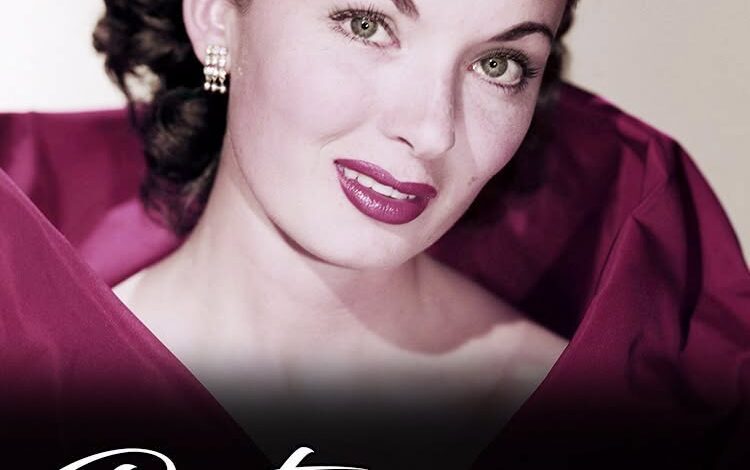
The lights of the silver screen have dimmed for the very last time for one of the most enigmatic figures in cinema history. Ann Blyth, the woman who famously breathed chilling life into the most iconic villainess of the 1940s, has passed away, marking the end of a truly legendary era. To the world, she was a glamorous star of the Golden Age, but behind the velvet curtains and the high-profile film sets, she lived a life defined by quiet grace, hidden tragedies, and personal joys that the public never truly saw. The curtain has fallen on a titan, and the secrets of her private world are finally being revealed.
Born in the humble town of Mount Kisco, New York, in 1928, Blyth’s trajectory toward stardom was anything but accidental. Even as a child, she possessed an uncanny, innate sense of timing and a voice that could command the attention of an entire room. Her early years were spent navigating the competitive landscape of radio programs and stage plays, honing a craft that would eventually make her one of Hollywood’s most sought-after young talents. By the mid-1940s, she had made the fateful transition to the big screen, instantly capturing the imagination of audiences who were hungry for a new kind of star—one who possessed both the fragility of youth and the steel of a seasoned veteran.
Her career was a kaleidoscope of memorable roles, spanning the dramatic weight of Brute Force to the musical charm of The Great Caruso and Rose Marie. She was a rarity in an era known for typecasting; she could navigate a musical number with the ease of a Broadway veteran, then pivot to a gripping dramatic scene that demanded raw, emotional vulnerability. Audiences and critics alike were captivated, but it was one particular role—a role that would come to define her legacy—that cemented her status as a cinematic icon. At only sixteen years old, she was cast as Veda Pierce in the 1945 classic Mildred Pierce, starring opposite the legendary Joan Crawford.
In Veda, Blyth created a masterclass in screen villainy. As the spoiled, manipulative daughter, her performance was so convincing, so layered with a cold-hearted, calculated cruelty, that it stunned viewers to their core. To play a character so deeply unlikable requires a performer of immense confidence and depth, and Blyth delivered a performance that earned her an Academy Award nomination for Best Supporting Actress. It was a role that made her a household name overnight, but it was also a performance so strong that many fans struggled to separate the sweet, gracious woman in real life from the ruthless character she portrayed on screen.
As the decades passed and the studio system that birthed her star began to fade, Blyth made the deliberate, conscious choice to step away from the relentless churn of major film production. Unlike many of her contemporaries, she did not fear the loss of the spotlight; she embraced the opportunity to curate a life of substance. She remained active, bringing her signature versatility to television staples like The Twilight Zone and Murder, She Wrote, proving that her talent wasn’t tied to a specific decade. She spent her later years far from the intrusive gaze of the paparazzi, finding fulfillment in roles that were much more important than those written in a screenplay.
Outside of the camera’s lens, Ann Blyth was a woman defined by her warmth and her unwavering devotion to her loved ones. She found solace and genuine happiness in the simple, tactile joys of a quiet existence. She was an avid gardener, a dedicated knitter, and a talented oil painter, often gifting her canvases to the friends and family who formed the bedrock of her support system. One of the most endearing aspects of her private life was her relationship with her fans. Even as her fame receded, she made it a point to personally reply to the fan letters that arrived at her door for decades. It was a dying art—a commitment to the individuals who had supported her through the highs and lows of her long career.
Her personal life was anchored by her marriage to Dr. James McNulty, a partnership that served as her refuge from the volatile, often superficial world of show business. While he preceded her in death, the life they built together remained the focal point of her legacy. She leaves behind a thriving family tree: five children, ten grandchildren, and five great-grandchildren. These individuals know her not as the ice-cold Veda Pierce or the singing sensation of the 1950s, but as a grandmother who valued the “sacredness of time” more than any award or box-office milestone.
As we bid farewell to Ann Blyth, we are saying goodbye to one of the final remaining links to a legendary chapter in American history. The Golden Age of Hollywood was a time of immense spectacle, but it was built on the backs of performers who truly understood the weight of their craft. Blyth’s passing is a reminder that even the brightest stars eventually go quiet, but their light continues to travel through time, touching new audiences in ways their creators never could have anticipated. Her films remain, preserved in the archives of cinema, ready to be discovered by the next generation of movie lovers.
Rest in peace, Ann Blyth. You were a performer of unrivaled versatility, a woman of profound grace, and a human being who found the perfect balance between the art of the stage and the art of living. The legacy you leave behind is not just on the celluloid reels of the past, but in the hearts of your descendants and the countless lives you touched with a simple, handwritten note. The curtain has fallen, but the applause of a grateful public will echo for many years to come.