The Final Curtain Call: Why the Tragic Passing of Daytime TV Legend Phil Donahue Has Left the World in Absolute Mourning
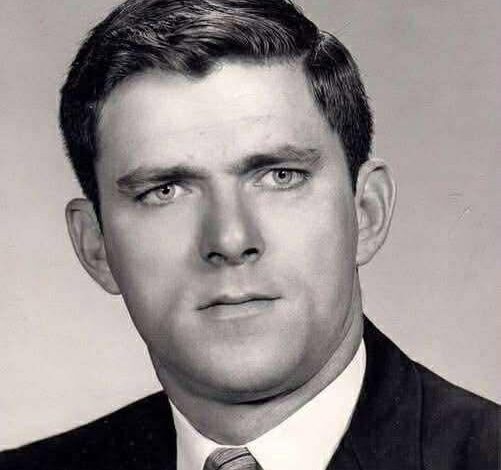
The airwaves have gone silent, and the golden age of daytime television has officially come to an end. We have lost the man who didn’t just host a show—he transformed the very fabric of our living rooms and redefined what it meant to listen to one another. Phil Donahue, the undisputed king of daytime talk, has passed away at the age of 88, leaving behind a void that no modern successor could ever hope to fill. It is a devastating loss that has sent shockwaves from Manhattan to every corner of the globe. How could a man who brought us face-to-face with the most explosive issues of our time be gone so suddenly?
The news of his passing, which occurred at his Manhattan home on August 18, has plunged the entertainment industry into a state of profound grief. While Phil Donahue had been battling a long-term illness in private, his eventual departure still feels like an abrupt conclusion to a life that was nothing short of legendary. His family confirmed the tragic news in a statement to Today, noting that during his final hours, he was held in the embrace of those he loved most: his wife of 44 years, the iconic actress Marlo Thomas, his children—Michael, Daniel, Kevin, and Mary Rose—his adoring grandchildren, and even his faithful golden retriever, Charlie.
The impact of Donahue’s career is difficult to overstate. For nearly three decades, The Phil Donahue Show—which later rebranded simply as Donahue—served as the cultural thermometer of the United States. Through more than 6,000 episodes, Donahue didn’t just interview celebrities or politicians; he invited the audience into the room. He pioneered the format where the viewers themselves were part of the dialogue, forcing America to reckon with controversial social issues, systemic inequality, and the lived experiences of people from every walk of life. From legends like Nelson Mandela and Muhammad Ali to the voices of ordinary citizens, Donahue gave them all a stage, treating daytime television as a space for serious, vital inquiry rather than mere fluff.
Perhaps his most enduring legacy, however, is the path he carved for the titans who followed him. Oprah Winfrey, who stands as perhaps the most successful talk show host in history, has been vocal about the debt she owed to the man who came before her. In a moving tribute posted alongside a black-and-white photograph of the pair, Winfrey made her gratitude clear: “There wouldn’t have been an Oprah Show without Phil Donahue being the first to prove that daytime talk and women watching should be taken seriously. He was a pioneer. I’m glad I got to thank him for it. Rest in peace, Phil.” It is a testament to his character that even as his fame spanned generations, he remained a source of inspiration to those who ultimately reached his own unparalleled level of influence.
Behind the lens, Donahue was just as revolutionary as he was in front of it. Born in Cleveland in 1935, his career began in the late 1950s within the fast-paced, high-pressure world of talk radio and television. When he launched his namesake show in 1967, and later relocated the production to Chicago in 1974, he was already defying conventions. He became a vocal, unapologetic feminist and a stalwart supporter of women’s rights during the late 1960s, a stance that was far ahead of its time for a male host in his position. He challenged the status quo, demanded accountability from the powerful, and never once flinched when the topics turned difficult or uncomfortable.
For his wife, Marlo Thomas, the loss is personal and immeasurable. Following the announcement, Thomas reached out to their millions of followers on Instagram, expressing a heart-wrenching gratitude: “Thank you for the beautiful messages of love and support that have been coming in all day, and for the wonderful and generous way that you’ve let Phil and me share our life adventure with you over the years.” She explained that she would be stepping away from the public eye for an indefinite period, asking for the space to grieve the loss of her dear husband. The intimacy of their relationship was a cornerstone of their public life, and the sight of a partner needing to retreat from the digital noise to heal is a reminder that behind every “legend,” there is a family whose world has been irrevocably altered.
As we look back on the archives of his life, we see not just a broadcaster, but a chronicler of the American spirit. He was there for the shifts in the cultural landscape, the movements that defined our history, and the moments of unity and division that shaped the late 20th century. He proved that the American public was hungry for more than just entertainment—they were hungry for connection and understanding. By treating his audience with intelligence and respect, he elevated the entire medium of television.
The exact cause of his death remains private, a final nod to the dignity with which he conducted his entire existence. But the legacy he leaves behind is loud and clear. He showed us that daytime talk could be a tool for progress rather than a distraction from reality. He held a mirror up to society, forced us to look at the reflections we might have wanted to ignore, and invited us to discuss what we saw with humanity and grace. Phil Donahue may have left his Manhattan home, but he remains a permanent fixture in the history of global media. His voice, his questions, and his commitment to the truth will continue to echo as long as there is an audience willing to engage, learn, and grow. Rest in peace to the king of daytime; the story of your life was the greatest production of all.