HOLLYWOOD MOURNS THE QUIET LOSS OF A TRUE LEGEND WHO DEFINED A GOLDEN ERA OF TELEVISION
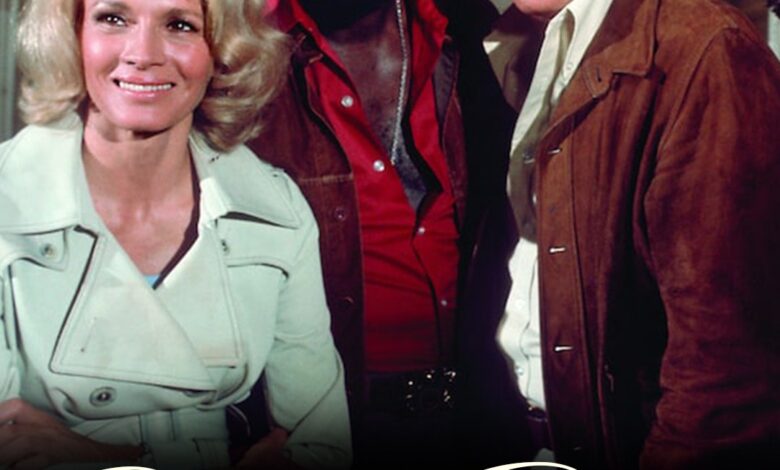
The entertainment industry is currently reeling from the tragic news that a beloved icon has passed away, marking the end of an era for millions of fans who grew up watching his steady, commanding presence on their screens. For decades, this legendary performer was a pillar of classic television, bringing authenticity and depth to some of the most memorable roles in history. His death at the age of eighty six in Northridge, California, has left a void that cannot be filled. While the world remembers him as a star, those closest to him describe a life of humility, faith, and curiosity.
The passing of Ed Bernard serves as a poignant reminder of the enduring power of a career built not on the fleeting nature of spectacle, but on the foundation of consistent craft and genuine human connection. Best known for his unforgettable performances as undercover detective Joe Styles on the groundbreaking series Police Woman and as the authoritative principal Jim Willis on the iconic drama The White Shadow, Bernard was a fixture of American living rooms during the nineteen seventies. He died on January twenty third, and his family recently confirmed the news, inviting fans to look beyond the characters he played to appreciate the man who brought them to life.
Behind the scenes, those who loved him remember a man who was profoundly different from the stoic authority figures he often portrayed. In an intimate statement, his family shared that while the public knew him as an accomplished actor, they knew him as a devoted father, a proud grandfather, and a man driven by deep, insatiable curiosity. They highlighted his surprising interests, describing him as a true foodie with a passion for sushi and healthy cooking, a lifelong learner, and a person of deep faith. It is this image of a grounded, thoughtful individual that serves as his true legacy.
Born on the fourth of July in nineteen thirty nine in Philadelphia, Bernard began his journey in the world of entertainment on the stage. His early professional foundation was built in off Broadway theater, most notably with his appearance in Five on the Black Hand Side in nineteen sixty nine. That experience in live performance provided him with the skills and versatility that would eventually allow him to thrive in the more demanding world of film and television. His transition into the film industry included appearances in gritty, iconic projects such as Shaft, Across 110th Street, and The Hot Rock. These early roles solidified his reputation as a reliable and dynamic actor, but it was the small screen that ultimately offered him his most consistent connection with the American public.
His breakout moment arrived through the acclaimed series Police Story, specifically the nineteen seventy four episode titled The Gamble. That pilot episode was so successful that it served as the launching pad for the long running series Police Woman. Bernard stepped into the role of Detective Joe Styles, where he worked alongside the legendary Angie Dickinson. For four seasons and ninety episodes, Bernard was a steady, grounding force on the show. Police Woman was a revolutionary production for its time, notable for its honest and gritty portrayal of a female lead in law enforcement, and Bernard’s performance was essential in providing the necessary balance and nuance to the ensemble cast.
Not long after the conclusion of that series, he secured another defining role as Principal Jim Willis on The White Shadow. The show was a pioneer in exploring complex social issues through the lens of high school sports and the education system. Starring Ken Howard as a former NBA player navigating the challenges of coaching, the series was praised for its thoughtful storytelling. Bernard’s character was the perfect foil to the high energy world of the basketball court; he brought authority, wisdom, and a compassionate, grounding force to Carver High School. He remained with the program for its first two seasons, leaving only when his character moved on to a prestigious position with the Oakland Board of Education, a creative choice that mirrored the show’s dedication to realistic, evolving narratives.
In the decades that followed his most iconic roles, Bernard continued to be an essential working actor, building an incredibly diverse resume that included appearances in some of the most influential television series of the twentieth century. From the tense crime drama of Kojak and the suspense of Mannix to the comedic wit of What’s Happening!! and the police action of T.J. Hooker, his range was vast. He also made appearances in later hits such as NYPD Blue, ER, JAG, Becker, and the long running procedural Cold Case. During the nineteen eighties, he held a recurring role on the hit series Hardcastle and McCormick and appeared in the popular nineteen eighty three film Blue Thunder. His final on screen credit arrived in two thousand and five, a year that was also defined by the profound personal loss of his wife of forty four years, Shirley.
Even after his retirement from active performance, his contributions to the arts were recognized by his peers in the industry. The Academy of Motion Picture Arts and Sciences honored him with a mention in their annual In Memoriam tribute, a quiet but deeply meaningful acknowledgement of a career that spanned nearly four decades. Though he was never one to chase the spotlight or seek fame for the sake of attention, Bernard’s performances resonated because of their authenticity and profound restraint. He understood that a subtle, nuanced performance often leaves a more lasting impression than an overt display of celebrity.
With his passing, the television landscape loses one of its final links to a unique era of storytelling. He becomes the last of the core cast members of Police Woman to pass away, leaving Angie Dickinson as the sole surviving star of the central ensemble. He is survived by his two sons, Edward and Mark, as well as his four grandchildren, Liz, Joshua, Samantha, and Alexandra. Ed Bernard’s life was not just a collection of television credits; it was a testament to the idea that a quiet, dedicated life can have a significant and lasting impact. He did not seek to dominate headlines, but in his own steady way, he helped shape the fabric of television history for generations of viewers who found comfort and truth in his work.