The Silent Killer in Your Kitchen: Why Your Food Storage Habits Are Secretly Poisoning Your Liver
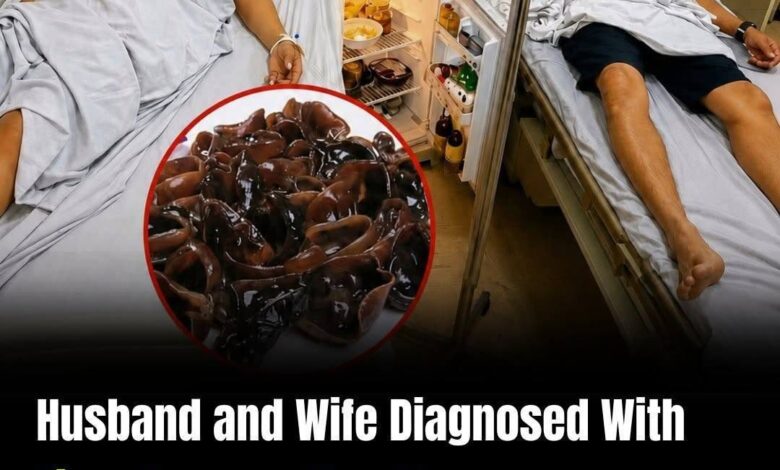
You think your refrigerator is a sanctuary of safety, but what if it’s actually a breeding ground for a silent, lethal threat? A tragic case involving a couple diagnosed with liver cancer has sent shockwaves through the medical community, forcing experts to confront a terrifying reality: the food you store improperly today could be the catalyst for your health crisis years down the road. You wash your produce and seal your leftovers, but you might be ignoring the microscopic, invisible toxins lurking in your pantry and fridge. The truth is, your kitchen hygiene might be holding the secret to your survival—or your undoing.
Liver cancer is not a condition that appears overnight. It is a slow, methodical process that often stems from years of cumulative damage to your most vital organ. While we often associate liver disease with alcohol, viral hepatitis, or obesity, there is a dangerous environmental factor that many people overlook: food contamination. The most notorious culprit in this silent war is a substance known as aflatoxin. This is not some rare chemical; it is a naturally occurring, highly potent toxin produced by specific strains of Aspergillus mold that thrive in warm, humid conditions. If your pantry is damp or your storage containers aren’t airtight, you might be providing the perfect luxury resort for these deadly mold spores to multiply.
The danger of aflatoxin lies in its deceptive nature. You might assume that if you don’t see green, fuzzy mold on your bread or nuts, you are safe. That is a dangerous gamble. Mold can penetrate deep into the fibers of dry goods like peanuts, corn, rice, spices, and dried beans without leaving an obvious visual trail. Even worse, if you find a patch of mold on a piece of fruit or a loaf of bread and simply cut it off, thinking the rest is pristine, you are mistaken. The invisible mycelium—the root system of the mold—has likely already permeated the entire product, carrying those heat-stable toxins with it. Crucially, these toxins are remarkably resilient; normal cooking temperatures, boiling, and even frying are often completely ineffective at neutralizing them. You could be cooking your food to perfection, yet still serving a toxic plate to your loved ones.
Another widespread kitchen myth that needs to be shattered is the idea that the refrigerator is a magical barrier against all decay. Your fridge is an essential tool for slowing bacterial growth, but it is not a sterile bunker. It is a time-limited holding cell. Every time you leave leftovers in the fridge for a week or repeatedly pull them out to reheat and then stick them back in, you are creating a biological rollercoaster. The temperature fluctuations and the sheer age of the food provide an open invitation for pathogenic bacteria to colonize your meals. When you consume these improperly stored leftovers, you are asking your liver to perform overtime duty, filtering out toxins and pathogens that should never have reached your plate in the first place.
So, how do you defend your home from these hidden threats? It starts with a rigorous, non-negotiable kitchen audit. You must stop treating your pantry and refrigerator as “set it and forget it” zones. Regularly inspect every single container. If you notice even the slightest discoloration, an “off” smell, or damaged seals on packaging, do not think twice—throw it out. It is better to waste a few dollars on spoiled food than to risk the long-term integrity of your liver cells. Shift your storage strategy: invest in high-quality, airtight glass or BPA-free containers that seal completely. Keep your dry goods in environments that are consistently cool and, above all, dry. Humidity is the enemy of food safety.
Furthermore, adopt a strict “two-hour rule” for leftovers. If cooked food has been sitting out at room temperature for more than two hours, it has already entered the danger zone where bacteria begin to multiply at an exponential rate. Get it into the fridge promptly. When you do store it, label it. If it’s been in there for more than four days, treat it as compost, not dinner. Keep your refrigerator temperature set below 4°C (40°F) to ensure that the environment remains inhospitable to the microbes that drive spoilage.
However, it is essential to maintain perspective. No single incident of eating a slightly old leftover or a dusty nut will instantly result in liver cancer. The disease is complex, arising from a web of genetic, lifestyle, and environmental interactions. The reason experts emphasize food safety is because it is one of the few variables in that complex equation that you can control immediately. You cannot easily change your genetics, but you can change how you store your rice, how you clean your fridge, and when you decide to throw away those questionable leftovers. These are the small, daily acts of vigilance that provide a shield for your liver over the course of your life.
Listen to your body, as it often provides early warnings that we are conditioned to ignore. If you find yourself grappling with persistent, unshakeable fatigue, notice unexplained weight loss, or see the whites of your eyes taking on a yellow tint, do not wait for the symptoms to become unbearable. Seek a medical evaluation immediately. Liver cancer, like many serious conditions, is exponentially more treatable when caught in its early stages. By combining proactive, obsessive kitchen safety with a commitment to overall liver health—including vaccinations against hepatitis, moderating alcohol, and maintaining a healthy weight—you are building a fortress around your health. The fight against cancer starts in the grocery store and is won in your kitchen, one responsible choice at a time.