The Silent Killer In Your Kitchen: Why Your Unplugged Appliances Are Still A Massive Fire Hazard
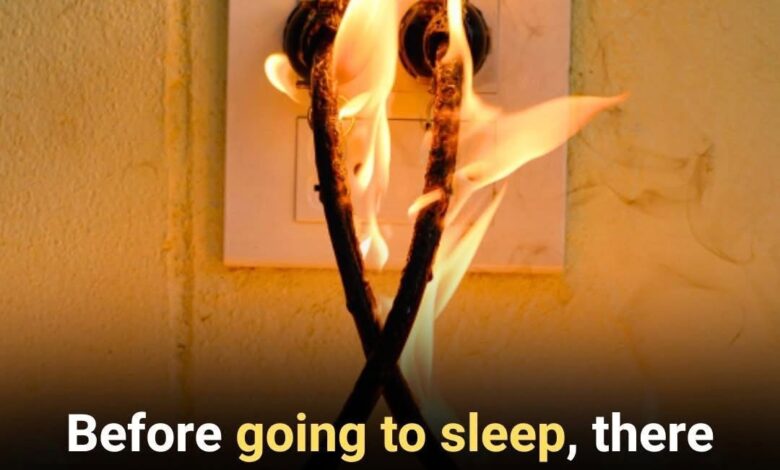
You think your home is safe because you switched off the toaster, the coffee maker, and the air fryer. You believe that by hitting the power button, you’ve neutralized the threat. But you are wrong. Every single day, your appliances are engaging in a dangerous, invisible process known as “phantom power,” where they continue to draw electricity long after you’ve walked away. This isn’t just a matter of a higher utility bill—it is a ticking time bomb. From short-circuiting control boards to overheating components, these everyday conveniences are quietly turning your sanctuary into a potential fire hazard.
We often view house fires as rare, tragic events that only happen to others. We assume that our modern appliances, built with safety features and digital displays, are fundamentally benign. This is a lethal misconception. Many kitchen devices, particularly those with digital clocks, memory settings, or standby modes, remain electronically active as long as they are tethered to the wall. This constant, trickle-flow of electricity puts unnecessary stress on internal circuits and heating elements. If an internal component fails while the device is in this standby state, the result can be catastrophic. A malfunction in an unattended appliance, located perhaps mere inches from paper towels, curtains, or wooden cabinets, can transform a quiet morning into a life-altering emergency in a matter of minutes.
Take the humble toaster, for instance. It is the most common appliance in the American kitchen, yet it is a consistent source of residential fires. When debris like crumbs builds up at the bottom of the unit, it becomes highly combustible fuel. If a heating coil decides to malfunction or if the appliance experiences a power surge while plugged in, those crumbs can ignite instantly. Furthermore, toasters are frequently left near flammable surfaces. When you leave a toaster plugged in, you aren’t just wasting energy; you are providing a direct, unmonitored path for electricity to reach a heating element that has no reason to be energized.
Coffee makers and air fryers carry similar, albeit slightly different, risks. A coffee maker with a built-in clock or a warming plate is essentially a small, constant heating device. If the thermal safety switch fails—a common occurrence in mass-produced electronics—the machine can reach dangerous temperatures, leading to smoldering or fire. Similarly, air fryers, which have become a modern necessity, are marvels of forced-air heating. However, they contain high-capacity fans and intense heating elements that require significant power. Digital interfaces mean these devices never truly “turn off.” A short circuit in a digital screen, exacerbated by accumulated grease from your last cooking session, is a recipe for a localized electrical fire that could consume your cabinetry before you even notice the smell.
Space heaters are perhaps the most dangerous category of household appliances. They are designed to pull significant amounts of energy to generate heat, and they are frequently used in environments—like bedrooms or living areas—where flammable materials like blankets, curtains, and carpets are abundant. The habit of leaving a space heater plugged in, even when the unit is toggled to “off,” is a major safety oversight. If a pet knocks it over, or if an elderly model experiences a surge, it may not trigger an automatic shutoff. Overloaded outlets, especially when space heaters are paired with extension cords, are the leading cause of electrical fires in many suburban homes. Unplugging these devices is not a suggestion; it is the most fundamental step you can take to prevent a nocturnal tragedy.
Microwaves, while seemingly passive, are notorious phantom power users. The internal clock display, which most of us ignore, is a constant drain on your home’s electrical system. More importantly, the control panels are sophisticated circuit boards that are vulnerable to surges and internal faults. Like other appliances, microwaves can collect grease and food particles, which can become charred or ignited if a component sparks or short-circuits. In an older home, where electrical wiring may already be strained by modern gadgetry, a faulty microwave left plugged in 24/7 is an unnecessary risk that serves no purpose other than to tell you what time it is.
The solution to these hazards is deceptively simple: adopt a “zero-standby” policy. If you aren’t actively using an appliance, the plug should not be in the wall. This is not just a financial decision to save the 10 percent of your electricity bill attributed to standby power; it is an act of home defense. Beyond this habit, there are several essential, non-negotiable steps to safeguarding your living space. First, conduct a “cord check” of your entire home. Inspect every cable for fraying, heat damage, or cracks. If you find a compromised cord, do not attempt a DIY repair—discard the appliance or have the cord replaced by a professional.
Furthermore, never overload your outlets. Resist the urge to daisy-chain power strips or to plug multiple high-wattage items into a single wall socket. If you must use surge protectors for your home office or entertainment center, ensure they are high-quality, UL-listed units, and replace them every few years as their surge-absorption capacity degrades. Ensure your smoke detectors are not just installed, but functional. Test them once a month, and if you are using an older house, ensure you have detectors in or near every room where an appliance is used. Finally, cultivate an environment of awareness. Keep curtains, towels, and paper products at least three feet away from any heat source, including your microwave and air fryer.
The goal here is not to live in fear of your own kitchen, but to respect the power that runs through it. Electricity is a convenience that requires constant, vigilant management. By treating your appliances as temporary tools rather than permanent fixtures, you drastically reduce the statistical likelihood of an electrical incident. It takes only a few seconds to pull a plug, but those few seconds can save your home, your belongings, and, most importantly, your life. Start tonight. Unplug the toaster. Unplug the coffee maker. Give yourself the peace of mind that comes from knowing you haven’t left a ticking fire hazard plugged into your wall. Your home is your most valuable asset—treat it with the caution it deserves.