THE FORGOTTEN GLAM ROCK ICON WHO DIED PENNILESS AFTER SELLING EVERYTHING FOR FAME
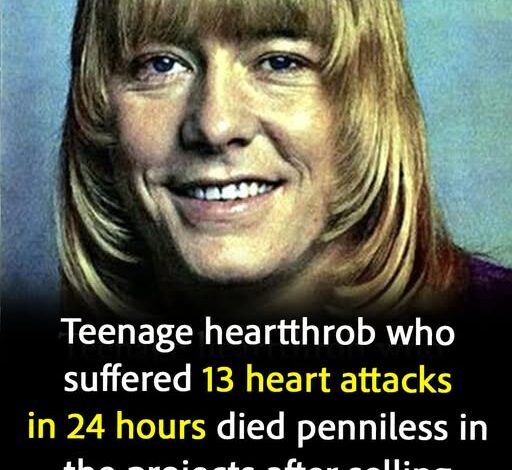
Brian Connolly was the golden boy of the 1970s, a man whose hypnotic voice and electric stage presence defined the glittering era of glam rock. As the lead singer of The Sweet, he stood at the apex of musical stardom, commanding massive crowds and selling fifty million records across the globe. He appeared to have everything—wealth, adoration, and a future that seemed entirely limitless. Yet, behind the bright lights and the chart-topping anthems, a devastating shadow was growing. The man who once ruled the world would eventually suffer a slow, agonizing descent into physical ruin, dying in obscurity, abandoned by the industry that once worshipped him.
The journey of Brian Connolly is a haunting testament to the volatile nature of rock stardom. Born in Scotland in 1945 and originally named Brian MacManus, his early life was marred by abandonment. He was adopted by a nurse and her husband, only discovering his true lineage as an adult when he learned he was the half-brother of the famous Scottish actor Mark McManus. This early instability may have shaped the man who would eventually seek validation in the roar of stadium crowds. By the mid-1970s, The Sweet had emerged as a titan of the British music scene, rivaling legends like Led Zeppelin and Queen with their unique fusion of pop hooks and raw, heavy-metal attitude.
Songs like Ballroom Blitz became the soundtrack of a generation, defined by Connolly’s soaring vocals and the band’s chaotic, infectious energy. They were one of the rare British acts to successfully crack the American market, achieving thirteen top twenty singles in the United Kingdom and a string of global hits that made them millionaires. Guitarist Andy Scott later recalled the sheer volume of wealth that passed through the band’s accounts during those peak years. Connolly, with his signature flicked-back blonde hair and commanding poise, was the undisputed face of the glam movement—the idol that millions of young fans plastered on their bedroom walls.
However, the rot began to set in as the decade drew to a close. By 1979, the pressure of fame and the grueling nature of constant touring had taken a severe toll. Connolly began to struggle with an increasingly heavy dependence on alcohol, which eventually undermined his standing within the band. He later confessed that he fell into a cycle of denial, convinced he could stop whenever he wanted, yet finding himself powerless against the momentum of his own habits. When he finally left The Sweet to launch a solo career, he found that his loyal fanbase did not follow him into his new ventures. His solo efforts failed to make a mark, leaving him adrift in a music industry that had already moved on to new trends.
The true collapse of his fortunes arrived in 1983. A staggering, multimillion-pound tax bill, accumulated during the height of the band’s success, descended upon the group like a hammer. Connolly was forced to liquidate his assets, including the sale of his family home, to settle the debt. This financial ruin was compounded by a series of catastrophic health events. In 1981, he had been hospitalized with severe bloating and suffered multiple heart attacks. These events left him with partial paralysis on his left side, a debilitating condition that eventually manifested as a chronic nervous system disorder. The man who had once electrified stadiums could now barely sustain the physical demands of his own body.
Despite the persistent decline of his health, Connolly’s spirit remained tethered to the stage. He continued to tour the UK and Europe with a reformed group known as the New Sweet, but the effort was grueling. His health remained brittle; during a 1990 tour in Australia, he was hospitalized for acute dehydration, a wake-up call that his physical stamina was no longer capable of supporting his professional ambitions. Furthermore, the legacy of The Sweet was further tarnished by a bitter and drawn-out legal battle over the rights to the band’s name. This fight divided the surviving members into two warring factions—Brian Connolly’s Sweet and Andy Scott’s Sweet—draining his already meager finances and adding emotional strain to his final years.
The closing chapters of his life were marked by a tragic attempt at artistic redemption. In 1995, he released a solo album titled Lets Go, which failed to recapture his former glory. That same year, he celebrated the birth of a son with his partner, Jean, but the joy was shadowed by his crumbling health. In a 1996 television documentary titled Don’t Leave Me This Way, Connolly spoke with devastating candor about his past. He acknowledged that he had suffered six heart attacks and admitted that decades of alcohol abuse had permanently scarred his internal organs. The documentary offered a stark, sobering look at the reality behind the leather pants and glittery personas of the glam rock era.
His final concert took place on December 5, 1996, at the Bristol Hippodrome, a modest performance that was a far cry from the stadium spectacles of his youth. Just over three months later, on February 9, 1997, the icon who had once lit up the world passed away at Wexham Park Hospital. The official cause of death was kidney and liver failure, exacerbated by the cumulative damage of his multiple heart attacks. He was fifty-one years old. The man who had been the voice of a decade died relatively alone, his vast fortune long gone and his physical body shattered by the lifestyle that had once been the envy of the world.
Fans who remembered the electricity of his prime eventually organized to raise funds for a memorial plaque at the Breakspear Crematorium, a small, humble tribute to a man who had left an indelible mark on music history. The story of Brian Connolly remains a haunting cautionary tale about the transient nature of fame and the high cost of living life at the absolute limit. He remains a beloved figure to those who grew up in the golden age of rock, a symbol of the beauty and the sorrow that characterized the 1970s. While he did not get the fairy-tale ending that his stardom once suggested, he left behind a catalog of hits that continue to echo, ensuring that while the man may be gone, the music that defined his life survives to inspire new generations.