YouTuber uses AI to analyze masked figure in Nancy Guthrie case, sparking debate online!
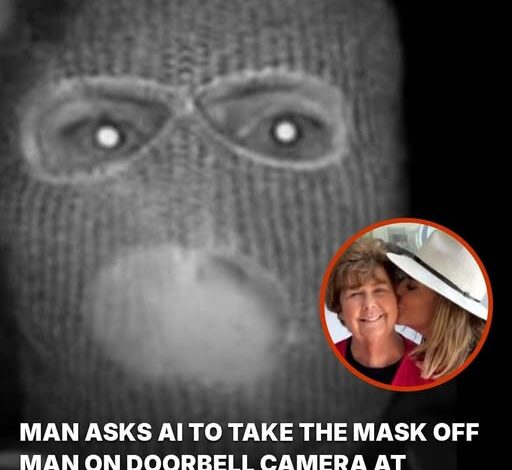
The disappearance of Nancy Guthrie, the mother of NBC Today show co-anchor Savannah Guthrie, has moved into a complex and controversial new phase as the digital world intervenes in the active investigation. Nearly two weeks after she vanished from her Arizona home, the vacuum of official information has been filled by “true crime” internet culture, sparking a heated debate over the ethics and accuracy of artificial intelligence in criminal forensics. The catalyst for this latest firestorm was a viral video from a popular YouTuber who claimed to have used advanced AI software to “unmask” a mysterious figure captured on Guthrie’s doorbell camera on the night of her disappearance.
The footage in question, released earlier by Arizona authorities in a plea for public assistance, shows a hooded individual wearing a gaiter-style mask approaching the Guthrie property. The resolution of the doorbell camera, common to many residential systems, is clear enough to show movement but insufficient to provide a definitive facial identification. While law enforcement has remained tight-lipped, refusing to confirm whether the individual is a suspect, a person of interest, or simply a neighbor, the digital community has rushed to provide its own answers.
The Rise of AI “Unmasking” and Digital Vigilantism
The content creator known as Professor Nez utilized a process called “AI de-masking” or “generative facial reconstruction” to analyze the pixels behind the fabric. By leveraging machine learning models trained on millions of facial structures, the software attempts to predict the jawline, nose shape, and cheekbone height of the individual based on the way the mask drapes and shifts over the face. The resulting image, which claims to reveal the person’s likeness, has been shared tens of thousands of times across social media platforms.
However, the “Professor Nez” revelation has been met with significant pushback from both legal experts and technology ethicists. The primary concern is “hallucination”—a phenomenon where AI, in its attempt to fill in missing data, creates features that do not actually exist. In a high-stakes missing person case like Nancy Guthrie’s, the spread of an inaccurate “unmasked” face can lead to the harassment of innocent individuals who happen to share a resemblance with a computer-generated approximation. This form of digital vigilantism presents a new challenge for 2026 law enforcement, who must now manage a flood of unverified tips generated by internet algorithms.
The Procedural Gap: Law Enforcement vs. Internet Sleuths
Arizona authorities have been quick to distance themselves from the YouTuber’s claims. Official forensic units utilize “image enhancement” rather than “generative reconstruction.” The distinction is critical: enhancement sharpens existing data, while reconstruction creates new data based on probability. While the former is admissible in a court of law, the latter is often viewed as speculative.
Despite the technical caveats, the public’s appetite for answers remains insatiable. The Guthrie family, particularly Savannah, has had to navigate this ordeal under the relentless glare of the national spotlight. The news of the AI unmasking comes on the heels of other recent developments in the case, including the detection of a weak electronic signal believed to be linked to Nancy’s location. The intersection of these high-tech leads—signals from the brush and pixels from the cloud—paints a picture of a 21st-century search and rescue operation where the boundary between helpful technology and harmful interference is razor-thin.
The Psychological Impact on the Investigation
The psychological weight of such “online evidence” on the families of the missing cannot be overstated. For Savannah Guthrie, who has remained a beacon of professionalism while her personal life is scrutinized, the sudden appearance of a “suspect’s face” on her social media feed adds a layer of emotional chaos to an already devastating situation. It forces families to confront potential “answers” that may be nothing more than digital phantoms.
Furthermore, the “Professor Nez” debate highlights a growing trend in 2026 where “true crime” creators prioritize engagement metrics over investigative integrity. By claiming to have “broken the case” with AI, these creators can drive massive traffic to their channels, often at the expense of the actual police work being conducted on the ground. This phenomenon has been seen in other regional cases this year, such as the updates involving Annie Guthrie and Tommaso Cioni, where community concern is frequently channeled into unverified digital theories.
Ethical Implications and the Future of Forensics
As the debate rages online, it raises fundamental questions about the future of surveillance and privacy. If AI can “unmask” an individual from a low-quality video, what does that mean for the anonymity of the average citizen? Conversely, if this technology could truly lead to the safe recovery of a missing person like Nancy Guthrie, is the risk of a “false positive” worth the potential for a breakthrough?
Experts suggest that the solution lies in a more integrated approach where AI is used as a supportive tool for investigators rather than a replacement for human judgment. For instance, AI can be used to filter thousands of hours of surveillance footage to find specific clothing patterns or gait signatures, which is a far more reliable metric than facial reconstruction.
The Search Continues Amid the Noise
As of late February 2026, Nancy Guthrie remains missing. The search teams on the ground in Arizona continue to focus on physical evidence, regional pings, and traditional witness interviews. While the “masked figure” remains a critical element of the timeline, authorities are urging the public to rely on official channels rather than YouTuber-generated reconstructions.
The story of Nancy Guthrie has become a microcosm of the modern world’s struggle with truth in the age of AI. It is a story of a family’s desperate hope, a community’s desire to help, and a technology’s power to both illuminate and obscure. As the investigation moves into its third week, the focus remains on the only outcome that matters: bringing Nancy home safely.
Whether the individual on the doorbell camera is the key to her recovery or a coincidental passerby remains to be seen. In the meantime, the “AI debate” serves as a reminder that while technology can bridge the gap between the unknown and the known, it must be handled with the same care and caution as a forensic crime scene.