With heavy hearts, we announce the passing of this music legend at 52!
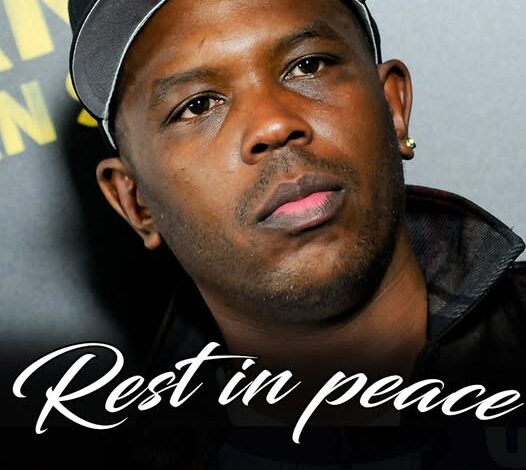
The hip-hop world is currently draped in a heavy, somber silence as it processes the departure of one of its most vital behind-the-scenes architects. On February 27, 2026, the community began collectively mourning Oliver “Power” Grant, a foundational pillar of the legendary Wu-Tang Clan, who passed away at the age of 52. The news was confirmed by the Staten Island collective through a series of heartbreaking social media tributes on Tuesday, February 24, noting that Grant had transitioned the previous day. While his cause of death has not been disclosed to the public, the void he leaves behind is immense, felt by the titans of the industry and fans alike who understood that while Power may not have always held the microphone, he undeniably held the vision.
Born in Jamaica on November 3, 1973, and raised amidst the gritty reality of Staten Island’s Park Hill Projects, Grant was a central figure in the tight-knit brotherhood that would eventually upend the music industry. In the early 1990s, when nine distinct voices—including legends like Method Man, RZA, and GZA—were coalescing into a singular force, it was Grant who provided the strategic backbone. He was the executive strategist, the man who saw the chess board several moves ahead while others were focused on the immediate heat of the recording booth. His role was less about the lyrical dexterity of the “36 Chambers” and more about ensuring that the world actually got to hear them.
The tributes from his “brothers in arms” have been visceral and deeply moving. Method Man took to Instagram to share a poignant farewell, wishing his brother “safe travels” to paradise. GZA, the group’s “Genius,” offered perhaps the most significant testament to Grant’s legacy, stating unequivocally that the Wu-Tang Clan “wouldn’t have come to fruition without Power.” It is a profound acknowledgment that talent alone is rarely enough to build an empire; it requires a builder, a protector, and a dreamer who refuses to accept the limitations of their environment.
Grant’s genius was perhaps most visible in his pioneering work within the fashion industry. In 1995, he founded Wu Wear, a streetwear brand that did more than just sell clothes—it redefined the relationship between hip-hop and global commerce. At a time when rap artists were largely seen as consumers of luxury brands rather than creators of them, Grant moved with an independent spirit that was decades ahead of its time. He didn’t just want a seat at the table; he wanted to own the wood the table was made from.
Under his guidance, Wu Wear exploded from a localized merchandise operation into a legitimate fashion house with flagship stores in Los Angeles and Atlanta. When major retailers like Macy’s began carrying the line, it signaled a tectonic shift in cultural power. Grant himself reflected on this journey in a 2001 interview, describing the process as one defined by “trial and error.” He noted that there were no models for what they were doing—no blueprint for how a group of young men from the projects could successfully market a lifestyle brand alongside a platinum-selling discography. They learned from the “school of hard knocks,” taking cues from active doers and figuring out the complexities of the business as they went along.
This “hard-knock” education gave Grant a unique perspective on the intersection of art and industry. He famously distilled the group’s success down to a simple, binary motivation: “Either you’re inspired, or you’re desperate.” For the Wu-Tang Clan, the desperation of their surroundings fueled an inspiration that was unmatched. They treated their music, their touring, and their brand as a unified ecosystem of survival and excellence. Grant was the quiet architect of this ecosystem, ensuring that the brand remained as gritty and authentic as the lyrics it represented.
The timing of his passing carries a bitter, poetic irony. Just twenty-four hours before the public announcement of his death, the Wu-Tang Clan received its first-ever nomination for induction into the Rock & Roll Hall of Fame for the Class of 2026. This nomination represents the ultimate institutional validation for a group that spent its early years fighting for basic recognition. If they are inducted, they will take their place alongside hip-hop royalty like The Notorious B.I.G. and Outkast—a milestone that Grant worked his entire adult life to make possible. It is a tragedy that he will not be there to walk across that stage, yet the nomination itself stands as a monumental capstone to his life’s work.
Grant’s impact is visible every time a modern artist launches a fashion line or exercises granular control over their business affairs. He helped establish the entrepreneurial blueprint that has become standard in the 21st century. He proved that an artist’s vision doesn’t have to end at the studio door; it can extend into the fabric people wear, the philosophy they live by, and the historic institutions that eventually come calling. He was a man of the “saga,” contributing to the narrative of Wu-Tang not just as a music group, but as an enduring American myth.
Even in the final years of his life, Grant remained connected to the legacy he helped build. His appearance at the 2019 premiere of Wu-Tang: An American Saga in New York City served as a reminder of his enduring presence within the collective. He was the bridge between the group’s humble beginnings in Park Hill and their current status as global icons. At 52, his life was cut far too short, but the “Power” he brought to the movement is immortal. It lives on in the sprawling influence of Staten Island’s finest, in the iconic yellow and black “W” that can be found in every corner of the globe, and in the spirit of every young entrepreneur who looks at a bleak situation and sees the possibility of an empire.
The music world has lost more than just a business manager or a fashion mogul; it has lost a visionary who understood that hip-hop was a vehicle for total liberation. Oliver “Power” Grant lived a life that was both inspired and inspiring. As the hip-hop community gathers its thoughts and shares its memories, the consensus is clear: the architect has left the building, but the house he built is made of stone. The 36 Chambers remain open, the legacy is secure, and the name “Power” will forever be synonymous with the strength, vision, and resilience of the Wu-Tang Clan.