UNSETTLING OR TOTALLY NORMAL? THE SURPRISING TRUTH BEHIND WHY HAIR SUDDENLY STARTS GROWING ON YOUR EARS
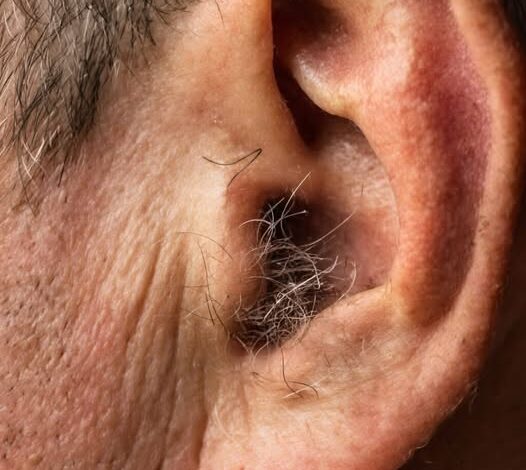
For many men and women entering their fifties and sixties, a morning look in the mirror can reveal a startling new development: a sudden, prominent sprout of hair growing from the ears. In a culture obsessed with youth and aesthetic perfection, the immediate reaction is often one of embarrassment, leading to frantic plucking or a fearful search for underlying medical causes. However, experts are speaking out to debunk the myths surrounding this phenomenon. The growth of ear hair isn’t a sign of mysterious illness or physical decline; rather, it is a fascinating biological byproduct of hormones, genetics, and the simple passage of time working quietly within the human body.
The biological mechanics behind this change are rooted in the complex way our hair follicles interact with hormones as we age. While hair often begins to thin on the scalp, the follicles in other areas—like the ears, nose, and eyebrows—can suddenly become hyper-responsive to androgens, specifically testosterone and dihydrotestosterone (DHT). Over several decades, these hormones shift the “growth phase” of the hair follicles in the ear canal and on the pinna, causing fine, invisible vellus hairs to transform into thicker, darker terminal hairs. While this is more common in men due to higher androgen levels, women often notice similar changes post-menopause as estrogen levels drop, allowing the effects of testosterone to become more pronounced.
Evolutionarily speaking, ear hair actually served a vital purpose for our ancestors. These fine bristles acted as a natural filtration system, designed to trap dust, debris, and tiny insects before they could reach the delicate eardrum. They also provided a layer of protection for the ear canal. While modern living has made these biological filters less of a survival necessity, our DNA hasn’t quite caught up yet. Your body isn’t malfunctioning; it is simply continuing a protective function that has been hardcoded into the human species for millennia.
Despite its harmless nature, ear hair has long been the subject of medical folklore. For years, myths have circulated claiming that ear hair is a secret indicator of poor circulation, heart disease, or severe hormonal imbalances. Science, however, has consistently debunked these associations. Another persistent myth is that trimming ear hair will cause it to grow back thicker and faster. In reality, hair follicles are located deep beneath the skin’s surface, and cutting the hair at the shaft has no impact on the follicle’s growth rate. The hair only appears thicker because the blunt edge created by scissors is coarser than the naturally tapered end of a new hair.
If you choose to groom your ear hair for personal comfort, safety is paramount. The ear canal is an incredibly sensitive area, and using sharp tools or aggressive plucking can lead to painful infections or damage to the eardrum. Experts recommend using specialized electric trimmers with safety guards or small, rounded-tip scissors. It is best to avoid chemical depilatories, which can cause severe irritation to the thin skin of the ear.
Ultimately, ear hair is a visible sign of a body that has lived, adapted, and endured. It is one of the many ways the human form evolves throughout the lifecycle. By understanding that these changes are a standard part of the aging process, we can move away from the stigma of “flaws” and toward a sense of acceptance. Ear hair is not a mystery to be solved or a symptom to be feared; it is simply a natural result of the body’s internal clock—a quiet reminder that time is passing exactly as it should.