Trump Promises $2,000 Tariff Dividend for All Americans! Says Opposing Tariffs Is Foolish
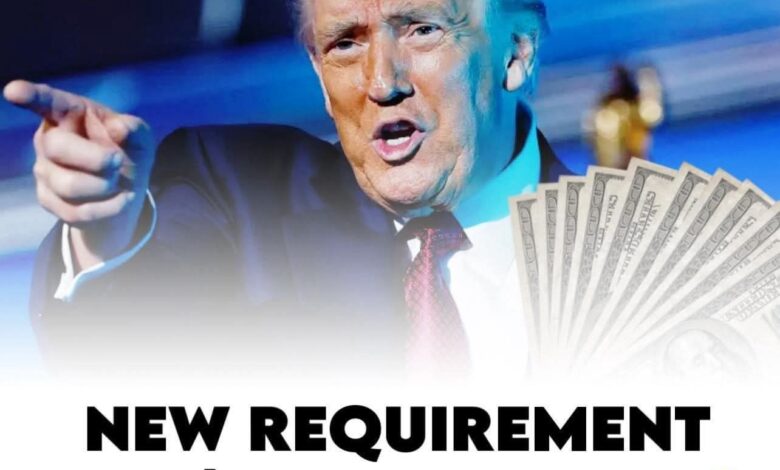
Rumors had been swirling for days, but by Sunday morning the guessing stopped. Trump, never one to let suspense go to waste, made it official in a direct blast on Truth Social: his administration was preparing a $2,000 “tariff dividend” for every American. Not a selective benefit, not a targeted program—every single citizen, funded entirely from the tariffs he imposed across the globe. The announcement hit like a political thunderclap. Supporters erupted with praise, framing it as a bold return of money “taken from foreign countries.” Critics immediately questioned the legality, the math, and the timing. But regardless of the reaction, one thing was clear: Trump had just thrown a grenade into the economic debate.
What pushed this message to the forefront wasn’t just the promise of money, but the moment it arrived. Only days earlier, the Supreme Court had taken up the question of whether Trump could legally invoke emergency powers to slap tariffs on nearly every foreign nation. While the justices have until June to decide, the stakes are massive. If they rule against him, billions could have to be refunded—an economic and political nightmare. Against that backdrop, Trump doubled down with confidence, calling tariffs one of his administration’s biggest successes. He insisted they had already generated “trillions,” boosted 401(k)s to all-time highs, and—defying his critics—had caused “NO inflation.” He ended his message by calling anyone opposed to tariffs “FOOLS!” It was signature Trump: aggressive, simple, and engineered for impact.
Treasury Secretary Scott Bessent attempted to soften the sharp edges later on ABC’s This Week. According to him, Americans might not receive literal checks. Instead, the dividend could take the form of tax reductions, embedded quietly into future filings. That clarification only raised more questions. People remembered the pandemic-era $2,000 stimulus proposal, which would have cost roughly $464 billion. Was the new plan comparable? Was it political theater? Or was Trump truly planning to carve a dividend out of tariff revenue, which between April and October brought in about $151 billion, with some projections saying annual revenue could reach $500 billion or more? The truth, as always with big federal numbers, lived somewhere between ambition and arithmetic.
The political implications were impossible to ignore. Republicans had suffered a rough week, losing key races in deep-blue states where voters spoke loudly about rising costs and stagnant wages. A promise of $2,000 per person played well with frustrated citizens, especially in an economy where groceries, rent, and gas still hit harder than anyone wants to admit. But not everyone on Trump’s side was applauding. Senator Bernie Moreno of Ohio cut straight to the point: “It’ll never pass. We’ve got $37 trillion in debt.” His skepticism echoed across conservative fiscal circles. Even if tariffs brought in unprecedented revenue, using them this way risked adding fuel to an already overheated deficit.
Meanwhile, the Supreme Court hangs over everything like a quiet storm cloud. If they rule that Trump overstepped by invoking emergency powers to justify the tariffs, the consequences could be staggering—potentially billions in refunds, unravelling years of financial planning. Some tariffs, like those on steel, aluminum, and automobile imports, look safe regardless of the ruling because they fall under different statutory authorities. But others sit on shakier ground, and Trump’s recent use of tariff threats as diplomatic leverage only complicates the legal picture. On the international stage, tariffs are as much bargaining chips as economic tools. Tying them to a national dividend fund presses even harder on already strained diplomatic relationships.
Still, Trump’s announcement isn’t really about paperwork or legal nuance. It’s about emotional momentum. A promise of financial relief—delivered not as aid, but as a share of “America’s power”—taps into a deep well of populist pride. The narrative is simple: foreign nations pay, American families collect. Whether that’s fully accurate or economically sustainable is a separate issue entirely. But in politics, simple stories often carry the most weight.
The bigger truth is that Americans are exhausted from high prices and political gridlock. A $2,000 windfall sounds like oxygen. Whether it comes as a check, a tax credit, or—as some analysts suspect—never materializes at all, the idea alone has power. It changes conversations. It forces lawmakers, economists, and voters to re-examine assumptions about tariffs, government spending, and the boundaries of presidential authority.
Looking ahead, everything depends on legal rulings, congressional cooperation, and the actual numbers behind tariff inflows versus national expenses. For now, Trump’s announcement is part promise, part provocation, part campaign strategy. It reveals the tension between big political gestures and the slow, grinding machinery of law and policy. What Americans ultimately receive—if anything—will depend on far more than a single post on Truth Social.
But the message has landed. Bold. Simple. Electrifying. And just uncertain enough to keep the whole country watching.