Tragedy in Indiana, Father!
The quiet, tree-lined streets of Wolcottville, Indiana, are usually defined by the rhythmic cadence of small-town life—a place where neighbors know one another by name and the local news rarely ventures into the realm of the unthinkable. However, on a Tuesday morning in September 2024, that peace was shattered by a discovery so profound in its tragedy that it has left the entire region in a state of collective mourning. What began as a routine welfare check at a residence on South Main Street ended with the discovery of four lives cut short, leaving a grieving father and a stunned community searching for answers in the wake of an unfathomable loss.
The sequence of events was set in motion on September 17, at approximately 11:20 a.m. Officers from the Wolcottville Police Department were dispatched to the 100 block of South Main Street to check on the well-being of the occupants after concerns were raised by those close to the family. Upon entering the home, the officers were met with a scene of absolute devastation. Inside, they located the bodies of 32-year-old Rebecca Hughes and three young children: 8-year-old Evelyn Newell, 6-year-old Allison Newell, and 5-year-old Amelia Newell. The immediate gravity of the situation prompted local law enforcement to contact the Indiana State Police (ISP), who quickly took the lead on the investigation to ensure that every forensic detail was meticulously documented.
In the initial hours following the discovery, a palpable sense of anxiety gripped the town. In small communities, the sight of multiple forensic vans and yellow police tape can spark immediate fears of an external threat. Recognizing this, the Indiana State Police issued a public statement shortly after their arrival, assuring the residents of Wolcottville and the surrounding Noble and LaGrange counties that there was “no ongoing threat to the public.” This phrasing, often used by law enforcement in the early stages of domestic tragedies, suggested that the incident was contained within the walls of the South Main Street residence, though it did little to dull the emotional edge of the news.
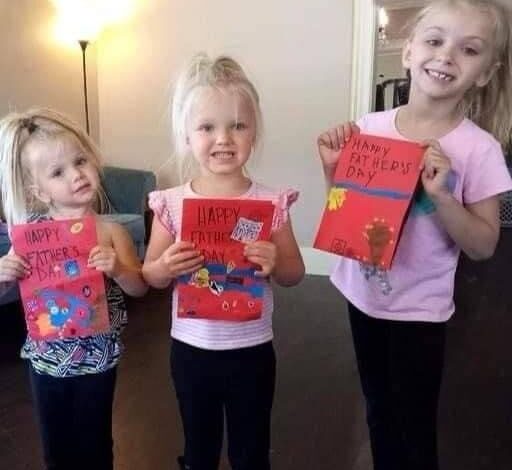
As the forensic teams moved through the home, the human element of the story began to emerge through the heartbreak of a father left behind. Jonathan Newell, the father of Evelyn, Allison, and Amelia, was suddenly thrust into a reality that no parent is ever prepared to face. The loss of three children at such tender ages—ages defined by the start of school, the loss of baby teeth, and the blossoming of distinct personalities—represents a void that can never truly be filled. The community’s focus quickly shifted from the technicalities of the police investigation to the immediate needs of a man forced to navigate the logistical and emotional nightmare of planning four funerals simultaneously.
To assist with the overwhelming financial burden that accompanies such a tragedy, a GoFundMe page was established by Jonathan Newell. The response from the public was a testament to the power of communal empathy. In the face of a story that felt too dark to process, thousands of strangers and neighbors alike reached out to offer support, ensuring that the financial costs of the final rites would not be an added weight on a heart already burdened by grief. For many in Wolcottville, contributing to the fund was a way to push back against the helplessness that often follows a tragedy of this magnitude.
From an investigative standpoint, the Indiana State Police have remained characteristically tight-lipped as they wait for the results of the autopsies and toxicology reports. While the public naturally craves immediate clarity, the “exact cause of death” is a determination that requires scientific precision. Investigators are tasked with reconstructing the final hours of the family, analyzing digital footprints, and examining the physical evidence within the home to understand how a 32-year-old mother and three vibrant young girls could lose their lives so suddenly. The process is slow and methodical, prioritized over the speed of the news cycle to ensure that the final report is accurate and beyond reproach.
The impact on the local school system has been equally significant. At ages five, six, and eight, the Newell sisters were at the heart of their peer groups, filling classrooms and playgrounds with the energy of childhood. School administrators and grief counselors have had to step in to help their classmates understand the permanent absence of their friends—a task that challenges even the most experienced educators. The loss of an entire sibling group in a small district creates a ripple effect that touches every family with children of a similar age, forcing parents to have difficult conversations about life, death, and the fragility of safety.
As the investigation enters its next phase in 2026, the memory of Rebecca, Evelyn, Allison, and Amelia remains a somber presence in Wolcottville. The home on South Main Street stands as a silent witness to a moment that changed the town’s history forever. While the legal and investigative chapters of this story will eventually reach their conclusion, the emotional recovery for the family and the community is a journey without a clear destination. Tragedies like this serve as a stark reminder of the hidden struggles that can exist behind closed doors and the importance of the communal bonds that hold a small town together.
The legacy of the Newell sisters is now carried by those who loved them and the community that rallied to support their father in his darkest hour. Every donation to the funeral fund, every candle lit at a local vigil, and every prayer offered up in the local churches serves as a collective defiance of the darkness. Wolcottville may be forever marked by the events of September 17, 2024, but it is also defined by the way it chose to respond: with compassion, with solidarity, and with an unwavering commitment to remembering the four lives that were lost. The Indiana State Police will eventually provide the technical answers as to “how” this happened, but the community will be the ones to determine the “why” of how they move forward—choosing to honor the short, bright lives of three little girls and the mother who cared for them.