This Hollywood stars real-life story is far more gripping than any of his movies!
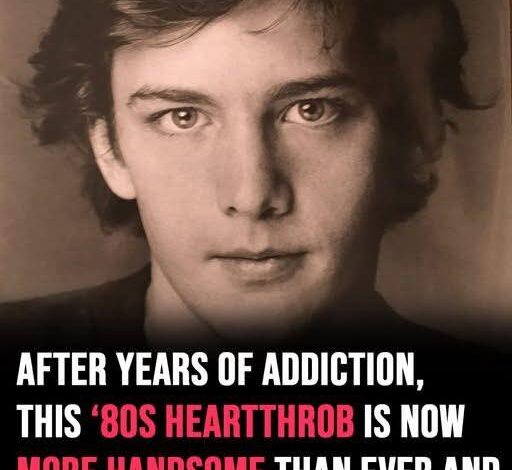
The 1980s were defined by a specific kind of cinematic magic, a time when coming-of-age stories felt like personal invitations into the lives of the young and the restless. At the center of this cultural whirlwind was a boy from Westfield, New Jersey, whose face would eventually grace millions of bedroom posters and magazine covers. With tousled dark hair and a disarming, sensitive gaze, he became the ultimate avatar for the understated romantic. Yet, the story of Andrew McCarthy is not merely a highlight reel of a Hollywood heartthrob; it is a profound narrative of survival, a journey from the peak of teen idol stardom to the depths of a hidden struggle, and ultimately, a transformation into a respected director and world-class storyteller.
Born in 1962 into a hardworking, middle-class family, McCarthy’s upbringing was devoid of the glitz he would later inhabit. His father dealt in investments, and his mother worked for a newspaper—a “regular” life that left him entirely unprepared for the sheer velocity of fame. Temperamentally, McCarthy was an anomaly in Hollywood. While peers thrived on the limelight, he possessed an introverted spirit that often recoiled from attention. This paradox—a man who desired to perform but detested being watched—would define much of his early career.
From NYU Expulsion to Leading Man
The trajectory of McCarthy’s career began with an irony that feels scripted for one of his films. In the early 1980s, he was enrolled at New York University’s prestigious acting program, but his lack of attendance led to a swift expulsion. However, the universe had other plans. Just weeks after being dismissed, he answered an “open call” in a newspaper for the film Class.
Waiting for hours among 500 other hopefuls, McCarthy secured the lead role of Jonathan, famously romancing the mother of his roommate, played by the legendary Jacqueline Bisset. He went from a failed student to a film star overnight. When NYU reached out to offer him a path back through “independent study,” McCarthy, with the brash confidence of youth, told them exactly where to go. He had found his rhythm, and Hollywood was listening.
His ascent continued with the 1985 hit St. Elmo’s Fire. Despite receiving harsh reviews from critics, the film became a cultural touchstone, cementing McCarthy as a core member of what the media dubbed the “Brat Pack”—a group of young, high-profile actors that included Rob Lowe, Demi Moore, and Emilio Estevez. McCarthy, however, always felt a sense of detachment from the group’s notorious partying reputation. He was the “sensitive one,” a label that was fully etched in stone after his performance as Blane in the 1986 classic Pretty in Pink.
The Invisible Battle: Alcoholism and “Dutch Courage”
Behind the “sensitive and lovely” persona that audiences adored, a much tougher struggle was unfolding. In his 2021 memoir, Brat: An 80s Story, McCarthy pulled back the curtain on the glamorous whirlwind, revealing that his understated presence on film was often the byproduct of a brutal hangover. He began using alcohol as “Dutch courage,” a crutch to navigate the social anxieties and the overwhelming pressure of a career he felt unsuited for.
“I felt confident and sexy and in charge and in control and powerful—none of those things I felt in my life,” he later admitted. This internal disconnect led to a spiral that lasted throughout the peak of his fame. Even during the filming of Weekend at Bernie’s, he attempted to quit cold turkey, pulling back from his social life to maintain a fragile sobriety. However, the path to recovery is rarely a straight line. A single beer offered by a co-star years later triggered a three-year slide into what he called a “lost and painful” period, culminating in a violent collapse on a bathroom floor.
The Turning Point and a Rugged Evolution
In 1991, at the age of 29, McCarthy made the game-changing decision to check into rehab. It was the end of his boyish glow and the beginning of a more rugged, lived-in reality. He traded the high-octane parties for a life of self-awareness and rebuilding. As his Hollywood heartthrob status faded into the rearview mirror, he discovered a new sense of purpose behind the camera.
McCarthy’s evolution from actor to director saw him overseeing nearly a hundred hours of acclaimed television, including Orange Is the New Black, Gossip Girl, and The Blacklist. He found that the detachment he felt in front of the camera served him well in the director’s chair—he understood the vulnerability of the actors while maintaining the vision of the storyteller.
A New Chapter: The Travel Writer and Family Man
Perhaps the most surprising turn in McCarthy’s life story is his second career as a world-renowned travel writer. Recognized as the Travel Journalist of the Year in 2010, he has contributed to National Geographic Traveler and Men’s Journal. For McCarthy, travel is not an escape, but a way to be more present in the world. He found that being a traveler and being an actor are “exactly the same” because they both involve the manifestation of a narrative.
His personal life also reflects a journey of reclamation. In 1999, he married his college sweetheart, Carol Schneider, decades after their initial romance. Though they eventually divorced, they share a son, Sam, who has followed his father into the acting world. In 2011, McCarthy married Irish writer and director Dolores Rice, with whom he has two children, Willow and Rowan. Today, he lives a grounded, quiet life in New York’s West Village, a far cry from the wild nights at the Chateau Marmont.
Legacy and Nostalgia
In 2026, looking back across four decades of performance, Andrew McCarthy stands as a symbol of endurance. His eyes no longer hold the wide-eyed wonder of a teen idol; instead, they reflect the quiet intensity of a man who has mastered his own narrative. While he remains modest about the lasting effect of his 80s films—noting that he doesn’t have much nostalgia for his own past—his fans continue to celebrate him as a survivor.
In a year marked by complex global updates and the search for authentic voices, McCarthy’s story of pulling himself out of addiction and the chaos of early stardom is more relevant than ever. He proved that fame is a temporary state, but character is built through the choices we make when the cameras are turned off. He remains a “Bad Mama Jama” of the industry—not because of his poster-boy past, but because of the rugged, honest, and creative life he built on the other side of it.