Robert Mitchums actor son passed away at 84 after long illness!
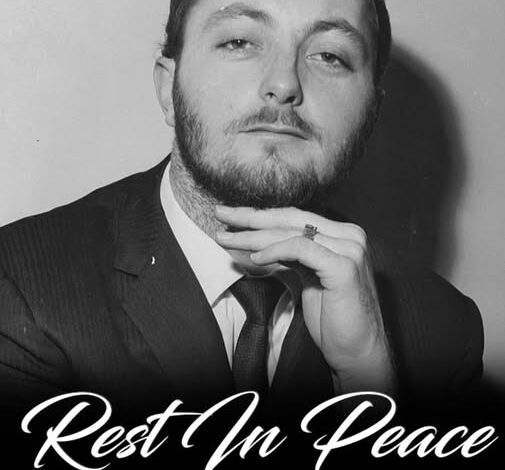
The golden age of Hollywood has lost another of its living links to the past with the announcement that James “Jim” Mitchum, the eldest son of the legendary Robert Mitchum, has passed away at the age of 84. For decades, Jim served as a walking reminder of his father’s formidable legacy, possessing not only the famous Mitchum surname but a physical resemblance so uncanny that it often startled those who saw him. News of his passing was confirmed by a family spokesperson, who revealed that the actor transitioned peacefully on September 20 at his expansive ranch in Skull Valley, Arizona. His death marks the end of a dignified, long-term battle with an undisclosed illness, closing a chapter on one of the most intriguing father-son dynamics in cinematic history.
Born on May 8, 1941, in Los Angeles, Jim was thrust into the epicentre of the film industry from his first breath. As the first child of Robert Mitchum and his wife, Dorothy Spence, Jim grew up in the shadow of a man who was widely regarded as Hollywood’s original “bad boy.” Robert Mitchum was a force of nature—a man whose heavy-lidded eyes and effortless cool made him a star in film noir classics like Out of the Past and a terrifying presence in thrillers like The Night of the Hunter. For Jim, however, this icon was simply a father, though a father whose professional footprint would inevitably shape his own path.
The most striking aspect of Jim’s existence was undoubtedly his appearance. He was, in every sense of the phrase, a “copy of his dad.” He inherited the broad shoulders, the deep, resonant voice, and that specific, laconic gaze that defined the Mitchum brand of masculinity. This resemblance was so profound that it led to one of the most famous casting choices in 1950s cinema. At just 17 years old, Jim made his acting debut in the 1958 cult classic Thunder Road. In a stroke of meta-casting that would be talked about for decades, he played the younger brother of his father’s character. The chemistry between the two was electric, fueled by an authenticity that only a real-world bond could provide. Jim didn’t just act like a Mitchum; he lived it, capturing the gritty, moonshine-running spirit of the film with a naturalism that suggested he was born for the screen.
Despite the obvious advantages of his lineage, Jim Mitchum’s career was a study in navigating the complexities of being the scion of a titan. Following the success of Thunder Road, he appeared in a string of notable films throughout the 1960s and 70s, including the epic war drama The Victors and the Western The Tramplers. While he never reached the stratospheric heights of his father’s fame, Jim carved out a respectable and steady career as a character actor and leading man in his own right. He often found himself drawn to the same rugged, outdoor roles that suited his rugged physique, appearing in various Westerns and action films that allowed him to utilize the stoic charisma that was his birthright.
However, Jim was more than just a carbon copy of a movie star. Those who knew him best described a man who was deeply connected to the land and far removed from the superficialities of the Hollywood “scene.” This affinity for a more grounded life eventually led him away from the bright lights of Los Angeles and toward the rugged beauty of Arizona. His ranch in Skull Valley became his sanctuary—a place where he could raise horses, enjoy the vast desert horizons, and live on his own terms. In many ways, his retreat to Arizona mirrored his father’s own legendary disdain for the trappings of celebrity. Jim lived a life of quiet dignity, preferring the company of his family and the rhythm of ranch life to the relentless scrutiny of the public eye.
In his later years, as he battled the illness that would eventually claim his life, Jim remained a guardian of the Mitchum family history. He spoke fondly of his father, often sharing anecdotes that humanized the “bad boy” image, revealing a Robert Mitchum who was a poet, a musician, and a deeply intellectual man. Jim’s own life served as a bridge between the old-school Hollywood era of grit and authenticity and the modern world. His passing at 84 marks the loss of a man who carried a heavy legacy with grace, never appearing embittered by the comparisons to his famous father, but rather embracing them as a point of pride.
The legacy Jim Mitchum leaves behind is one of quiet strength. While he will always be remembered for that incredible physical resemblance to his father, his own contributions to film—specifically his debut in Thunder Road—remain essential viewing for fans of mid-century cinema. He proved that it was possible to exist in the shadow of a giant while still maintaining a clear sense of self. His choice to spend his final years in the serenity of Skull Valley reflects a man who had found peace with his place in the world, far removed from the “chilling villains and heroic roles” that defined his father’s career.
As news of his death spreads, tributes are beginning to emerge from the film community and the residents of Arizona who knew him as a neighbor rather than a star. They speak of a man who was “old school” in the best possible way—polite, private, and possessed of a dry wit. He is survived by his younger brother, Christopher Mitchum, who also followed in the family footsteps, and a large extended family who will continue to honor the Mitchum name.
In the final assessment, Jim Mitchum’s life was a testament to the idea that some legacies are written in the blood. He didn’t just inherit a name; he inherited a presence. As he is laid to rest in the Arizona soil he loved so dearly, he leaves behind a body of work and a family history that continues to captivate. He was a son, an actor, a rancher, and a true original, even if he looked exactly like the legend who came before him. Hollywood may have lost a familiar face, but the story of the Mitchum men remains one of the most compelling sagas in the history of the American screen.