Rising Tensions Between the United States and Iran! Strategic Options, Military Planning, and Global Implications
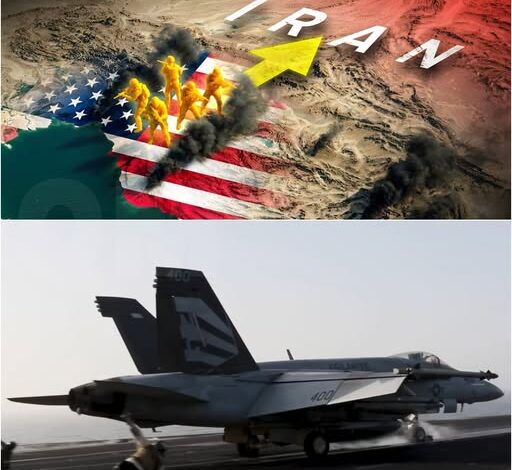
In recent years, the relationship between the United States and Iran has remained one of the most closely watched and carefully managed tensions in global politics. It is a situation defined not by constant conflict, but by a cycle of pressure, restraint, and calculated decision-making, where every move carries implications far beyond its immediate impact.
While headlines often suggest sudden escalation or imminent confrontation, the reality is far more layered. Beneath public statements and dramatic narratives lies a continuous process of strategic evaluation, where military capability, political objectives, and diplomatic considerations intersect. Each development is rarely isolated; instead, it is part of a broader system of signals, responses, and long-term positioning.
At the center of ongoing concern is Iran’s nuclear program, which has been the subject of international monitoring and negotiation for years. Iranian officials maintain that their activities are focused on civilian energy production, while other governments remain wary of the potential for weaponization. This fundamental disagreement has shaped policy decisions, fueled negotiations, and contributed to the enduring uncertainty that defines the relationship.
The issue is not simply about technology or capability. It is about interpretation, trust, and the limits of verification. International organizations have attempted to bridge that gap through inspections and agreements, but the differences in perspective remain unresolved, creating a persistent source of tension.
When discussions turn toward potential military action, airpower is often at the forefront. Modern military strategy emphasizes precision, speed, and flexibility, allowing nations to project force without committing large numbers of ground troops. Air operations can be used for surveillance, deterrence, or targeted strikes, offering a range of options that fall short of full-scale war.
However, many of the more dramatic scenarios that circulate in public discourse tend to oversimplify these realities. Claims of rapid, large-scale outcomes often ignore the complexity involved in even limited military engagements. In practice, strategic decisions are shaped by caution, with an emphasis on minimizing escalation rather than provoking it.
More complex possibilities, such as direct intervention against nuclear facilities, are occasionally discussed but remain highly unlikely. These operations would require extraordinary levels of coordination, precise intelligence, and the ability to navigate heavily fortified and often underground sites. Even if such an operation were technically successful, the challenges of sustaining control and managing the aftermath would be significant.
Geography itself adds another layer of difficulty. Many of Iran’s key installations are located deep داخل the country, intentionally positioned to make access difficult and defense more effective. Any attempt to reach them would demand extensive logistical planning and long-term operational support, increasing both cost and risk.
Beyond the immediate military considerations lies a broader strategic concern: the Strait of Hormuz. This narrow waterway is one of the most critical routes for global energy transportation, with a substantial portion of the world’s oil supply passing through it. Any disruption in this area would have immediate and far-reaching consequences, affecting not only regional stability but also global markets, supply chains, and economic systems.
This interconnectedness is what makes the situation so sensitive. Decisions made in one context can ripple outward, influencing multiple sectors at once. A single incident, even if limited in scope, has the potential to trigger wider reactions, both politically and economically.
At the same time, the role of information has become increasingly important. In today’s digital environment, news, speculation, and analysis spread rapidly, often without clear verification. Images, claims, and interpretations can gain traction within minutes, shaping public perception before official information is available.
This creates an additional challenge.
Understanding what is actually happening requires careful attention to sources, context, and confirmation. Without that, it becomes easy to mistake speculation for fact, or to interpret isolated developments as part of a larger escalation that may not exist.
Despite the ongoing tension, most analysts agree on one key point: full-scale conflict remains unlikely. The potential consequences are simply too great. The economic impact alone—especially in relation to energy markets—would be felt worldwide. Beyond that, the risks of broader regional instability and unintended escalation act as powerful constraints on decision-making.
Instead, strategies tend to focus on more limited objectives.
Deterrence plays a central role, with each side signaling capability and resolve without crossing thresholds that would trigger a wider conflict. Containment and influence are also key considerations, shaping how actions are taken and how responses are calibrated.
Diplomacy, even when slow and inconsistent, remains an essential part of this balance. Negotiations provide a channel for communication, allowing for adjustments, agreements, and de-escalation when necessary. While progress is often uneven, the presence of dialogue itself helps prevent misunderstandings from turning into larger confrontations.
The broader implications extend far beyond the immediate region. Global alliances, trade relationships, and financial systems are all influenced by developments in U.S.–Iran relations. Governments around the world monitor the situation closely, aware that shifts in this dynamic can affect everything from energy prices to geopolitical stability.
In this context, perspective becomes critical.
While dramatic narratives often dominate public discussion, actual decision-making tends to be far more measured. Leaders operate within a framework defined by risk, consequence, and long-term strategy. Actions are weighed carefully, not only for their immediate effect but for how they will be interpreted and responded to by others.
This doesn’t eliminate uncertainty.
If anything, it highlights it.
Because in a situation where every move carries multiple meanings, even small actions can have significant implications. Misinterpretation, miscalculation, or unexpected developments can alter the balance quickly, creating new challenges that require equally careful responses.
What remains consistent is the need to manage tension without allowing it to spiral.
The relationship between the United States and Iran is not defined by a single event or outcome. It is an ongoing process, shaped by shifting priorities, evolving strategies, and the constant effort to maintain stability in an environment where that stability is never guaranteed.
In the end, it reflects a broader reality of modern geopolitics.
Power is not exercised in isolation.
Decisions are rarely simple.
And the line between conflict and restraint is often thinner than it appears.