Real reason why children stop visiting their parents!
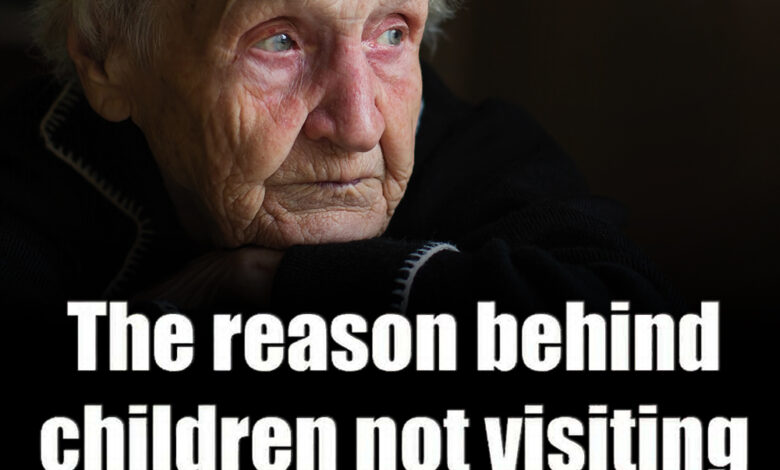
Family is supposed to feel permanent—a place where you’re known, understood, and accepted without having to earn it. But for many parents, there comes a moment when they realize something has shifted. The calls come less often. Visits shrink from full weekends to rushed afternoons. Holidays turn into brief appearances. Grandchildren grow up recognizing their grandparents more from photos than from memories. The distance doesn’t arrive like a thunderclap; it creeps in quietly, built from small moments that were never talked about, until one day the space between parent and child feels impossibly wide.
Most parents assume the distance is caused by ingratitude or changing priorities. In reality, it’s rarely a lack of love. More often, it’s the slow accumulation of misunderstandings, dismissals, and emotional bruises that were never acknowledged. Adult children don’t drift because they stop caring; they drift because staying close begins to cost them more than they can afford emotionally.
It often starts with conversations that don’t go the way either side intends. A parent says, “Are you eating enough?” while thinking about their child’s well-being. But the adult child hears, “You don’t take care of yourself.” “How’s work?” turns into “You should be doing better by now.” What was meant as concern lands as judgment, and the child leaves feeling small. Over time, they start showing up less—not to punish, but to protect themselves from walking away feeling criticized again.
Boundaries amplify the divide. When an adult child says, “Let’s not talk about that,” or “Please respect how we’re raising our kids,” they aren’t trying to erase the parent’s role. They’re trying to build a healthier one. But if the response is, “Don’t be dramatic,” or “I’m your parent, I can say what I want,” the message is clear: your needs don’t matter as much as mine. For a grown child, that’s the moment closeness starts to feel unsafe.
The past also plays a role—especially in families that never healed from earlier wounds. Some households keep retelling the same painful stories, assigning the same blame, revisiting problems that should’ve been laid to rest years ago. Family gatherings become emotional time machines, dragging everyone back into old patterns. Distance, for many, becomes the only way to breathe.
And apologies—real apologies—are often the missing ingredient. Every family has its scars, but when a child finally finds the courage to open up about the impact of their childhood and hears, “You’re exaggerating,” or “That’s not what happened,” it slams the door on reconciliation. Adult children don’t expect perfection; they want acknowledgment. Without it, they learn it’s safer to stay away than to reopen wounds that will never be validated.
Partners are another major fault line. A parent may adore their child but treat their spouse like an outsider. Sometimes subtly, sometimes openly, the message slips through: “You’re not really part of us.” Nothing pushes a couple away faster. When you hurt someone’s partner, you hurt them. A cold comment or a judgmental glance can drive more distance than a decade of arguments. Families that stay close learn to make room for the person their child chose—not grudgingly, but wholeheartedly.
Then comes grandparenting. Many parents want to be helpful, but help turns harmful when it undermines authority. Correcting an adult child’s parenting in front of their kids, reminiscing about “the right way” things used to be done, or ignoring rules set by the parents creates tension that lingers long after the visit ends. The invitations fade, not out of spite, but because protecting the family’s stability becomes more important than preserving tradition.
Even generosity can complicate relationships. Financial help or gifts are meant to ease burdens, but when they come with emotional strings—whether spoken or implied—gratitude turns to resentment. Most adult children would rather struggle than be indebted to love that feels conditional.
And underneath it all is a quieter sorrow: being loved for who you used to be instead of who you’ve become. Parents cling to childhood versions of their kids—the athlete, the straight-A student, the dreamer. But adults evolve. When conversations never leave the past, the person in front of the parent disappears. Few pains cut deeper than feeling unseen by the people who raised you.
None of this means parents are villains or that children are selfish. It means both sides are hurting in different ways. Parents feel abandoned. Children feel misunderstood. Each side waits for the other to fix it, and the silence grows heavier.
Repair begins with something small—curiosity instead of assumption. “Tell me about your life now.” “How can I support you?” “I didn’t realize that hurt you.” Real listening can rebuild bridges that guilt and pressure never could. Boundaries honored become trust restored. New stories replace old ones. Respect softens resentment. A sincere “I’m sorry” can do more healing than a decade of explanations.
The real tragedy isn’t that adult children stop visiting. It’s that visits stopped feeling safe, warm, or welcome long before they stopped happening at all. But the hopeful truth is this: it’s never too late to change the tone, to show humility, to meet your child where they are now instead of where you left them years ago.
Closeness doesn’t come back all at once. It returns in small gestures—a softer voice, a boundary respected, a partner fully included, a grandchild’s routine honored, a conversation that stays in the present. One gentle step at a time, the distance can shrink.
Family ties don’t disappear—they fade. And with effort, sincerity, and genuine willingness to grow, they can strengthen again.