My Fiance Wanted to Exclude My Adopted Daughter from the Wedding – When I Found Out Why, My Knees Went Weak!
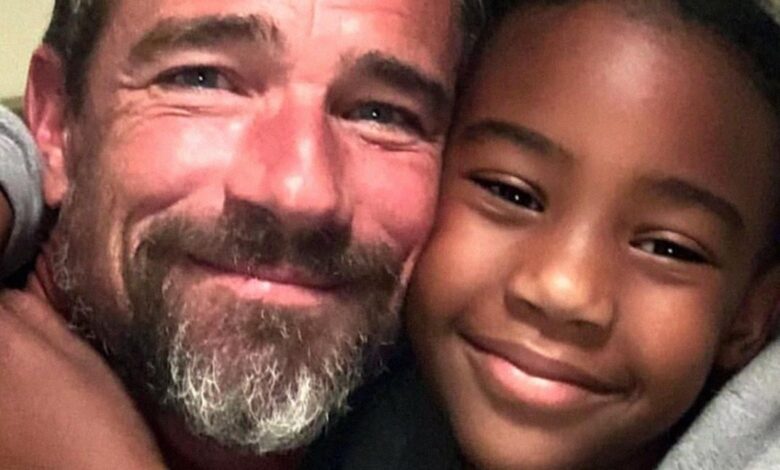
The morning ritual of making pancakes is more than just a culinary tradition in our house; it is a vital rhythm that defines the sanctuary Sarah and I have built together. “Chocolate chip or blueberry?” I called out over the sizzle of the griddle, the steam from the batter rising into the shafts of early Tennessee sunlight. From the kitchen table, the rhythmic tapping of Sarah’s pencil ceased. She didn’t look up from her math homework immediately, maintaining a facade of academic focus. “Chocolate chip, Dad,” she replied, her voice mock-serious. “But only if you do the smiley faces.”
I wiggled the spatula at her, and she finally cracked, sticking out her tongue in a classic twelve-year-old gesture of playful defiance. Watching her, with her hair still a wild thicket from sleep, it was hard to remember the silence that had once defined these four walls. After my first wife, Susan, passed away, the house had been a hollow shell of coffee brewing and static-filled news broadcasts. Sarah had been my life raft, the toddler we had adopted together who suddenly became the only reason I had to keep moving forward. We had figured out how to be a family of two, a bond forged in the quiet aftermath of loss.
Then came Nora. We met two summers ago at a friend’s cookout, where she had the entire yard roaring with her pitch-perfect impressions. When Sarah, typically shy and guarded, sidled up to her, Nora didn’t talk down to her. She knelt on the grass and engaged her as an equal. They clicked instantly. For the first time since Susan’s death, I saw Sarah truly come back to life. There were cookie-baking marathons, movie nights, and a constant stream of inside jokes. When I proposed, Sarah was the first person I told. She spent months color-coding sticky notes for the wedding, helping Nora choose flowers and debating the theoretical logistics of how many dogs could serve as flower girls.
The three of us were a unit—or so I believed. The first crack in the foundation appeared on a Saturday afternoon when Nora arrived home with a stack of shopping bags, her cheeks flushed with excitement. Her sister, Abigail, had finally booked her tickets for the wedding. Sarah’s face lit up with a pure, uncomplicated joy. “Maybe we can both throw petals?” she suggested, already imagining herself in a matching dress.
The air in the kitchen suddenly felt thin. Nora paused, her hands hovering over a shopping bag. “Actually, Sarah… I was thinking Abigail should be the flower girl. Just her.”
The silence that followed was heavy. Sarah’s pencil froze on her paper. “But… you said I could too.” Nora’s tone shifted, becoming saccharine but unyielding, the way one speaks to a toddler who doesn’t understand the rules. She explained that it was Abigail’s first wedding and she needed the memory, suggesting that Sarah could help with “decorations” instead. I tried to intervene, but Nora was already pulling out a pair of tiny white ballet flats for her niece, her back turned to the heartbreak sitting at our table.
That night, the resilience I had spent years fostering in my daughter seemed to falter. She pushed her dinner around her plate, her eyes fixed on her fork. “Am I in trouble, Dad?” she whispered. “Nora seemed mad when I asked about the flower girl thing. Did I do something wrong?” I squeezed her hand, promising her that adults just get “weird” about weddings, but a cold weight settled in my chest.
In the days that followed, the rift widened. Every time I brought up Sarah’s feelings, Nora became a fortress of defensiveness. She claimed the wedding was her celebration and that she had the final say over the guest list and the roles involved. The woman who had once knelt in the grass to talk to a shy child was being replaced by someone who viewed my daughter as an aesthetic inconvenience.
Two days before the ceremony, the situation reached a breaking point. I was in the garage when Nora appeared, her arms folded tight across her chest. “I don’t think Sarah fits,” she said quietly. The words hit me like a physical blow. When I pushed for clarification, she finally dropped the mask. “She doesn’t belong in the wedding. In fact, I don’t want her there at all. If you insist on her being there, I’ll call the whole thing off.”
I didn’t argue. I didn’t plead. I simply grabbed my jacket, picked Sarah up from her friend’s house, and took her for “desperate times” ice cream sundaes. As she chattered about her favorite books, blissfully unaware that her future stepmother had just issued an ultimatum for her exile, I realized the choice had already been made. My heart knew the answer, but my head was spinning, searching for the “why” behind Nora’s sudden cruelty.
The answer arrived in a stinging text message from Nora’s mother, Brooke: “You’re being dramatic, Winston. Drop the girl. Her presence isn’t necessary.” That word—necessary—was the catalyst. I dropped Sarah at school the next morning and drove straight to Nora’s house.
She was sitting at her table, her eyes red from crying. She didn’t offer excuses this time; instead, she slid a worn envelope across the table. It was a letter from Susan, my late wife, found while Nora was cleaning out my study. As I read the elegant, familiar script, my knees finally went weak. Susan had known Sarah before the adoption. She was Sarah’s biological mother, a secret she had carried to her grave to protect the narrative of our “perfect” adoption.
“I panicked,” Nora sobbed. “Every time I looked at Sarah, I saw the secret first. I couldn’t watch you stand at that altar making vows while your whole family was built on a lie Susan told you.”
I stared at her, feeling a strange mixture of grief for Susan’s burden and absolute clarity regarding Nora’s character. “So, because my late wife had a secret, you decided to punish a twelve-year-old child? You wanted to exclude her from her own father’s wedding because of a piece of paper?”
The silence that followed was the end of us. Nora asked if we could still get married, but the woman I had fallen in love with didn’t exist anymore. “Whatever Susan hid,” I said, stepping back, “Sarah is my daughter. You asked me to choose. I already have.”
I canceled the wedding that hour. I sent a single message to both families, making it clear that anyone who thought my daughter was “unnecessary” was no longer considered family. The fallout was immediate—calls from confused florists, angry relatives, and eventually, quiet apologies from those who realized the depth of the betrayal.
A week later, Sarah and I walked to the park. The Tennessee spring was in full bloom, the air sweet and clear. She dropped into the grass beside me and asked the question I knew was coming: “Why didn’t the wedding happen?”
I pulled her close, the heavy olive-drab weight of the last few weeks finally lifting. “Because sometimes grownups let fear make them cruel,” I told her. “But nothing changes the way I feel about you. You’re my daughter, and you are the most necessary part of my life. That never changes.”
She hugged me tight, a simple, grounding gesture that outweighed any vow I could have made at an altar. We went home to make blueberry pancakes for dinner, returning to the rhythms that actually mattered. I had lost a fiancée, but I had protected my home. As long as she was with me, I was exactly where I belonged.