My Dad Abandoned My Mom When He Found Out About Her Cancer Diagnosis, Saying I am Not a Nurse – Ten Years Later, Karma Paid Him a Visit
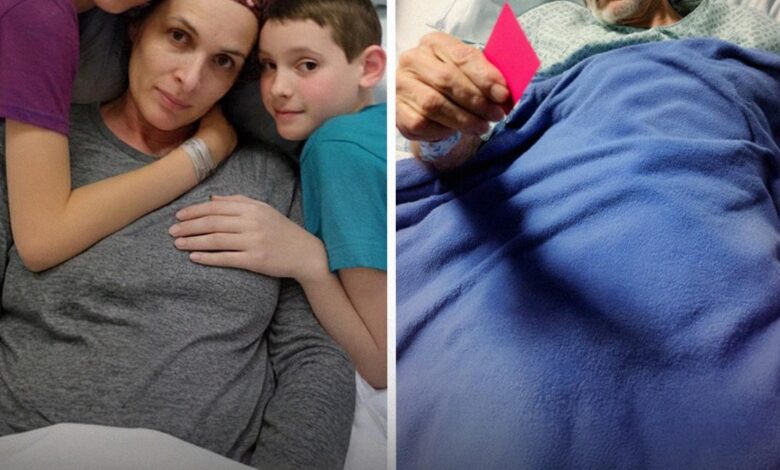
The day my mother began chemotherapy was the same day my father decided he was done being part of our family.
I was fourteen. My younger brother Jason was eight. At that age, you don’t fully understand what cancer means, but you understand fear. You understand the way a house feels different when something is wrong. That day, the air felt heavier, quieter, like everything was waiting for something to break.
Mom was upstairs in her bedroom, wrapped in blankets despite the warm afternoon. It was only her second round of chemo, but she already looked smaller, weaker, as if something inside her was being slowly drained away. Jason and I sat halfway up the staircase, not supposed to be listening, but unable to move away.
Then we heard it.
The sharp, unmistakable sound of a zipper closing.
Jason grabbed my arm. “Kelly… is he leaving?”
I didn’t answer right away. I didn’t need to. Deep down, I already knew.
My father’s voice came from upstairs, calm in a way that didn’t match the moment. “I didn’t sign up for this.”
Mom said something back, but it was too quiet to hear clearly.
Then his voice rose, harder, sharper. “I want a partner, not a patient. I’m not a nurse.”
Jason’s grip tightened.
Before I could think, I ran upstairs. Dad stood near the door, suitcase beside him, already dressed as if he were heading out to something important. He didn’t look upset. He didn’t look conflicted.
He looked inconvenienced.
“Please don’t go,” I said, grabbing his sleeve.
He didn’t even look at me properly. He just adjusted his watch, like he was late for something that mattered more.
Jason ran up behind me, clinging to his leg. “Daddy, Mom’s sick!”
Dad gently removed his hands, like he was brushing off something that didn’t belong to him.
“I can’t do this,” he said.
An hour later, he was gone.
The door closed, and with it, something else closed too.
Mom called us into her room after. She looked fragile, her head wrapped in a scarf, her eyes tired but steady.
“Where’s your father?” she asked.
Jason looked at me.
“He left,” I said.
She closed her eyes for a moment, then opened them again without tears.
“Alright,” she said quietly.
And that was it.
No breakdown. No anger. Just acceptance.
Within a month, he had built a new life. A luxury apartment. A younger woman named Brittany. We didn’t hear it from him—we heard it from someone who saw them together, laughing, like nothing had happened.
Then the payments stopped.
Letters began to pile up on the kitchen table. Red stamps. Final notices. Mom tried to hide them, but I saw everything. Eventually, a man in a suit knocked on the door, and the house we had lived in was no longer ours.
We packed what we could.
Jason cried as we loaded boxes into a borrowed truck. “Are we coming back?” he asked.
Mom smiled softly. “No, sweetheart.”
We moved into a small apartment above a laundromat. The machines ran all night, shaking the walls, filling the silence with constant noise.
But Mom didn’t give up.
She fought through every treatment, every wave of nausea, every day when getting out of bed felt impossible. Watching her, I understood something I hadn’t before. If someone in this family was going to stay when things got hard, it had to be us.
So I stayed.
I helped her walk when she was too weak. I sat beside her when she couldn’t sleep. I worked after school, cooked what I could, studied in hospital waiting rooms while machines hummed around us.
One day, during treatment, I watched a nurse adjust Mom’s blanket with a calmness that felt unshakable.
“You holding up?” she asked me.
“Yeah,” I said.
But I wasn’t.
Still, something about her stayed with me.
On the ride home, I told Mom, “I think I want to be a nurse.”
She looked at me, tired but proud. “You’d be a good one.”
Years passed.
Mom survived.
The word remission changed everything. It felt like air returning after years of suffocation. Jason graduated. I finished nursing school. Life began to move forward again.
And my father?
He disappeared.
We heard things—marriage, business, success—but nothing from him directly. No calls. No apologies. Eventually, we stopped expecting anything at all.
Ten years later, I was working as a head nurse in a long-term care facility. The kind of place that handles the cases others can’t. Stroke patients, brain injuries, people who need more patience than most are willing to give.
One afternoon, a new file landed on my desk.
“Severe stroke,” the social worker said. “Right-side paralysis. Limited speech. Needs full-time care.”
“Family?” I asked.
She shook her head. “Wife dropped him off and left. Filed for divorce the same day. Said she’s too young to take care of him.”
The words hit harder than they should have.
Too familiar.
I opened the file.
And everything stopped.
The name on the chart was one I hadn’t spoken in years.
I stood outside his room before going in.
He looked older, smaller, like life had stripped him down to something fragile. When he saw me, panic flashed across his face, followed by recognition.
“Ke… Kelly…” he struggled.
I walked closer.
He reached out, his hand shaking, and pressed something into mine.
“Don’t… leave…”
I looked down.
His watch.
The same one he wore the day he walked out on us.
But it was open.
Inside, hidden, was a small compartment. A photo was folded inside—Jason and me, sitting on the floor, taken the day before everything changed. The edges were worn, like it had been handled countless times.
He had kept it all those years.
I looked at him.
“I’m not the one who left,” I said quietly.
And I walked out.
That night, I told Mom.
She listened, calm as always.
“I forgave him a long time ago,” she said.
“For him?” I asked.
“For me,” she replied. “I didn’t want to carry it forever.”
I thought about that for a long time.
The next day, I went back.
Not as a daughter.
As a nurse.
I did my job. I made sure he was treated properly, that he had what he needed. I didn’t avoid him. But I didn’t pretend either.
Recovery was slow.
He learned to sit again. To speak in fragments. One day, he looked at me and said, “You… stayed.”
I didn’t answer.
But I didn’t leave.
Months later, he was discharged. He had nothing left. No home. No partner. Just a sister willing to take him in.
I didn’t say goodbye.
Some things don’t need words.
Weeks later, a package arrived at the hospital.
Inside was the watch.
The photo was gone.
In its place, an engraving:
“For Kelly — the one who stayed.”
I held it for a moment, then closed it.
Not because of what it was worth.
But because of what it meant.
And then I went back to work.
Because there were still people who needed someone to stay.
And staying was something I had learned how to do.