More people are coming out as Orchidsexual – here is what it means!
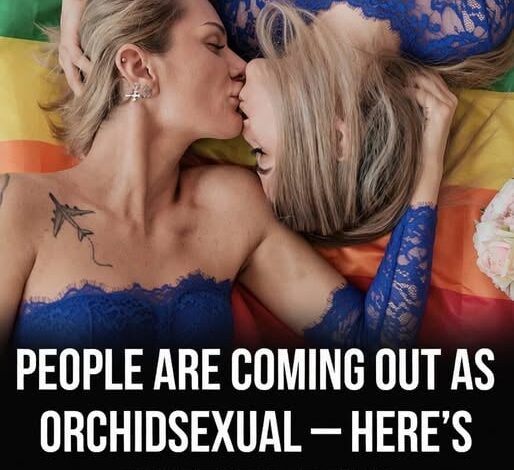
The landscape of human intimacy is undergoing a profound transformation, as the traditional rules governing desire and behavior are increasingly being rewritten by a generation seeking more nuanced self-expression. Across digital forums, private group chats, and social media platforms, a new term is gaining momentum, effectively splitting the concept of attraction from the necessity of action. This word—orchidsexuality—is sparking intense debate, frustrating traditionalists while providing a long-awaited sense of sanity and relief to those who have long felt out of place. It forces a challenging and necessary question upon a society obsessed with sexual metrics: Is it possible to experience sexual attraction and yet have no desire for the act of sex itself?
For decades, the cultural narrative has treated desire as a straight, predictable line that begins with an initial spark of attraction and ends inevitably in the bedroom. In this rigid framework, attraction is viewed as a functional precursor to action; if you feel it, you are expected to want to act on it. Orchidsexuality is a radical departure from this script. It posits that attraction does not inherently owe anyone—including the person experiencing it—any form of physical manifestation. It suggests that a deeply fulfilled and authentic life can include the presence of sexual feelings without the requirement of sexual behavior. This distinction is subtle but monumental, creating a space for individuals who feel “the spark” but prefer to leave it exactly where it is.
The emergence of the orchidsexual identity, complete with its own flag and dedicated online communities, has become a vital lifeline for individuals who previously believed they were fundamentally broken. Before this terminology existed, many people found themselves in a confusing middle ground. They weren’t asexual, as they still experienced the pull of attraction toward others, yet they lacked the drive to pursue the physical encounters that society insisted should follow. Without a name for this experience, many internalized their lack of sexual ambition as a medical or psychological defect. The rise of this microlabel has transformed that isolation into a shared community, replacing a sense of individual failure with a collective understanding of a valid, albeit different, way of being.
Whether orchidsexuality eventually becomes a mainstream term or remains a niche identifier within the broader spectrum of human orientation, its core message reaches far beyond its specific definition. It highlights the immense power of language to provide clarity in the face of confusion. By naming an experience, we validate its existence; we move it from the realm of the “weird” or “abnormal” into the realm of the possible. For many, this isn’t about creating more boxes to fit into, but about expanding the room we have to breathe. It challenges the “sexual imperative”—the idea that a healthy adult life is incomplete without active sexual participation—and offers a vision of wholeness that is defined by the individual rather than social expectations.
Furthermore, the orchidsexual perspective invites a broader conversation about the nature of consent and autonomy. It reinforces the idea that an individual’s body is not a debt to be paid back to their desires. In a world where people are often pressured to “follow through” on their attractions, orchidsexuality stands as a firm boundary, asserting that the internal experience of attraction is a complete and valid end in itself. This perspective can be particularly liberating for those who have spent years trying to force themselves to want things they simply don’t, often at great cost to their mental health and self-esteem.
The pushback against orchidsexuality often stems from a fear that the proliferation of “microlabels” complicates the social landscape or dilutes more established identities. Critics sometimes view it as an unnecessary over-complication of human behavior. However, for those who adopt the label, the complexity is the point. Human beings are not monoliths, and the ways in which we experience attraction are as varied as the ways we experience joy, grief, or friendship. Attempting to cram the vast diversity of human intimacy into a few broad categories inevitably leaves people behind. Microlabels like orchidsexual aren’t meant to confuse others; they are meant to help the person using them understand themselves.
As more people come out as orchidsexual, the conversation around the identity is helping to de-stigmatize the choice to remain celibate or sex-neutral. It shifts the focus away from “what is missing” in a person’s life and toward the intentionality of how they choose to live. It acknowledges that for some, the aesthetic, emotional, or intellectual aspects of attraction are the primary draw, and the physical act of sex adds nothing of value to their experience. By decoupling attraction from action, orchidsexuality allows people to pursue relationships that are built on a foundation of mutual understanding and radical honesty about their needs and boundaries.
In the grander scheme of social evolution, orchidsexuality serves as a reminder that we are still learning how to talk about who we are. Every new term that enters our lexicon is a step toward a more inclusive understanding of the human condition. These words are tools for navigation, helping us find our way through a world that is often unyielding in its expectations. For the person who has spent a lifetime feeling like an outsider because they liked the look of someone but never wanted to go home with them, orchidsexuality is more than just a word; it is a permission slip. It is an invitation to stop apologizing for the way their heart and body interact.
Ultimately, the validity of a way of being doesn’t depend on how many people share it, but on the clarity it brings to those who do. Orchidsexuality is proving that attraction is not a contract, and desire is not an obligation. As this identity continues to spread through the digital and physical worlds, it is opening doors for people to build lives that are true to their internal compasses. It is a quiet revolution of the self, proving that sometimes the most radical thing you can do in a world that demands action is to simply be, exactly as you are, without feeling the need to change for anyone else’s comfort.