Massive Changes Are Coming to Grocery Prices in the US, Could This Hit Our Wallets Next?
The economic landscape of 2026 has presented a complex and often contradictory reality for the American consumer, particularly when navigating the aisles of the local supermarket. As the second term of the Trump administration reaches its one-year milestone, the fervent campaign promises of 2024—specifically the vow to slash the cost of living “starting on Day 1″—are being tested against the stubborn machinery of global trade, climate volatility, and agricultural shifts. While the frantic, double-digit inflationary spikes that defined the post-pandemic recovery have largely subsided, they have been replaced by a “new normal” of uneven pricing, where relief in one aisle is almost instantly offset by a surge in another. For the modern shopper, the grocery cart has become a primary indicator of a shifting national and global economy, where policy decisions in Washington, D.C., ripple outward to affect kitchens from Chicago to the Balkans.
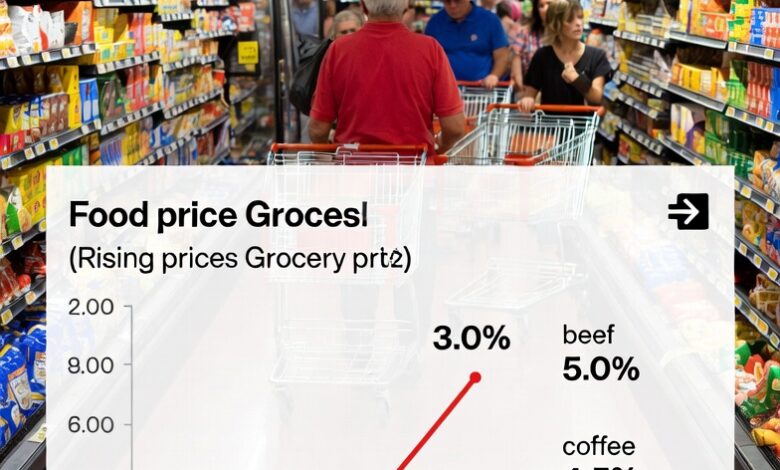
According to the comprehensive data released in January 2026 by the U.S. Department of Agriculture’s Economic Research Service (USDA ERS), the overarching forecast for food prices in the United States remains on an upward trajectory, with a projected 3.0% increase across the calendar year. While this figure is a significant moderation from the 2022 peak, it masks the deep structural fissures within specific food categories. The consumer experience is currently defined by a “mixed bag” of deflationary wins and inflationary pain points. In the win column, the dairy and poultry aisles have provided much-needed reprieve. Eggs, which were the face of food inflation in years prior, have seen a dramatic price correction, dropping nearly 30% from their 2025 highs due to stabilized supply chains and the successful containment of avian flu outbreaks. Similarly, dairy products are trending toward a modest decline of nearly 1%, offering a rare bit of breathing room for household budgets.
However, these gains are being aggressively countered by a crisis in the meat and commodity sectors. The American cattle industry is currently grappling with its smallest herd in 75 years—a biological reality that cannot be reversed by policy overnight. Compounded by escalating feed costs and parasitic challenges affecting imports from the southern border, wholesale beef prices have climbed nearly 14% over the last year, with an additional 6.9% jump expected throughout 2026. For the average family, this translates to ground beef prices that have surged by nearly 20% in certain regions, turning a once-affordable staple into a luxury item. Furthermore, global harvest failures in Brazil and trade frictions have sent coffee prices soaring by 20%, ensuring that even the morning routine of the American worker carries a heavier financial burden than it did just twelve months ago.
A significant, and highly debated, driver of these persistent costs is the administration’s aggressive tariff strategy. Implemented in waves throughout 2025, broad import duties on goods from China, the European Union, Mexico, and Canada have created a secondary inflationary pressure. While the administration argues that these tariffs are essential for long-term supply chain resilience and the protection of domestic industries, the short-term reality is a “tariff tax” passed directly to the consumer. Estimates from the Tax Foundation and the Yale Budget Lab suggest that more than half of imported food products are now subject to added costs, adding between 0.5 and 0.7 percentage points to overall inflation. For a standard household, this policy-driven push can represent an annual cost increase of $1,000 to $1,700, much of which is hidden in the price of imported seafood, olive oil, pasta, and tropical produce like Mexican avocados and tomatoes.
The economic pressure is further exacerbated by the labor market. Immigration enforcement measures have inadvertently reduced the available pool of agricultural labor, leading to higher wages that producers must pay to harvest and process goods—costs that inevitably migrate to the grocery shelf. This is particularly evident in the “food-away-from-home” sector. Restaurants and takeout establishments are seeing price increases of 4.6%, nearly double the historical average, as they struggle to balance rising ingredient costs with the need to pay competitive wages in a tightening labor market. Consequently, the act of dining out is becoming increasingly inaccessible for middle-class families, further concentrating the financial strain on home-prepared meals.
For residents of Pristina and the wider Balkan region, the question is whether this American “grocery wave” will reach their shores. While Kosovo maintains a level of insulation due to its reliance on European and local production for staples like bread and dairy, the global food system is an intricately linked web. A stronger U.S. dollar, often a byproduct of aggressive trade and tariff policies, makes dollar-denominated imports—such as coffee, chocolate, and certain vegetable oils—more expensive globally. Additionally, if U.S. demand or policy shifts cause a rise in global commodity prices for grains or fertilizers, the impact will eventually be felt in the markets of Pristina. While the IMF projects a stabilizing 2% inflation rate for Kosovo in 2026, the volatility of energy prices and global freight rates remains a wildcard that could nudge import costs higher in Eastern Europe.
The broader economic context revealed in the January 2026 CPI data shows that while national food inflation has eased slightly to 2.9% year-over-year, the lived experience varies wildly by geography. In urban centers like Chicago or New York, shoppers report that the “real-world” cost of a typical grocery cart has risen by double digits, far outpacing the moderated national averages. This discrepancy has fueled a sense of ongoing stress among consumers, with polls consistently ranking grocery prices as the number one concern for American voters. The psychological impact of seeing “180°C” temperatures in the weather forecast or “10%” increases on a receipt creates a persistent sense of economic precariousness that is difficult for any administration to message away.
Looking toward the remainder of 2026, the strategy for the consumer is one of vigilance and adaptation. In the United States, households are increasingly turning to store brands, bulk buying, and seasonal shopping to mitigate the impact of the 3.0% forecast. In Kosovo and the Balkans, the lesson is one of monitoring global linkages; a tariff signed in Washington today can subtly alter the price of an imported luxury in a local market months down the line. The “massive changes” predicted for grocery prices are not a single, catastrophic event, but a series of incremental, policy-driven shifts that require a more sophisticated approach to household management.
In conclusion, the U.S. grocery story of 2026 is a narrative of uneven relief. The dramatic drops promised during the campaign have been stymied by the smallest cattle herd in a generation, global climate impacts on crops, and the self-inflicted friction of international trade wars. While the availability of cheaper eggs provides a small glimmer of hope, the rising cost of beef, coffee, and restaurant meals serves as a reminder that the cost of living is a stubborn beast. As we move forward, the intersection of nature, policy, and economics will continue to dictate the contents of our wallets. For now, the best advice for any shopper—whether in the American Midwest or the heart of the Balkans—is to stay informed, shop with precision, and recognize that in an interconnected world, there is no such thing as a localized price tag. The evolution of the grocery store in 2026 is a testament to the fact that while headlines may promise quick fixes, the reality of the dinner table is governed by much deeper, more complex forces.