MASH Stars Final Curtain Call, Beloved Actor Patrick Adiarte Dies at 82
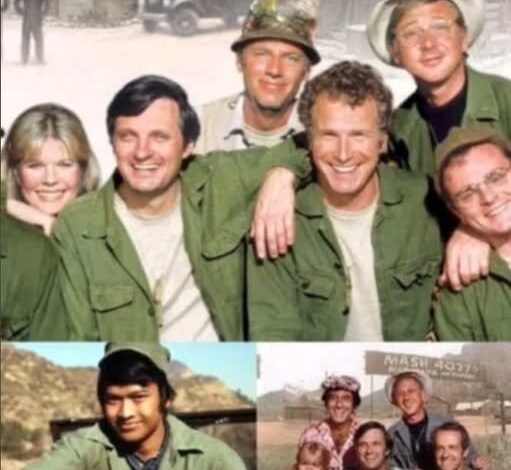
The entertainment world has quietly lost one of its most versatile and underappreciated talents. Patrick Adiarte, best remembered for his role in the early days of the iconic sitcom MASH*, has passed away at the age of 82. While not always a household name, Adiarte’s career spanned decades and left a lasting impression across film, television, and stage, particularly for those who recognize the depth of talent behind some of Hollywood’s most memorable productions.
Born in the Philippines, Adiarte’s journey to international recognition was anything but ordinary. He entered the entertainment industry at a time when opportunities for Asian actors in Hollywood were limited and often stereotypical. Despite these challenges, he carved out a career defined by skill, discipline, and undeniable charisma. His ability to move seamlessly between acting and dance set him apart, earning him roles in major productions that showcased both his physical precision and emotional range.
Many fans first encountered Adiarte through his recurring role as Ho-Jon, the camp houseboy in the first season of MASH*, which aired from 1972 to 1973. Though his time on the show was relatively brief, his character added a unique layer to the ensemble. Ho-Jon wasn’t just background presence—he represented a human connection to the Korean setting of the series, grounding the humor and chaos of the mobile army surgical hospital in a more personal reality. Adiarte brought warmth and subtlety to the role, ensuring the character was remembered long after his departure.
But limiting Adiarte’s legacy to MASH* would be a mistake. Long before his appearance on the show, he had already established himself as a formidable performer, particularly in musical theater and film adaptations of major Broadway productions. He appeared in the film version of The King and I, one of Rodgers and Hammerstein’s most celebrated works. The film was a major production of its time, and Adiarte’s involvement placed him alongside some of the industry’s most respected performers.
He followed that with another significant role in Flower Drum Song, a groundbreaking musical that featured an almost entirely Asian cast—something extremely rare in Hollywood during that era. The film not only provided representation but also demanded a high level of performance skill, especially in dance. Adiarte delivered on both fronts, proving himself to be more than just an actor—he was a complete performer.
His talent as a dancer was, in many ways, his defining trait. He wasn’t just good—he was exceptional. His movements were sharp, fluid, and expressive, capturing attention even in ensemble performances. That skill did not go unnoticed. During a television appearance, he had the opportunity to perform alongside Gene Kelly, one of the most legendary dancers in Hollywood history. Kelly reportedly saw something special in Adiarte, even suggesting he had the potential to follow in the footsteps of Fred Astaire. That kind of praise doesn’t come lightly, and it speaks volumes about Adiarte’s ability.
Throughout the 1970s, Adiarte became a familiar face on American television. He appeared in a range of popular shows, including Bonanza, The Brady Bunch, Hawaii Five-O, and Kojak. These weren’t minor productions—they were some of the most widely watched series of their time. His presence across such a variety of programs demonstrated his adaptability. Whether it was drama, comedy, or action, Adiarte could step into different worlds and make his role feel natural.
Despite consistent work, Adiarte never quite reached the level of fame that many of his contemporaries did. Part of that can be attributed to the industry itself, which, especially during the mid-20th century, often sidelined talented performers who didn’t fit its narrow expectations. But those who paid attention recognized his contributions. He was a working actor in the truest sense—someone who showed up, delivered, and elevated every project he was part of.
What made Adiarte stand out wasn’t just his resume, but the way he carried himself within the craft. There was a quiet professionalism to his performances. He didn’t rely on over-the-top expressions or exaggerated delivery. Instead, he brought a level of authenticity that made even smaller roles feel significant. That kind of consistency is rare, and it’s often what separates a good actor from a great one.
Beyond his on-screen work, Adiarte’s legacy also lives in what he represented. At a time when representation was scarce, he was part of a small group of performers breaking through barriers, even if progress was slow. His presence in major productions helped pave the way for future generations of Asian actors who would eventually demand and receive more substantial roles.
As news of his passing spreads, there’s a growing recognition of just how much he contributed. He may not have been a headline name, but his work touched multiple corners of the entertainment industry. From Broadway-inspired films to primetime television, from dance stages to sitcom sets, Adiarte built a career that was both diverse and impactful.
His death marks the end of a chapter that many didn’t fully appreciate while it was still being written. But that’s often how it goes with artists like him—those who quietly do the work, consistently and without fanfare, only to be fully recognized once they’re gone.
Patrick Adiarte leaves behind a body of work that reflects dedication, talent, and resilience. He proved that even in an industry that doesn’t always make space for everyone, it’s still possible to carve out a place through skill and persistence. His performances remain, preserved in film and television, ready to be rediscovered by audiences who may only now be realizing what they missed.
In the end, Adiarte wasn’t just a supporting actor in other people’s stories—he was a central figure in his own, one defined by movement, expression, and a refusal to be overlooked.