How to Cook Bacon to a Perfect Crisp Texture!
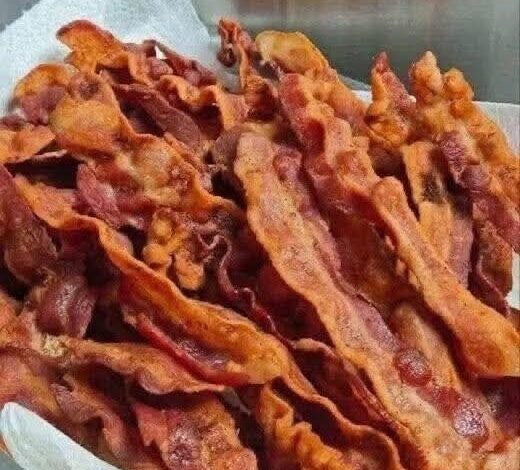
Achieving the elusive “perfect” slice of bacon—one that maintains a glass-like crunch without tasting charred or feeling heavy with grease—is a culinary pursuit that often ends in frustration when limited to the stovetop. While the sizzling pan is the traditional image of a morning breakfast, it is frequently plagued by uneven heat, curling edges, and the inevitable, painful splatter of hot oil across the kitchen counter. For those seeking consistency, the professional secret lies not in the skillet, but in the controlled environment of the oven. This method transforms bacon from a high-maintenance chore into a streamlined, hands-off process that yields uniform, restaurant-quality results every single time.
The journey to the perfect crisp begins with temperature control and strategic preparation. Start by preheating your oven to 200°C (400°F). This specific temperature is high enough to render the fat quickly but moderate enough to prevent the delicate proteins from burning before they reach the desired texture. To ensure a stress-free experience, line a large, rimmed baking sheet with aluminum foil or parchment paper. This creates a barrier that catches the rendered fat, making cleanup as simple as folding up the liner and throwing it away. For the ultimate texture, place a wire cooling rack inside the baking tray. By elevating the bacon, you allow the hot air to circulate 360 degrees around each strip, mimicking a convection effect that crisps the underside just as effectively as the top.
When arranging your bacon, the most critical rule is to avoid overcrowding. Lay the strips in a single, neat layer, ensuring they do not overlap. Overlapping creates “steam pockets” that result in chewy, rubbery patches—the antithesis of a perfect crisp. Once the oven is ready, slide the tray onto the middle rack. Regular-cut bacon typically reaches its peak between 15 and 18 minutes, while thick-cut varieties require a more patient 20 to 25 minutes. Because every oven has its own personality and hot spots, start monitoring the progress during the final five minutes. You are looking for a deep, mahogany gold and a slight rippling of the edges.
One of the most significant advantages of the oven-baked method is the ability to experiment with “millionaire’s bacon” variations. Since the meat lies flat and undisturbed, it acts as a perfect canvas for glazes and spices. Before baking, you might consider a light dusting of cracked black pepper for a savory kick, or a thin brush of maple syrup and a sprinkle of brown sugar for a caramelized, candy-like finish. For a modern twist, a pinch of smoked paprika or even a dash of cayenne pepper can introduce a complex heat that cuts through the richness of the fat.
As soon as the bacon achieves that ideal golden hue, remove the tray from the oven. Even if the strips look slightly soft, remember that bacon continues to firm up as it cools. Use tongs to immediately transfer the slices to a plate lined with paper towels to wick away any lingering surface oil. Let them rest for two to three minutes; this brief cooling period is when the structure truly sets into that satisfying, shatter-on-the-teeth crunch. Whether it serves as the crowning glory of a breakfast platter, the structural backbone of a classic BLT, or a sophisticated garnish for a creamy pasta, oven-baked bacon proves that the best results come from working smarter, not harder, in the kitchen.