A Voice That Changed Everything! sotdf!
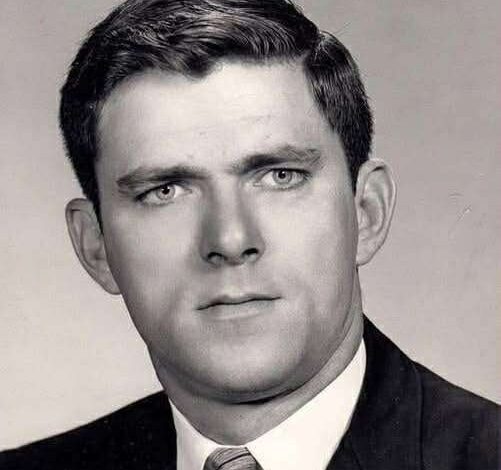
The passing of Phil Donahue at the age of 88 is not merely the closing of a chapter in the history of broadcasting; it is the fading of a specific, compassionate light that once illuminated the darkest and most sequestered corners of the American consciousness. To call him the “father of the daytime talk show” is to vastly underspeak his contribution to the fabric of public discourse. Long before the digital age democratized the stage, and decades before the concept of “going viral” became the metric of influence, Donahue was performing a radical act of service: he was handing the microphone to the people the world had decided to ignore.
In a media landscape that now often feels like a sterile hall of mirrors, Donahue’s legacy serves as a jarring reminder of what television used to be—and what it was capable of achieving. He didn’t just host a show; he created a town square that broadcast directly into the living rooms of a nation that was, at the time, deeply divided and often painfully repressed. His stage was an open invitation to the marginalized and the misunderstood. He brought in single mothers who were struggling against societal judgment, Vietnam veterans whose trauma was being swept under the national rug, whistleblowers who had risked their careers for the truth, and queer teenagers who had never before seen their humanity reflected back at them on a television screen.
Donahue’s genius lay in his refusal to sanitize. He never polished the anger of the oppressed or muted the pain of the grieving for the comfort of a suburban audience. He possessed a profound, almost revolutionary trust in the viewer. He believed that if you presented the public with raw, uncomfortable truths, they wouldn’t look away. He trusted them to sit with the discomfort, to engage in the messy, difficult arguments of the day, and ultimately, to emerge with a more nuanced, evolved understanding of their neighbors. He didn’t lecture; he facilitated. He didn’t preach; he questioned.
In the contemporary media environment of 2026, where the standard operating procedure is to shout over one another until the loudest voice wins by attrition, Donahue’s approach feels almost subversive. We live in an era of echo chambers and algorithmic silos, where we are rarely forced to confront a perspective that challenges our own. Donahue’s legacy is a direct rebuke to this trend. He proved, day after day, that asking an honest question—and then truly, deeply listening to the answer—is not a sign of weakness or a lack of conviction. It is, in fact, the ultimate act of courage. It is the admission that the world is larger than our own experience and that every person we meet knows something we do not.
The loss of Phil Donahue cuts so deeply because it exposes a vacancy in our culture that we have long pretended wasn’t there. For years, we have seen the daytime talk show format evolve into something else entirely—moving away from the intellectual curiosity of the Donahue era and toward sensationalism, staged conflicts, and “infotainment.” Network executives have tried for decades to find a successor, to replicate his unique gift for connection, but they have largely failed because Donahue’s gift wasn’t something that could be packaged or produced. It was an organic manifestation of his genuine interest in the human condition. You cannot manufacture the kind of empathy that Donahue brought to the stage; it has to be lived.
There is a hollow space where his microphone once lived, and it is a space that no single person can fill. However, the true tragedy would be to let that silence become permanent. The only way Phil Donahue’s microphone truly gets picked up again is if millions of us, as individuals, decide to reclaim the spirit of his work. His legacy is no longer in the hands of producers or broadcasters; it is in our hands. It is in how we conduct ourselves in our own living rooms when we disagree with a family member. It is in how we show up at city hall meetings to listen to those whose lives are vastly different from our own. It is even in the way we engage in the often-toxic digital comment sections of the internet.
Donahue’s life’s work was a bet on humanity. He bet that we were capable of empathy, that we were smart enough to handle complexity, and that we were brave enough to change our minds. He believed, with every fiber of his being, that genuine understanding was worth the risk of being wrong. To carry his legacy forward is to adopt that same belief. It is to choose curiosity over contempt and listening over lecturing. It is to recognize that behind every “controversial” headline is a human being with a story, a family, and a struggle.
As we look back at the footage of a younger Donahue, sprinting through the aisles of his studio with a silver microphone and a look of intense concentration, we see more than just a host. We see a man who believed that the American experiment depended on our ability to talk to one another. He understood that a democracy cannot function if its citizens have lost the ability to see the humanity in their opponents. His show was a daily exercise in democratic participation, a masterclass in the art of the civil debate. He showed us that you can disagree passionately without devaluing the person across from you.
The extinction of this “rare and compassionate light” is a call to action. We are currently living through a period of profound social fragmentation, where the “shouting over one another” that Donahue avoided has become the primary mode of communication. The vacancy he leaves behind is a challenge to all of us. Will we continue to retreat into our corners, or will we have the courage to walk into the aisle, pick up the metaphorical microphone, and ask, “How do you feel? What is your story? Help me understand.”
Phil Donahue’s passing at 88 is the end of a television era, but it must not be the end of the “Donahue way.” His legacy now depends entirely on whether we have the courage to carry it forward into a new age. It depends on our willingness to be uncomfortable, our desire to be challenged, and our commitment to the idea that we are all, in the end, part of the same human story. He changed everything by giving us a voice; now, the question is what we will do with the silence he has left behind. The microphone is there, waiting. All it takes is the decision to finally listen.