Donald Trump Threatens to Abandon UK Over Iran War Refusal as Diplomatic Crisis Rocks the Special Relationship
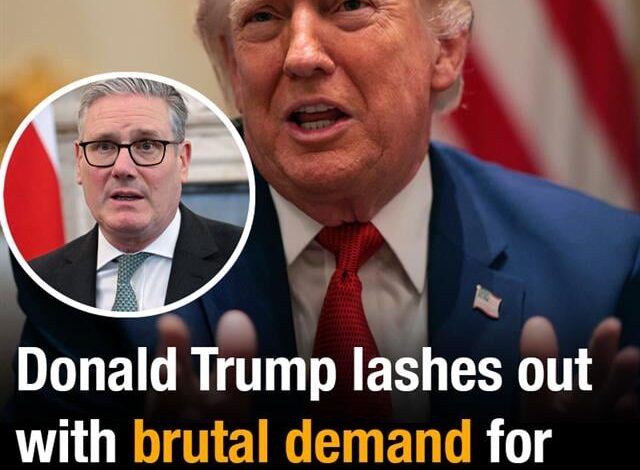
The historic bond between the United States and the United Kingdom has reached a sudden and perilous breaking point, following a series of blistering attacks from Donald Trump that have sent shockwaves through the global diplomatic community. The confrontation erupted after the UK government formally refused to commit military forces to a burgeoning conflict with Iran, a decision that prompted a furious and unprecedented response from the American leader. In a tirade that has redefined the terms of the transatlantic alliance, Trump issued a brutal warning that has left British officials reeling: America will no longer stand as the UK’s protector if they refuse to step onto the front lines of the Middle East.
The rhetoric escalated quickly on Truth Social, where Trump mocked Britain’s strategic hesitation and questioned the nation’s “courage” on the world stage. As tensions explode around the Strait of Hormuz—a vital artery for global energy supplies—Trump’s message to the UK was as clear as it was cold: “Go get your own oil.” He warned that the days of unconditional American military support are over, stating flatly that the U.S. “won’t be there to help you anymore.” This diplomatic grenade comes at a particularly vulnerable moment for Britain, as the country grapples with rising jet fuel costs and acute energy concerns while desperately trying to avoid being dragged into the chaos of another protracted regional war.
For many analysts, this move represents a fundamental shift in the “Special Relationship” that has anchored Western security for nearly a century. By publicly threatening to abandon a key ally during a period of heightened military tension, Trump has signaled a new era of transactional diplomacy where support is predicated entirely on immediate military compliance. The rebuke has sparked intense debate in Parliament, with some calling for a total reassessment of UK-US relations, while others fear the economic and physical consequences of losing the American security umbrella in an increasingly volatile world.
However, in a turn of events that has left many observers bewildered, Trump’s hostility toward the British government was almost immediately followed by an effusive embrace of the British Monarchy. Within the same breathless news cycle used to threaten the UK’s energy security, Trump pivoted to announce a state visit for King Charles III and Queen Camilla. Striking an entirely different tone, he gushed about a “momentous occasion” and a “beautiful Banquet Dinner” planned for the royal couple at the White House. He spoke with “great respect” for the King, creating a jarring contradiction between his treatment of Britain’s elected leaders and its symbolic figureheads.
This “two-faced” approach to foreign policy has left the international community wondering which message defines the actual future of the alliance. By threatening the British people’s security while hosting their King for a lavish dinner, Trump is playing a high-stakes game of divide and conquer that targets the heart of British identity. Critics argue that this duality is a calculated attempt to pressure the UK government through public and symbolic channels, while supporters see it as a necessary wake-up call for allies who have relied too heavily on American resources for too long.
As the state visit approaches, the world remains on edge. The dichotomy of a “beautiful banquet” occurring in the shadow of a brutal military threat has created a diplomatic paradox that may take years to untangle. Whether the UK can maintain its independence in foreign policy while keeping its seat at the American table remains the central question of 2026. For now, the special relationship is no longer a given—it is a negotiation, and the price of American protection has never been higher.