The Silent Alarm, Why Brussels Is Engineering the Most Ambitious Military Overhaul Since the Cold War to Save a Divided Continent
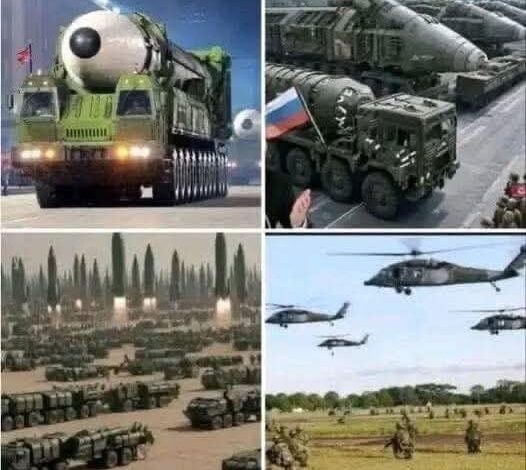
The cobblestone streets of Brussels, often associated with bureaucratic lethargy and diplomatic finesse, have begun to pulse with a rhythm more akin to a command center than a trade hub. For decades, the European Union operated under the comforting umbrella of “The End of History,” a philosophy suggesting that economic integration and liberal democracy had rendered large-scale kinetic warfare an archaic relic. However, the full-scale invasion of Ukraine by Russia, coupled with a dramatic shift in the geopolitical winds blowing from Washington, has shattered that complacency. Today, the continent is gripped by a singular, urgent realization: the era of peace was a luxury, and that luxury has expired. Europe is now racing against a ticking clock to rebuild its military, industrial, and psychological foundations before the next storm breaks.
The shift in rhetoric from European capitals is as stark as it is consistent. While diplomacy was once the first and only tool in the box, military readiness has become the primary directive. This urgency is fueled by a terrifying consensus among intelligence agencies and defense ministers. Boris Pistorius, Germany’s Defense Minister, recently warned that Europe may have witnessed its “last summer of peace.” This sentiment is echoed by NATO Secretary General Mark Rutte, who has been uncharacteristically blunt in stating that Russia’s sights are already set beyond the borders of Ukraine. The consensus is that an attack on NATO territory is no longer a “what if” but a “when,” with many analysts pointing to a window as short as five years. Vladimir Putin’s own declarations—noting that Russia is prepared for a fight and warning that the time for negotiation is passing—have only served to validate these fears.
Yet, as Brussels accelerates its military planning, it faces a profound and dangerous obstacle: the reluctance of its own citizens. A massive disconnect exists between the strategic maneuvers of EU leaders and the sentiments of the European public. Recent polling data suggests a continent deeply hesitant to take up arms. In a survey of nearly 10,000 respondents across the EU, a staggering 75% stated they would not be willing to fight to defend the union’s borders. Only a meager 19% expressed a readiness to serve. While concern about Russian aggression is palpably high in frontline states—reaching 62% in Denmark and 57% in Lithuania—the broader European population seems more preoccupied with the secondary effects of war, such as energy security and economic collapse, rather than the primary act of national defense. This “readiness gap” presents a strategic nightmare for Brussels, which is attempting to build a fortress on a foundation of public ambish.
In response, Eastern Europe has taken the lead, reviving Cold War-era civil defense protocols with a modern twist. Countries like Poland, Finland, and Sweden are not waiting for a centralized EU directive to prepare their people. Sweden has taken the extraordinary step of mailing “If Crisis or War Comes” brochures to every single household, a move designed to transition the public mindset from peace to resilience. In Lithuania, the government has begun constructing “drone walls” and intentionally restoring wetlands to serve as natural defensive barriers. Perhaps most telling is the shift in education; in Latvia and Poland, firearms safety and national defense are being integrated into school curriculums. The digital landscape reflects this anxiety, with surges in search queries for the nearest bomb shelters and evacuation checklists, indicating that while the public may be unwilling to fight, they are beginning to realize they must prepare to survive.
Behind the closed doors of the European Commission, the financial and logistical machinery is being completely rewired. European defense spending surpassed €300 billion in 2024, but even that massive sum is being eclipsed by future projections. The “Readiness 2030” roadmap is the most ambitious coordination effort in the EU’s history. It aims to solve the “Military Schengen” problem—the bureaucratic and physical hurdles that prevent troops from moving quickly across borders. The goal is to allow heavy military equipment to move across the continent within six hours during an emergency, down from the days or weeks it currently takes. To facilitate this, the EU is identifying 500 critical infrastructure points—bridges, tunnels, and ports—that require massive upgrades to support the weight of modern armored divisions. The price tag for this logistical overhaul is estimated at upwards of €100 billion.
To fund this transformation, the EU launched “ReArm Europe,” a central platform designed to end the fragmentation of the continent’s defense industry. Historically, Europe has been plagued by duplicated efforts, with different nations using incompatible weapons systems and procurement processes. “ReArm Europe” utilizes two massive financial engines: the European Defence Industry Programme (EDIP) and the Strategic Armament Financing Envelope (SAFE). The latter is a €150 billion loan facility that allows member states to pool their resources and purchase weapons at a lower cost and higher speed. The early demand for these funds has been overwhelming, with requests already flooding in for air defense systems, drones, and long-range missiles.
This frantic activity is being pushed along by a growing sense of abandonment by the United States. Recent national security strategies from Washington have adopted an “America First” posture, describing Europe as a “weakened partner” rather than an equal ally. The U.S. has made it clear that it expects Europe to handle the vast majority of its own conventional defense by 2027. This shift has ignited a fierce debate over “strategic autonomy.” Leaders like Council President António Costa and foreign policy chief Kaja Kallas have pushed back against U.S. interference in European political choices, but the reality remains: Europe can no longer bank on unconditional American security guarantees. The Hague summit’s agreement to aim for 5% GDP spending on defense by 2035 is a testament to this pressure, though many countries are still struggling to meet the current 2% NATO baseline.
Ultimately, the challenge for Brussels is not just about money or steel—it is about time. Decades of underinvestment and the dismantling of the defense industry cannot be reversed in a single budget cycle. Regulatory bottlenecks and production limits continue to plague the ramp-up of ammunition and equipment manufacturing. While the EU is fast-tracking reforms and simplifying approval processes, the structural limits are real and formidable. As 2026 unfolds, the question haunting the halls of Brussels is no longer whether Europe has the will to defend itself, but whether it has the capacity to prepare before the window of opportunity slams shut. The continent is no longer debating its future; it is frantically building the walls that will determine if it even has one.