From the Depths of Trauma to the Heights of Hollywood, The Unfiltered Survival of Dax Shepard
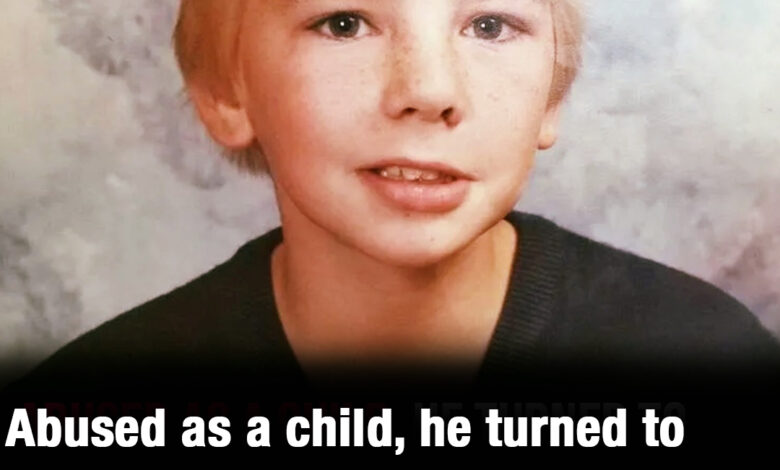
In the polished world of Hollywood, where public relations teams carefully curate every smile and social media post, Dax Shepard stands out as a jarring, necessary anomaly. To the casual observer, he is the witty, charismatic husband of America’s sweetheart Kristen Bell, a successful filmmaker, and the voice behind one of the world’s most popular podcasts. But beneath the surface of his comedic timing and silver-screen success lies a history marked by devastating trauma, systemic abuse, and a relentless battle with the demons of addiction. His journey is not just a celebrity success story; it is a raw blueprint of human resilience and the grueling work required to break cycles of generational pain.
Born on January 2, 1975, in Ypsilanti, Michigan, Shepard’s life began in the heart of the American automotive industry. His mother worked for General Motors while his father was a car salesman, providing a blue-collar backdrop to a childhood that would soon fracture. By the age of three, his parents divorced, setting the stage for a turbulent upbringing. However, the most profound scar was inflicted at the age of seven when he became a victim of sexual abuse. It was a secret he would carry like a lead weight for over a dozen years, a burden that warped his developing sense of self and masculinity.
The psychological toll of such early trauma is often catastrophic. For Shepard, the silence bred a toxic internal narrative. He would later reflect on the “insane thoughts” he harbored during those twelve years of secrecy, wondering if his own identity or orientation had somehow invited the violation. This confusion is a common byproduct of childhood molestation, where the victim internalizes the shame of the perpetrator. Shepard often cites a sobering statistic that underscores the gravity of his situation: those who have been molested have only a 20 percent chance of avoiding addiction. For him, the path toward substance abuse wasn’t just a choice; it felt like a biological and psychological inevitability.
By the time he was a teenager, Shepard was living a transient lifestyle. Between the ages of 14 and 18, he traveled the racetrack circuit with his mother, a period of his life that lacked the traditional stability of high school. While he briefly experimented with drugs at 14, the true descent began at 18. For years, he wrestled with a devastating cocktail of alcohol, cocaine, and prescription pills. This was not the “party lifestyle” often glamorized in cinema; it was a desperate attempt to numb the echoes of Beyer Hospital and the years of silent suffering that followed.
Despite the chaos of his personal life, Shepard possessed an undeniable creative spark. He eventually moved to Los Angeles, where a friend introduced him to The Groundlings, the legendary improv and sketch comedy troupe. It was here that Shepard found a constructive outlet for his energy. Training alongside future icons like Melissa McCarthy and Octavia Spencer, he honed the improvisational skills that would eventually make him a household name. His big break came in 2003 through Ashton Kutcher’s Punk’d, where his fearless, “anything for a laugh” attitude made him a standout performer. Commercial success followed with films like Without a Paddle, Let’s Go to Prison, and Baby Mama, but it was a supporting role in the 2010 film When in Rome that would alter the trajectory of his soul.
On the set of that romantic comedy, Shepard met Kristen Bell. On paper, they were opposites. Bell was the “good girl” from a stable, Christian background who had navigated her career with discipline and grace. Shepard was the scarred veteran of the Los Angeles underground, carrying a history that was, by his own admission, “terrifying” to her. The first year and a half of their relationship was a battlefield. Bell struggled to believe that a man with such a volatile past could commit to monogamy, sobriety, and fatherhood. Yet, it was through this friction that Shepard found a new reason to maintain his recovery. They famously delayed their wedding until 2013, refusing to marry until same-sex marriage was legalized in California—a testament to the advocacy that would become a cornerstone of their public lives.
However, the road to recovery is rarely a straight line. In 2020, Shepard made a move that shocked his fanbase: he admitted on his podcast, Armchair Expert, that he had relapsed after 16 years of sobriety. The relapse began following a motorcycle accident that required surgery and prescription painkillers. The old patterns returned with frightening speed. But unlike the young boy who hid his abuse for twelve years, the adult Shepard chose radical transparency. He confessed to his wife and his community, transforming a moment of perceived failure into a masterclass on how to handle a lapse in recovery.
Today, Shepard’s life is defined by an uncompromising honesty with his daughters, Lincoln and Delta. He does not hide his struggles from them; instead, he explains his frequent AA meetings as a necessary “medicine” to ensure he remains the father they deserve. He has transitioned from a man hiding secrets to a man who uses his platform to destigmatize the very things that once nearly destroyed him.
Beyond his personal recovery, Shepard and Bell have become formidable advocates for the protection of children. They were instrumental in the passage of California Senate Bill 606, which increased penalties for paparazzi who harass the children of public figures. Their argument was simple: while they chose a life in the spotlight, their children did not. This advocacy highlighted a protective, grounded side of Shepard that stood in stark contrast to his earlier “wild man” persona.
Dax Shepard’s story is a powerful reminder that the people we see on our screens are often navigating complexities we cannot imagine. His journey from a traumatized seven-year-old in Michigan to a leading voice in the conversation about mental health and addiction proves that trauma does not have to be a life sentence. Through the support of his family and a commitment to brutal honesty, he has turned his 20 percent chance of survival into a 100 percent commitment to a meaningful life. He remains a beacon for anyone who feels that their past has disqualified them from a bright future, showing that while you cannot change where you started, you have every right to redefine where you finish.