He Was Introduced to Drugs as a Child and Nearly Lost Everything, Then Became the Highest-Paid Star in the World
For decades, Robert Downey Jr. has stood at the top of the entertainment world, recognized instantly across generations and continents. His name is tied to massive box office success, critical acclaim, and one of the most iconic roles in modern cinema. But none of that was guaranteed. In fact, there was a time when his story looked like it would end in failure, not triumph.
Long before the awards and global recognition, his life was chaotic, unstable, and dangerously close to collapse.
He was born in New York City in 1965 into a family deeply rooted in the arts. His father, Robert Downey Sr., was an underground filmmaker known for unconventional work, while his mother, Elsie, was an actress. Creativity surrounded him from the beginning, but so did dysfunction. The environment that nurtured his talent also exposed him to things no child should have to face.
Acting wasn’t something he discovered—it was something he grew up inside. By the age of five, he had already appeared in one of his father’s films. Before most kids understood what a camera even meant, he was learning how to perform in front of one. As he grew older, his natural ease on screen became undeniable. He trained, attended acting programs, and developed a skill set that hinted at a powerful future.
But behind that early promise, something far more complicated was taking shape.
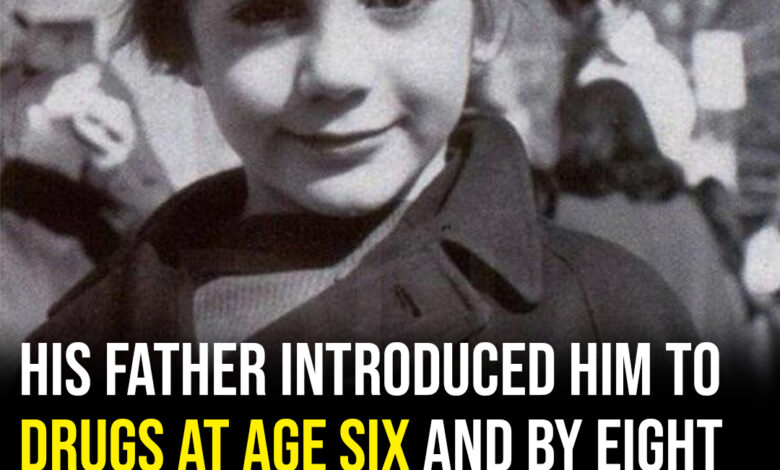
His father struggled with addiction, and in a decision that would later haunt him, he introduced his young son to drugs. What might have seemed like a careless moment at the time became the beginning of a pattern that would follow Robert for years. It blurred the line between bonding and destruction, shaping how he understood connection and escape.
As he grew into his teenage years and early adulthood, his career began to gain real momentum. In the 1980s, he became part of a rising group of young actors gaining attention across Hollywood. Films like Weird Science and Less Than Zero put him on the map, the latter eerily reflecting the very struggles he was living through off-screen.
From the outside, it looked like he was on the path to major success.
But internally, things were unraveling.
His personal life became increasingly unstable. Relationships were strained under the weight of addiction, including his well-known relationship with Sarah Jessica Parker, who later spoke about the difficulty of trying to support someone caught in that cycle. She offered him stability where she could, but addiction doesn’t bend easily to good intentions.
By the mid-1990s, the cracks had turned into fractures.
His name started appearing in headlines for all the wrong reasons—arrests, rehab stints, erratic behavior. One incident involved him being pulled over under suspicion of driving under the influence, where authorities reportedly found illegal substances and a firearm. Another moment shocked the public when he wandered into a stranger’s home, disoriented, and fell asleep in their bed.
It was no longer a private struggle.
It was public, messy, and spiraling.
Eventually, it caught up with him in a way that couldn’t be ignored. Legal troubles led to prison time—an experience he later described as one of the most dangerous and sobering periods of his life. For many watching from the outside, that seemed like the end of the story. Hollywood doesn’t always leave room for second chances, especially not after repeated setbacks.
At that point, it looked like his career was over.
But that wasn’t where his story ended.
The turning point came in the early 2000s. It wasn’t dramatic or instantaneous. There was no single moment that fixed everything. Instead, it was a slow, deliberate shift—one decision at a time.
By 2003, he had achieved sobriety.
That alone was a massive milestone, but it was only the beginning. Rebuilding a life takes more than just stopping destructive habits. It requires consistency, discipline, and a willingness to face everything you’ve tried to avoid.
He began working again, cautiously at first. Smaller roles, careful steps, rebuilding trust in an industry that had every reason to doubt him. Slowly, project by project, he proved that he was reliable again. That he could show up, deliver, and stay steady.
At the same time, his personal life began to stabilize. He remarried, started building a stronger foundation at home, and shifted his focus toward something he had never fully experienced before—consistency.
But even then, life didn’t stop testing him.
When his eldest son later faced addiction struggles of his own, Robert found himself on the other side of a situation he knew all too well. Instead of denial or distance, he responded with a perspective shaped by experience. He understood the weight of that battle, and more importantly, the possibility of overcoming it.
He didn’t frame it as a failure.
He framed it as another chance at recovery.
Then came the role that changed everything.
When he was cast as Tony Stark in Iron Man, it wasn’t just another job—it was a risk. At the time, he wasn’t the obvious choice for a franchise that would eventually become one of the biggest in cinematic history. But that risk paid off in a way few could have predicted.
The performance was electric. Charismatic, layered, and undeniably compelling.
And just like that, everything shifted.
The role didn’t just revive his career—it launched him into a new stratosphere. Film after film, he became a central figure in one of the most successful franchises ever created. His name alone began to carry weight at the global box office.
He went from being someone the industry hesitated to trust…
To one of the highest-paid actors in the world.
Awards followed. Recognition followed. But what made his story resonate wasn’t just the success—it was the contrast.
He had been at the bottom.
Addiction. Arrests. Prison.
And he had climbed back up, step by step, without erasing where he came from.
That’s what makes his journey different. It isn’t a story about perfection or instant redemption. It’s about persistence. About choosing, again and again, to move forward even when the past doesn’t disappear.
Today, his life stands as proof that even the most difficult chapters don’t have to define the ending.
Redemption isn’t a single moment.
It’s a series of decisions—quiet, consistent, and often made when no one is watching.
And in his case, those decisions didn’t just rebuild a career.
They rewrote an entire life.