I Returned to Our Bench Alone After 60 Years, But the Woman Waiting There Knew My Wife Better Than I Ever Did
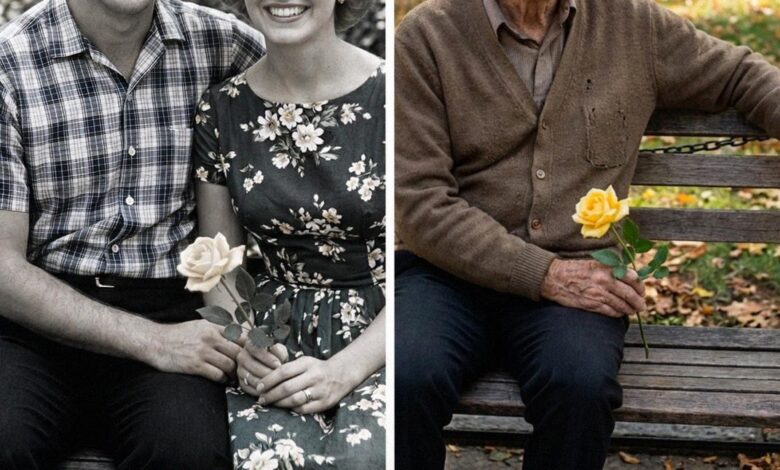
For sixty years, we never missed a Sunday.
Three o’clock. The same bench. The same willow tree in Centennial Park.
It wasn’t something we planned at first. It just became ours over time. A place where life unfolded in quiet conversations—where we talked through decisions, argued when we had to, and sat in silence when words weren’t necessary. Some of the most important moments of our lives didn’t happen at home or in crowded rooms.
They happened on that bench.
My name is James. I’m eighty-four years old.
And three years ago, I lost my wife, Eleanor.
After she passed, I told myself I would never go back there alone.
It wasn’t just a place. It was everything we had built together in small, ordinary moments. Going back without her felt like admitting that chapter had truly ended. I wasn’t ready for that.
So I stayed away.
I kept the house exactly as it was. Her chair still across from mine at the kitchen table. Her things untouched, as if leaving them there might somehow keep her close.
But yesterday was her birthday.
And something shifted.
I woke up earlier than usual, sat at the table longer than I needed to, staring at the empty space where she used to sit. By midday, I felt restless in a way I couldn’t ignore.
It wasn’t a thought.
It was a pull.
Within the hour, I was out the door.
I stopped at a small flower stand and bought a single yellow rose. Eleanor always preferred yellow. She used to say it felt more honest than red—less dramatic, more real.
The taxi ride felt longer than it should have. I sat there holding the rose, rehearsing nothing, just trying to steady myself for something I couldn’t quite define.
When we arrived, I didn’t get out right away.
I sat there for a minute.
Then I stepped out.
The park hadn’t changed. Same paths. Same trees. Same distant sounds of people moving through their day. It was all familiar, and yet everything felt different.
Each step toward the bench felt heavier than the last.
When I reached the clearing, I stopped.
Because the bench wasn’t empty.
A young woman was sitting there.
At first, I thought I had made a mistake. That I had come to the wrong place. But I hadn’t. I knew every detail of that spot.
That was our bench.
I stepped closer.
And then I saw her clearly.
For a moment, my mind refused to process what I was looking at.
She looked exactly like Eleanor.
Not similar.
Not vaguely familiar.
Exactly.
The same auburn hair. The same freckles. The same green eyes that had been part of my life for decades. Even the dress she wore—green, floral—looked like the one Eleanor had worn the day we met.
My chest tightened.
I whispered without thinking, “No… that’s not possible.”
The woman turned toward me.
She didn’t look surprised.
If anything, she looked like she had been waiting.
She stood up slowly and extended her hand.
“You must be James,” she said calmly. “I’m Claire.”
I shook her hand, but I couldn’t find the words.
“Please,” she said gently. “Sit.”
She reached into her bag and pulled out an old envelope, worn at the edges from time.
“This was meant for you.”
My hands started shaking before I even touched it.
I knew the handwriting immediately.
Eleanor’s.
I had seen it for over sixty years. There was no mistaking it.
But the date on the envelope stopped me.
It wasn’t recent.
It had been written decades ago.
I looked up at Claire, ready to ask a dozen questions at once, but she didn’t speak. She just watched me, as if she already knew what I was about to read.
I opened the envelope carefully.
The paper inside felt heavier than it should have.
And as I began reading, I could hear Eleanor’s voice in every word.
“My dear, if you’re reading this, then I didn’t get the chance to tell you myself…”
I paused, my grip tightening.
“There’s something from long before we met. I should have told you. I wanted to. But I didn’t know how without changing everything.”
I kept reading.
“When I was seventeen, I found out I was pregnant.”
The world narrowed.
The words didn’t make sense at first.
I read them again.
Then continued.
She wrote about a relationship before me. About how it ended. About finding out she was pregnant afterward. About her parents helping her make a decision.
She gave the baby up.
But she didn’t walk away.
“I stayed close,” she wrote. “I helped quietly. I told myself it was the right thing. But I never stopped thinking about her.”
My hands trembled as I lowered the letter.
I looked at Claire.
Now, I could see it.
Not just Eleanor.
Something younger.
Something connected.
“Who are you?” I asked.
She didn’t hesitate.
“I’m Claire,” she said softly. “I’m Eleanor’s daughter.”
The words didn’t hit all at once.
They settled slowly, piece by piece.
“She stayed in my life,” Claire continued. “Through the family that raised me. She helped more than anyone knew. She never tried to take me away—she just stayed… close.”
She handed me a photograph.
A young girl standing in a backyard, holding a book too big for her hands. And in the background, slightly out of focus, was Eleanor.
Not part of the moment.
But still there.
Claire showed me more—letters, small gifts, pieces of a connection that had existed quietly for decades.
“She never gave me her address,” Claire said. “I think she didn’t want to cross a line.”
I sat there, trying to understand a version of my wife I had never known.
“Why now?” I asked.
Claire looked at the bench.
“She told me about this place in her last letter,” she said. “I only got it recently. I’ve been away for work. But today… it’s her birthday. I came hoping I might find you here.”
I looked around.
The same bench. The same tree.
The same place where I thought I had known everything about her.
But I hadn’t.
“I need time,” I said quietly.
Claire nodded.
She handed me her number.
“I’ll be here,” she said.
I left that day with more questions than answers.
But something had shifted.
Over the next few days, I reread the letter. I thought back through our life together, through moments I had never questioned before.
Small absences.
Unexplained visits.
Details that had seemed insignificant at the time.
Now they meant something else.
Not betrayal.
Just a part of her life she didn’t know how to share.
On the third day, I called Claire.
“Sunday,” I said. “Three o’clock.”
“The bench?” she asked.
“Yes.”
When I arrived, she was already there.
We sat side by side, leaving a small space between us.
“I read the letter again,” I said. “I’ve been trying to understand.”
“She didn’t want to hurt you,” Claire said.
“I know.”
And I did.
We sat in silence.
The same kind of silence Eleanor and I used to share. Not empty. Just… present.
Then I turned to Claire.
“Tell me about your life.”
She looked surprised.
Then she began.
And I listened.
Not as someone holding onto the past.
But as someone stepping into something new.
By the time we stood up, the sun had shifted low in the sky.
“Same time next week?” she asked.
I thought about it.
Then nodded.
“Yes. Same time.”
As we walked away together, I realized something I hadn’t expected.
I didn’t feel alone on that bench anymore.
Not because the past had come back.
But because it had opened into something I never saw coming.