The $25 Miracle, How Lynda Carter Overcame Poverty and Sexist Producers to Become the World’s Most Iconic Wonder Woman
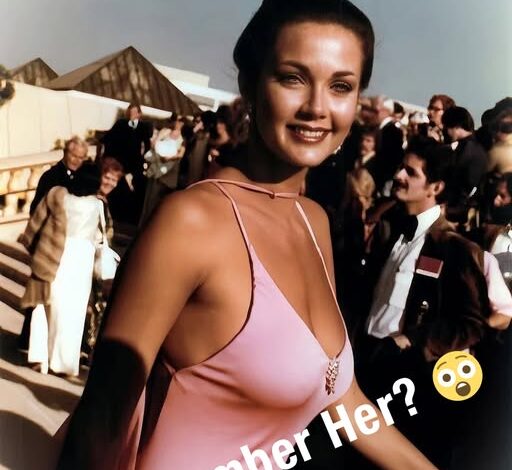
In 1975, female action heroes were virtually nonexistent in Hollywood. While the women’s liberation movement was marching through the streets of New York, the television landscape was still a male-dominated fortress. Enter Lynda Carter—a 6-foot-tall beauty from Phoenix, Arizona, who would not only break the glass ceiling but do so while wearing a tiara and the American flag. Today, her legacy as the definitive Wonder Woman remains untouched, but the road to the Lasso of Truth was paved with financial desperation and behind-the-scenes battles.
Born in 1951, Carter was a natural performer who made her television debut at just five years old. However, her true passion was music. By fifteen, she was singing in local pizza parlors for $25 a weekend, eventually dropping out of Arizona State University to pursue a singing career that never quite caught fire. She pivoted to the beauty pageant circuit, winning Miss World USA in 1972, though she later described the experience as “painful” and “cruel.”
By the early ’70s, Carter was struggling in Los Angeles. She had taken acting classes and landed minor guest spots, but the competition was fierce. On the day her manager called to tell her she had beaten out hundreds of others for the role of Diana Prince, Lynda Carter had exactly $25 left in her bank account. She was days away from giving up and moving back to Arizona. Instead, she became the face of a cultural revolution.
The production of Wonder Woman was a minefield of 1970s gender politics. Producers were terrified that Diana Prince’s feminist rhetoric would “dangerous” and turn off viewers. Carter, however, refused to be a silent mannequin. When producers insisted on using a male stunt double with a hairy chest and bulging muscles for action sequences, Carter was livid. To prove a point, she performed a terrifying stunt herself—hanging from a flying helicopter—until the studio finally agreed to hire a female stunt professional.
Despite being voted “The Most Beautiful Woman in the World” in 1978, Carter fought hard against being sexualized. She famously hated the best-selling poster of her in a tied-up crop top, feeling uncomfortable that her image was “tacked up in men’s bathrooms.” She made a conscious choice to play Wonder Woman not as a pin-up, but as a sister and a best friend. She wanted women to want to be her, not just for men to admire her.
After the series ended in 1979, Carter’s life took several dramatic turns. She found immense professional success but struggled privately during an “unfortunate” first marriage to talent agent Ron Samuels, which contributed to a battle with alcoholism. Everything changed in 1984 when she met attorney Robert A. Altman. It was love at first sight, and Carter made the bold decision to leave the Hollywood limelight behind.
Moving to Potomac, Maryland, she transitioned from superhero to devoted mother, raising two children, James and Jessica. With Robert as her “knight in shining armor,” she achieved over 20 years of sobriety and built a life of genuine substance away from the cameras. Though she suffered a devastating blow with Robert’s passing in 2021, Carter remains a vibrant force in the industry, recently appearing in Wonder Woman 1984. At 72, Lynda Carter remains a “timeless” icon—a woman who proved that true strength isn’t just about super-speed or golden bracelets, but the courage to stand up for yourself when the world tries to keep you small.