What a Purple Fence Symbolizes?!
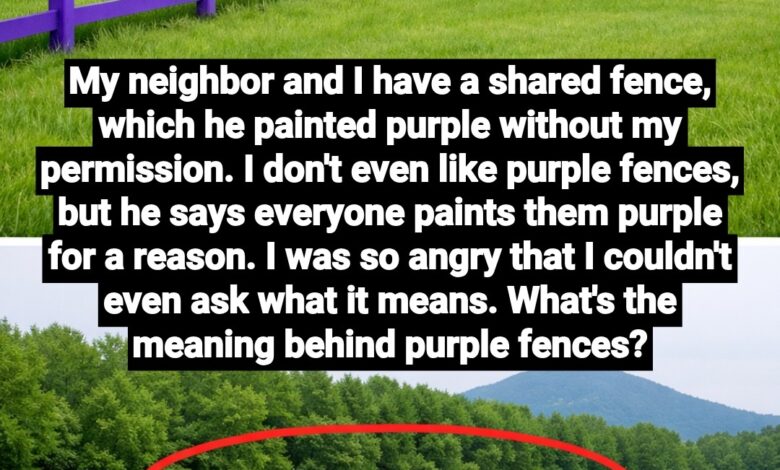
The landscape of property ownership is often defined by physical barriers—looming stone walls, chain-link fences, or the classic white picket. However, if you find yourself wandering through the American countryside or a sprawling rural estate, you might encounter a boundary marker that feels strangely out of place: a fence post or a tree trunk splashed with a vibrant, unmistakable shade of purple. While it may look like the result of a whimsical DIY project or a stray bit of graffiti, that grape-colored stripe is actually a sophisticated legal shorthand. In the world of land management, purple is the color of “No Trespassing.”
The transition from traditional signage to the “Purple Paint Law” was born out of pure pragmatism. For decades, landowners relied on “Private Property” signs to protect their boundaries. Unfortunately, physical signs are notoriously high-maintenance; they fade in the sun, rust in the rain, or become enticing targets for vandals and target practice. A single winter storm can strip a property of its legal warnings. In response, several states—beginning with Arkansas in the 1980s and expanding to nearly a dozen others, including Texas, Florida, and Missouri—legalized purple paint as a permanent, weather-resistant alternative that carries the same weight as a formal sign.
Choosing purple wasn’t an accident of aesthetics. The specific hue is often referred to as “No-Hunting Purple.” It was selected because it is a color that stands out sharply against the browns and greens of the natural world, yet it remains identifiable even to individuals with red-green color blindness. This ensures that the warning is accessible to almost everyone, regardless of their visual acuity or the time of day. When a hiker, hunter, or fisherman sees that violet streak, the message is immediate and legally binding: you are standing at a private threshold.
However, invoking the protection of the Purple Paint Law requires more than just a haphazard bucket of paint; there is a specific geometry to the warning. To be legally recognized, the markings must be vertical stripes, typically at least one inch wide and eight inches long. Placement is equally critical. The paint must be applied between three and five feet off the ground—high enough to remain visible above summer brush and winter snow, but low enough to meet the eye level of a person approaching on foot. Furthermore, these marks must be repeated at regular intervals, usually every 100 feet, to ensure that no matter where someone encounters the property line, the “No Trespassing” mandate is clear.
The effectiveness of this system lies in its simplicity and cost-efficiency. For a landowner with hundreds of acres, maintaining a perimeter with paint is far more sustainable than replacing hundreds of plastic or metal signs. It also offers a layer of protection for the environment, as painting a tree is often less intrusive than nailing a sign into its bark.
Before you decide to paint your own perimeter, it is vital to remember that these laws are not universal. While the trend is growing, the legal weight of purple paint varies significantly by jurisdiction. In some states, it is a primary warning; in others, it is merely a secondary reinforcement of physical signs. Regardless of the local statute, the cultural message has become widely understood. If you are out exploring and come across a splash of purple on a fence or a forest boundary, it is a clear signal to turn back. That single streak of paint is a silent sentinel, communicating a desire for privacy and a respect for the land that transcends the need for words.