US National Counterterrorism Director Resigns Over Iran War!
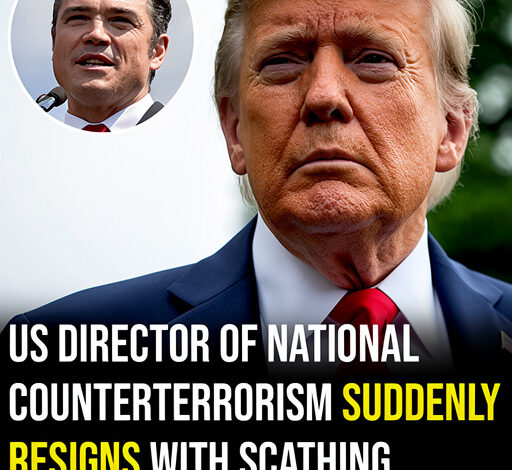
The landscape of American intelligence was fundamentally altered on Tuesday when Joe Kent, the Director of the National Counterterrorism Center (NCTC) and a staunch ally of the administration, resigned in a scathing public protest. Kent, a retired Green Beret with deep roots in the Trump political movement, stepped down specifically to condemn the ongoing U.S. military conflict in Iran. His departure marks a significant rupture within the national security apparatus, as one of the administration’s most loyal veterans directly challenged the premise of the current war.
In an emotionally charged resignation letter addressed to President Donald Trump, Kent argued that the justification for the invasion was fabricated. “I cannot in good conscience support the ongoing war in Iran. Iran posed no imminent threat to our nation,” Kent wrote. He further alleged that the United States had been maneuvered into the conflict by external interests, stating plainly that the war was initiated due to “pressure from Israel and its powerful American lobby.” Kent’s rhetoric drew direct parallels to the 2003 invasion of Iraq, which he characterized as a catastrophic error driven by similar tactical deceptions that cost thousands of American lives.
Kent’s background as a decorated combat veteran adds a layer of gravity to his dissent. Over a twenty-year military career, he served eleven combat deployments as an Army Special Forces operator before transitioning into the CIA and intelligence leadership. His connection to the human cost of Middle Eastern conflict is deeply personal; his wife, Navy cryptologist Shannon Kent, was killed in a 2019 terrorist bombing in Syria. For Kent, the war in Iran represents a betrayal of the “America First” foreign policy that he believed the administration originally championed—a policy he argued was designed to avoid the “trap” of endless Middle Eastern wars that drain national wealth and resources.
As the head of the NCTC, Kent oversaw the primary hub for analyzing terrorist threats and managed the government’s central database of known and suspected terrorists. His resignation highlights a growing friction between career intelligence professionals and political directives. Interestingly, Kent’s own tenure was not without controversy; reports suggest that prior to his break with the administration, he had pressured his own analysts to align their assessments with White House narratives. However, by March 2026, Kent’s tolerance for the administration’s trajectory reached a breaking point, leading him to conclude that the current path serves “no benefit to the American people.”
The resignation comes at a time of intense scrutiny over the integrity of U.S. intelligence. The administration has faced criticism for firing veteran analysts whose objective assessments regarding regional threats clashed with the executive branch’s claims of an “imminent” Iranian danger. Kent’s letter explicitly accused the administration of being misled by foreign influence, suggesting that the strategic autonomy of the United States has been compromised. “Until June 2025, you understood that the wars in the Middle East were a trap,” Kent reminded the President, pointing to a perceived shift in the administration’s stance that occurred roughly nine months prior to his departure.
Joe Kent’s immediate exit leaves the NCTC without a director during an active war, creating a vacuum in a critical sector of the intelligence community. His decision to go public underscores a profound disillusionment with the direction of U.S. foreign policy and serves as a high-profile warning about the influence of lobbying on military decision-making. By stepping down, Kent has positioned himself as a vocal critic of the very administration he helped build, asserting that the cost of American lives can no longer be justified by the current objectives in Tehran.