Why Tying a Ribbon to Your Luggage Could Cause Problems, According to Baggage Handlers
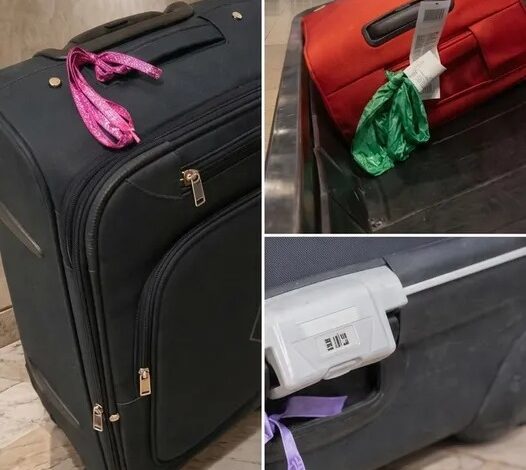
The seasoned traveler knows the sinking feeling of standing at a baggage carousel, watching a parade of identical black hardshell suitcases glide past, none of which belong to them. In an effort to bypass this frustration, many have adopted the “ribbon hack”—tying a bright neon strip of fabric or a distinctive scarf to the handle of their luggage. While this DIY beacon makes a bag easy to spot from fifty paces, airport baggage handlers and logistics experts are increasingly sounding the alarm. What seems like a clever organizational shortcut is, in reality, a primary catalyst for mechanical failures, missed connections, and damaged property within the bowels of the modern airport.
The journey of a suitcase from the check-in counter to the belly of an aircraft is not a manual one. It is governed by a high-speed, automated infrastructure consisting of miles of conveyor belts, vertical sorters, and high-resolution laser scanners. These systems are calibrated to process thousands of bags per hour with surgical precision. However, these machines are designed to interact with smooth, predictable shapes. When a traveler attaches a loose ribbon, a dangling yarn tassel, or a floppy fabric scarf to a handle, they are introducing a foreign object into a high-tension mechanical environment.
Baggage handlers explain that these decorative additions are prone to getting snagged in the gaps between conveyor belts or tangled in the motorized rollers. When a ribbon catches, one of two things happens: either the ribbon is ripped off—often taking the luggage handle or the zipper with it—or the entire conveyor line grinds to a halt. A single caught ribbon can cause a “baggage jam” that backs up hundreds of suitcases, leading to a cascade of delays that can result in bags failing to reach their designated flight before the cargo doors close.
Beyond the physical risk of entanglement, these decorations pose a significant digital hurdle. Modern sorting systems rely on Omni-directional scanners that read the 10-digit Barcoded Bag Tag (BTP) attached at check-in. These scanners are incredibly fast, but they are easily confused by visual “noise.” A fluttering ribbon can physically obscure the barcode at the exact millisecond the laser passes over it. Furthermore, if a traveler has neglected to remove old stickers or “bingo tags” from previous trips, the system may receive conflicting data. If the machine cannot achieve a 100% confident read, the bag is diverted to a manual sorting area. This “rejection” adds thirty to sixty minutes to the bag’s processing time. In tight layovers, this delay is the difference between your luggage arriving with you or spending the night in a hub city halfway across the globe.
Interestingly, it isn’t just the exterior of the bag that can trigger the automated systems to flag a suitcase for inspection. Professional handlers and TSA agents point out that certain organic materials have a density that mimics restricted items under X-ray or CT imaging. A classic example is marzipan. This dense, almond-paste confection has a chemical consistency that can appear similar to some plastic explosives on a security monitor. While traveling with sweets is perfectly legal, packing large quantities of dense food items often results in a “checked bag search” (CBS). This involves a physical opening of the suitcase, which can lead to disorganized packing or, in rare cases, a failure to re-secure the bag properly if the traveler used non-TSA-compliant locks.
To navigate the complexities of modern air travel without losing your belongings to the machinery, industry veterans suggest a shift in strategy. The goal remains the same—easy identification—but the execution must be “low-profile.” The most effective way to distinguish a bag is to move away from the “sea of black” entirely. Investing in a suitcase with a bold, integrated pattern or a non-standard color like burnt orange, forest green, or cobalt blue provides the same visual benefit as a ribbon without any of the mechanical risks. Because the color is part of the suitcase’s structural shell, there is nothing for a conveyor belt to snag.
If purchasing new luggage isn’t an option, travelers can use high-contrast adhesive elements. Specialized luggage skins or heavy-duty vinyl stickers that lay flat against the surface of the bag provide a unique visual signature that scanners will simply ignore. Another professional tip involves the use of “handle wraps”—neoprene sleeves that Velcro tightly around the handle. Because they don’t have dangling ends, they provide a pop of color and a comfortable grip while remaining “mechanically invisible” to the airport’s sorting hardware.
The physical orientation of the bag on the belt also plays a crucial role in its survival. Handlers recommend placing suitcases on the conveyor with the wheels facing upward or toward the side. When a bag travels “wheels down,” the wheels can drop into the small gaps between belt segments, causing the bag to tumble or stop abruptly. This jarring motion is often what causes wheels to snap off or handles to crack. By placing the bag on its largest, flattest surface, you ensure it glides through the sorter with minimal friction.
The evolution of airport technology has made travel faster and more efficient, but it has also made the system less forgiving of “analog” solutions like ribbons and scarves. The convenience of spotting a neon pink bow at the carousel is quickly outweighed by the frustration of a broken zipper or a bag that never left the origin airport. By streamlining the exterior of your luggage, removing the ghosts of past travels in the form of old stickers, and being mindful of how internal contents might appear on a scanner, you significantly increase the odds of a seamless transit.
Ultimately, the best piece of luggage is the one that moves through the system unnoticed by the machines but is instantly recognizable to its owner. In the high-stakes world of international logistics, simplicity is the ultimate sophistication. Swapping out a dangling ribbon for a brightly colored luggage strap that sits flush against the bag, or choosing a suitcase with a unique texture, ensures that your gear remains safe, your flight stays on schedule, and your vacation begins the moment you land, rather than at the “Lost and Found” desk.