Debate Inside the White House Over Iran Conflict!
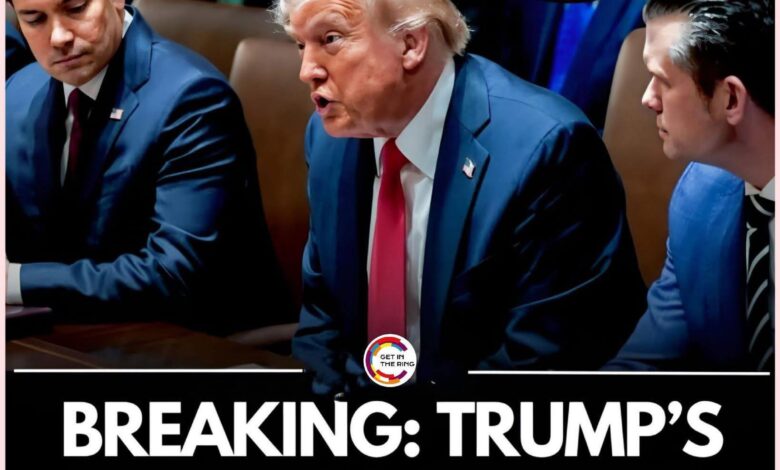
The corridors of the West Wing, typically a theater of choreographed confidence, have become the setting for a profound ideological struggle as the administration grapples with the future of the conflict in Iran. As of March 11, 2026, the initial phase of military engagement has passed, leaving in its wake a devastated Iranian defensive infrastructure and a White House divided over what comes next. While the public rhetoric remains steadfast, reports from internal circles suggest that a significant rift has formed between senior advisors. One faction is now vigorously advocating for an immediate pivot toward a diplomatic off-ramp, arguing that the primary strategic objectives of the campaign have already been achieved with surgical precision.
This growing internal advocacy for restraint is rooted in the assessment that the United States has successfully degraded Iran’s offensive capabilities. Over ten days of high-intensity strikes, the coalition forces have neutralized key missile launch sites, crippled naval assets that threatened regional maritime security, and dismantled command-and-control centers. To the pragmatists within the administration, the mission’s core goal—the substantial erosion of Iran’s power projection—is a completed task. These officials argue that continued kinetic operations offer diminishing returns. They fear that a prolonged military campaign will eventually cross a threshold where the tactical benefits are outweighed by the risk of inviting a desperate, asymmetric escalation from a cornered adversary.
The concerns fueling this push for a ceasefire are not merely military, but deeply economic. Global financial markets have entered a period of extreme volatility, with the shadow of a prolonged conflict looming over every trading floor from New York to Tokyo. Energy traders are particularly fixated on the Strait of Hormuz, a narrow but vital artery through which a fifth of the world’s petroleum flows. Even the rumor of a disruption to this passageway sends shockwaves through fuel prices, threatening to stall the global economic recovery. Proponents of a diplomatic approach warn that a stray missile or a calculated blockade in the Strait could trigger an energy crisis that would eclipse the shocks of the 1970s. For an administration that has staked its reputation on economic strength, the prospect of surging domestic gas prices and a broad market downturn is a powerful deterrent against further escalation.
President Trump’s role in this debate is, as always, central and complex. While he has been the face of the “Fire and Fury” doctrine, he has also dropped significant hints that the window for a ceasefire is open. However, he has made it clear that any decision to halt the strikes will not be a solitary American endeavor. The President has emphasized that any shift toward de-escalation must be made in close consultation with Israeli Prime Minister Benjamin Netanyahu. This underscores the unprecedented level of U.S.-Israel security coordination, particularly concerning the common threat of a nuclear-capable Iran. The administration is balancing its own domestic and economic interests with the security requirements of its most critical regional ally, creating a delicate diplomatic dance where the next step is never entirely certain.
Beyond the walls of the White House, the pressure for restraint is mounting on a global scale. European allies, who are more directly exposed to Middle Eastern instability and energy price hikes than the United States, have been increasingly vocal in their calls for a diplomatic resolution. Leaders in London, Paris, and Berlin are reportedly urging Washington to take the “win” and transition to a position of strength at the negotiating table. They fear that a wider regional war would lead to a massive migration crisis and economic contagion that could fracture the European Union’s internal stability. These international voices are joining the chorus of domestic advisors who believe that the time for “Maximum Pressure” through military means has yielded its maximum result.
The situation is further complicated by the domestic political climate. In Congress, voices like Maxine Waters have reignited the debate over presidential war powers, arguing that the administration is treading on unconstitutional ground by conducting an extended air campaign without a formal declaration of war. This legal and political pressure adds another layer of urgency to the White House’s deliberations. If the conflict continues to drift toward an open-ended engagement, the administration risks a bruising constitutional showdown that could overshadow the military successes on the ground.
As the situation remains fluid, the coming days will serve as a pivotal turning point in modern history. The world is watching to see if the administration can pivot from the “warrior” stance that characterized the first week of the conflict to the “deal-maker” persona that the President often champions. A shift toward diplomacy would require a sophisticated balancing act: maintaining enough military pressure to keep Iran at the table while offering enough of a reprieve to prevent a regional collapse. The stakes could not be higher. A successful transition to diplomacy could lead to a new regional security framework that ensures the long-term stability of energy routes and the safety of allies. Conversely, a failure to de-escalate—whether due to internal indecision or Iranian provocation—could result in a conflict that redraws the map of the Middle East in blood and fire.
The uncertainty of the current moment is palpable. Energy markets are currently pricing in the “risk of the unknown,” with every headline regarding White House meetings causing instant fluctuations in oil futures. This is a confrontation where one rash order, one misinterpreted intelligence report, or one successful diplomatic overture will define a generation. The core of the debate inside the White House is essentially a question of legacy: will this administration be remembered for a decisive victory that paved the way for a lasting peace, or for an escalation that spiraled out of control?
Ultimately, the resolution of this internal debate will depend on which side can most convincingly present its vision of the “end game.” For the hawks, the mission is not over until the regime’s ability to threaten its neighbors is completely extinguished. For the pragmatists, the mission ended the moment the first wave of missiles hit their marks, and every day after is a gamble with the global economy. As the President weighs these competing perspectives, the world waits in a state of suspended animation, hoping for a resolution that preserves both security and stability. The “Maximum Pressure” campaign has reached its apex; the question now is whether the descent back toward peace will be a controlled landing or a chaotic fall.