My Aunt Fought for Custody of My Brother, But I Knew Her True Motives!
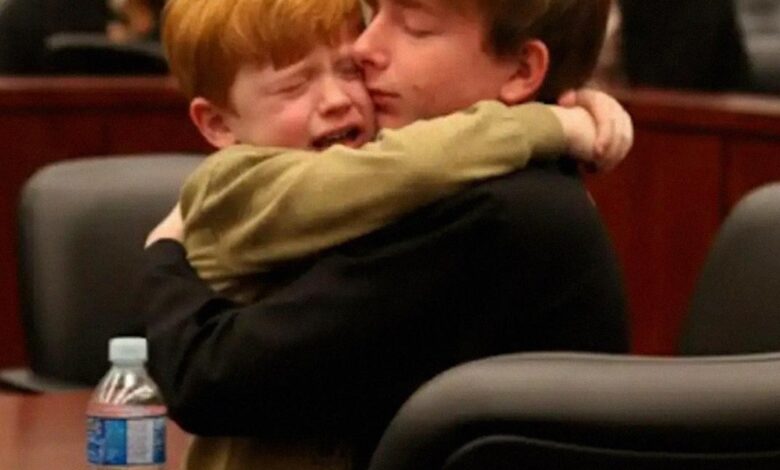
The transition from childhood to adulthood is rarely a slow, graceful climb; for me, it was a violent shove off a cliff. On the day I turned eighteen, I didn’t celebrate with a party or a newfound sense of freedom. Instead, I stood in a cemetery, dressed in black, burying both of my parents. The weight of the world had settled onto my shoulders in a single afternoon, but the heaviest burden wasn’t the grief or the sudden responsibility of a household—it was the terrified six-year-old boy clutching my hand. My brother, Max, was too young to understand the finality of the dirt hitting the caskets. He still thought our mother was away on a long trip, and he kept looking toward the cemetery gates as if expecting her car to pull through at any moment.
As we stood over the fresh graves, I knelt down and looked Max in the eyes. I whispered a promise that would become my entire purpose: I would never let anyone take him. I didn’t care that I was still legally a teenager or that I had no idea how to navigate the world alone. I was his brother, and now, I was his world. But as it turned out, the shadows of the funeral weren’t the only things creeping toward us. My parents were barely gone before the vultures began to circle, and the most dangerous among them wore the face of family.
A week after the funeral, my Aunt Diane and Uncle Gary invited us to their home. Their kitchen was a masterpiece of suburban perfection, all white marble and polished chrome, smelling of expensive candles. Diane handed me a mug of cocoa with a smile so practiced it felt like a mask. She spoke in hushed, melodic tones, the kind people use when they want you to think they’re fragile, but beneath her words was a steel trap. She told me I was “just a kid,” that I had no job, no degree, and no way to provide the “routine and guidance” Max deserved. Gary chimed in like a rehearsed echo, talking about the importance of a “real home.”
The hypocrisy was stifling. These were the people who had skipped Max’s birthday parties for three years and prioritized cruises over family holidays. They didn’t want Max because they loved him; they wanted him for a reason I couldn’t quite name yet, but my gut was screaming at me that their concern was a strategic opening move in a very different game. When they filed for custody the next morning, I realized I was no longer just a brother. I was a combatant in a war for Max’s future.
I didn’t waste a second. I walked into my college registrar’s office and withdrew from my freshman year. Education was a luxury that required time I didn’t have. I needed to build a fortress around my brother, and that required money and stability. I picked up two jobs: delivering groceries by day and cleaning law offices by night. We moved out of the spacious family home we couldn’t afford and into a tiny, shoebox studio apartment. It was cramped, smelling of industrial floor cleaner and the cheap pizza we ate for dinner, but Max never complained. He called it “warm and tiny,” and his resilience was the only thing that kept me from collapsing under the pressure.
The battle turned ugly when the social worker arrived for a home visit. Diane had launched a smear campaign, planting seeds of doubt that I was leaving Max alone, screaming at him, and even physically abusing him. The accusations were so vile they made my vision blur. Doubt is a poison in a courtroom, and Diane was a master chemist. However, she had overlooked one thing: the power of a quiet witness. Our neighbor, Ms. Harper, a retired teacher with a spine of iron and a heart of gold, stood up for us. She told the judge that I was raising Max with more devotion than most parents show in a lifetime. Her testimony bought us a lifeline—supervised visitation for Diane instead of an immediate change in custody.
Every Wednesday, the dread would return as I dropped Max off at Diane’s house. One evening, I arrived early and heard Max crying. He told me Diane had tried to force him to call her “Mommy,” threatening to withhold his dessert if he didn’t. That was the spark that changed my defense into an offense. I began to pay closer attention, and eventually, I found myself standing outside Diane’s kitchen window one evening, listening to a speakerphone conversation.
The truth was uglier than I had imagined. Diane and Gary weren’t looking for a son; they were looking for a paycheck. They were discussing a $200,000 trust fund our parents had set up for Max’s future. Diane spoke of a new car and a vacation to Hawaii, while Gary casually mentioned sending Max to a boarding school once they secured the money because he was a “handful.” My blood ran cold, but my hands stayed steady as I hit record on my phone.
At the final custody hearing, Diane was the picture of maternal concern, even bringing a tin of homemade cookies for the bailiff. She looked like a saint, but the audio recording we played for the judge revealed the sinner underneath. The courtroom fell silent as her own voice echoed through the speakers, plotting to use a grieving child as a pawn for financial gain. I watched the judge’s face turn from polite neutrality to cold disgust. The cookies remained untouched on the table, a silent testament to Diane’s failed deception.
The judge’s ruling was swift and severe. Diane and Gary were reported for attempted fraud and stripped of any claim to Max. I was granted full legal guardianship, along with a recommendation for housing support in light of my “exceptional effort.” As we walked out of that courthouse, the Arizona sun felt warmer than it had in months. Max held my hand with a grip that said he finally felt safe.
It has been two years since that day. Life isn’t easy, but it’s ours. I work full-time while pursuing my degree online, and Max is a thriving second-grader who thinks I’m a superhero. We still live in a small space, and we still have to count every penny, but we are free from the vultures. I learned that family isn’t about blood or big houses; it’s about the person who stays when everyone else leaves. I stood at my parents’ graves and promised Max I would never let anyone take him. I kept that promise, and in the process, I found out that the strength to fight for someone you love is the only thing that truly makes you an adult. We are safe, we are together, and most importantly, we are home. Would you like me to help you draft a similar story about a different family dynamic or perhaps explore a specific theme like resilience?