My Sister Gave Up Her Adopted Daughter When She Became Pregnant with Her Real Child, but She Did Not Expect Who Knocked on Her Door!
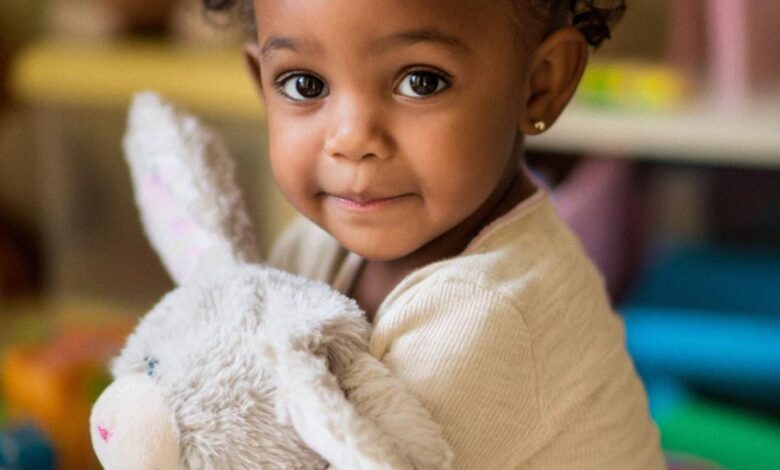
I used to think I knew my sister the way you know weather patterns in a hometown you’ve lived in forever. Predictable. Familiar. Sometimes annoying, sometimes comforting, always the same sky.
Then one dinner blew that illusion to pieces and forced me to choose what kind of person I was going to be.
My name is Megan. I’m thirty-two, I live in Portland, and I work from home as a freelance graphic designer. My life is quiet in the best way—morning coffee that goes cold because I forget it exists, long walks when my eyes start burning from screens, and a shameful devotion to used bookstores that smell like paper and dust and time. I’m not married. I don’t have kids. In my family, that made me “the steady one,” the one who shows up with a calm voice and a plan when everyone else spirals.
For years, I used that steadiness on my sister, Claire.
Claire is three years older and has always been the planner. She loves lists, schedules, labels. She could organize a hurricane if you gave her a clipboard. She married David in her late twenties, a quiet, agreeable man who rarely disagreed out loud. Together, they built the kind of life that looks perfect in photos: a tidy house, a decent neighborhood, matching holiday pajamas, the whole curated dream.
But Claire wanted one thing more than anything, and that dream didn’t arrive on schedule.
They tried for almost seven years to have a baby. I watched her get turned inside out by it. IVF rounds that failed. Hormone injections that made her skin bruise and her mood crash. Specialist appointments that cost more than my rent. The slow, ugly erosion of hope.
I lost count of the nights she called me from her bathroom floor, whisper-crying so David wouldn’t hear, saying, “Maybe next time,” like it was a prayer she could force the universe to answer.
Family dinners became performances. We talked about work, weather, movies—anything except the crater sitting in the middle of the table. My parents tried to be supportive in that stiff, awkward way people get when they don’t know what to do with pain. David stayed quiet and rubbed Claire’s shoulder, nodding as if endurance was a substitute for comfort.
So when Claire called me and said, “We’re adopting,” my throat tightened with relief. I cried right there at my desk.
“She’s three,” Claire said, voice trembling. “Her name is Sophie. We’re bringing her home.”
For the first time in years, Claire sounded light. Not desperate. Not strained. Just… hopeful.
When I met Sophie, she was in the living room stacking blocks with fierce concentration, like the blocks were serious business. Soft brown curls, big eyes that watched everything. I knelt beside her and said, “Hi, Sophie. I’m Megan.”
She studied me for a second, then asked, “Are you Auntie?”
It hit me like a small miracle. I laughed, probably too loud. “Yeah,” I said. “I’m Auntie.”
From that moment, it stuck. Every time I visited, Sophie ran into my arms like she’d been waiting for me all day. She tugged my hand to show me her drawings, her stuffed animals, her favorite chair. She called Claire “Mom” without hesitation. She curled beside David on the couch during cartoons. Claire looked like a woman who had finally found her right size in the world.
Our family started breathing again.
And then, six months later, Claire called me one evening and said, breathless, “I’m pregnant.”
For a second I couldn’t speak. After everything, it felt impossible. Then I started laughing and crying at the same time, the way your body reacts when something is too big to hold.
The whole family exploded with excitement. Claire decided to host a celebratory dinner that weekend, of course—candles, flowers, a theme, probably color-coordinated napkins. That was Claire’s language: if it wasn’t organized, it wasn’t real.
I showed up with a gift bag and a cake from a bakery she liked. Her porch looked like a magazine cover. Fairy lights around the railing, a wreath, the warm glow of a perfect home.
But the moment I stepped inside, something felt off.
The floor was spotless. Too spotless. No toys underfoot. No little shoes by the door. No half-finished coloring pages on the coffee table. Sophie’s presence had always been loud in the way children are loud—sticky fingerprints, scattered crayons, tiny chaos that means life is happening.
That chaos was gone.
As I walked toward the dining room, I noticed something taped to the front door. A glossy printed announcement in clean, bold letters:
COMING SOON: OUR FIRST REAL CHILD
I stopped so fast I nearly dropped the cake.
My stomach went cold. I read it again, hoping I’d misunderstood.
Then I turned and saw Claire smiling like she’d hung a congratulatory banner, not a warning.
“Claire,” I said slowly, “where’s Sophie?”
She didn’t blink. She didn’t hesitate. She didn’t even look guilty.
“I gave her back,” she said.
The room went silent in a way that felt physical. Like the air had been slapped out of it.
I stared at her, waiting for the punchline. Waiting for the explanation that made it make sense.
“What do you mean, you gave her back?” I asked, voice rising. “Like she’s a coat that didn’t fit?”
Claire took a sip of water like this was an annoying but manageable conversation. “I’m pregnant, Megan. I can’t do pregnancy and a toddler. And now we’re finally having our own baby. This is different.”
David cleared his throat and muttered something about timing, stress, what was best for “everyone.” My parents looked horrified, but they didn’t speak. They just sat there with the same frozen faces people get at accidents.
I felt heat crawl up my neck. “She calls you Mom,” I said. “She thinks she belongs here.”
Claire shrugged. “She’ll adapt. Kids adapt.”
That sentence landed like something rotten.
“She’s a child,” I snapped. “Not a placeholder. Not a practice run while you waited for the ‘real’ one.”
Claire’s eyes hardened. “Don’t lecture me in my own house.”
Then the doorbell rang.
All heads turned. David looked relieved, like the interruption had saved him. Claire looked annoyed.
A woman stepped inside wearing a gray blazer and the calm expression of someone who has delivered bad news for a living. She carried a folder under her arm like a shield.
“I’m with the adoption agency,” she said, voice professional and controlled. “Claire and David?”
Claire’s face tightened. “Yes. What is this about?”
The woman opened the folder. “We received a report regarding Sophie’s placement. There are serious concerns about how she was removed from your home.”
Claire straightened. “I returned her.”
The woman’s eyes didn’t soften. “You did not return her through the agency. You handed her to a volunteer without legal authority and signed no official surrender documents. That is not a return.”
Claire’s lips parted. No sound came out.
“It is considered abandonment,” the woman continued. “An investigation has been opened. There may be legal consequences. Your future parental rights will be reviewed.”
The word abandonment hit the room like smoke. It clung to everything.
Claire collapsed into a chair, suddenly pale, her perfect dinner party unraveling into reality. David started talking fast, trying to explain, trying to soften it, but the woman didn’t budge. She delivered the next steps, the timeline, the court processes, the possible outcomes. Then she left as calmly as she’d arrived.
I followed her outside into the cold air, my heart beating too hard.
“Where is Sophie?” I asked her.
“In temporary care,” she said. “She’s safe. She’s confused.”
I swallowed. My throat burned. “I want her,” I said. “I want to adopt her.”
The woman studied me for a long moment. “It won’t be quick. Background checks. Home studies. Interviews. Training. It may take months.”
“I don’t care,” I said. “I won’t let her be alone.”
Two days later, I saw Sophie in a beige visitation room that smelled like disinfectant and sadness. She looked smaller than she had in Claire’s living room, like someone had turned down her brightness. She clutched a stuffed bunny so tight its ears were bent.
When she saw me, her eyes widened.
“Aunt Meg?” she whispered, like she wasn’t sure she was allowed to hope.
I dropped to my knees and held her, feeling her little arms lock around my neck.
“I’m here,” I told her. “I’m not leaving.”
The process took seven months. Paperwork that never ended. Classes about trauma and attachment. Home inspections where I worried my apartment was too small, too plain, too imperfect for a child who’d already been tossed aside once. Interviews where strangers asked me if I understood what I was signing up for.
“Yes,” I kept saying. “I understand.”
Because the truth was, I wasn’t signing up. I was already in.
Every night, I lay in bed staring at the ceiling, imagining Sophie waking up in some unfamiliar room asking for her mom, and my chest would tighten until I had to sit up and breathe through it.
When the final court date came, I wore my best blouse like armor. Sophie sat beside me holding my hand, feet swinging above the floor. The judge spoke in a steady voice about permanency and responsibility and the best interest of the child.
Then she signed the papers.
Just like that, Sophie became mine. Officially. Forever.
Sophie is four and a half now. She laughs loudly again. She paints sunflowers and insists they’re “happy flowers.” She sings in the car with the wrong lyrics on purpose because it makes her giggle. She calls me Mommy like she never had to learn a new word at all.
Claire did have her baby—a boy. I saw the announcement online. Perfect photo. Perfect lighting. Perfect caption.
The agency followed through on their investigation. Claire and David will never be allowed to adopt again.
The last time I saw Claire, she stood on the sidewalk outside my building, holding her newborn like a shield. She didn’t look triumphant. She looked tired, smaller than she used to. Her eyes flicked to the window where Sophie’s drawings were taped up like bright flags.
“Is she happy?” Claire asked, voice thin.
“Yes,” I said. “Very.”
Claire nodded once, like she was absorbing a consequence she couldn’t argue out of. Then she walked away.
I don’t wonder anymore if karma exists. Sometimes it doesn’t show up like lightning. Sometimes it’s quieter than that. Sometimes it’s simply love being moved out of careless hands and placed with someone willing to fight for it.
Sophie was never second best. She was never temporary.
She became mine the moment she handed me that blue block and called me Auntie, like she’d already decided I belonged in her life. And I’m going to spend the rest of my life making sure she never doubts she was always enough.