For fun, I took a DNA test and found a brother who said we grew up together
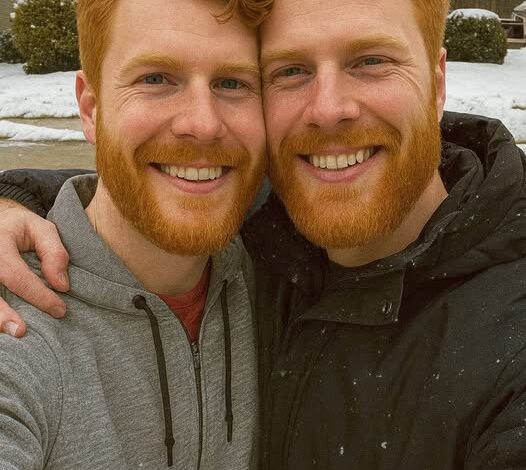
The transition from a life of absolute certainty to one of total upheaval often begins with a single, unremarkable action. For me, Billy, that action was a casual click of a mouse. I was eighteen, freshly standing on the precipice of adulthood, and I decided to gift myself a DNA kit. I wasn’t looking for a lost history; I was looking for a novelty, perhaps a percentage of Viking heritage or a distant Irish ancestor to boast about at parties. I lived in a perfect, unshakable triangle of a family. My parents doted on me with a devotion that bordered on the reverent, recently surprising me with a high-end gaming console just because it was Tuesday. My father would call me his “favorite son,” and my mother would unfailingly correct him with a wink, reminding him I was his “only son.” We were a complete unit, or so I believed.
The email containing my results arrived on a quiet afternoon while the scent of my mother’s Sunday pancakes still lingered in the air. I clicked the link with a heart full of lighthearted anticipation, expecting a pie chart of ethnicities. Instead, I was met with a digital bombshell that obliterated the floor beneath my feet: Close Match Found—Full Sibling: Daniel.
The words didn’t make sense. I refreshed the page, checked the login credentials, and finally called the testing company, certain that a vial had been swapped in a lab somewhere. The representative was polite but unyielding, informing me that their data was verified and 100% accurate. I had a brother. A full brother. The “only son” narrative that had been the bedrock of my identity for eighteen years had just evaporated.
That evening, I waited for my father by the door, the physical evidence of the results clutched in my hand like a weapon. When I confronted him, the transformation in his demeanor was instantaneous. The warmth drained from his face, replaced by a gray, haunted mask of panic. He pulled me aside, glancing over his shoulder to ensure my mother was out of earshot. In a low, urgent hiss, he told me a story of a clandestine affair from years ago—a mistake he claimed my mother knew nothing about. He begged for my silence, insisting that the truth would destroy our family. I nodded, paralyzed by a sense of duty, but my intuition screamed that something was wrong. His fear didn’t look like the guilt of an unfaithful husband; it looked like the terror of a man whose tallest lies were finally toppling.
Unable to rest, I ignored my father’s plea and messaged Daniel. His response was nearly instantaneous, vibrating with an intensity that suggested he had been waiting for this moment for a lifetime. We agreed to meet the following morning at a nondescript café. When I walked in, the recognition was visceral. It was like looking into a mirror that showed a version of myself who had lived a much harder life. He had my eyes, my posture, and a weary smile that suggested he knew secrets I hadn’t even begun to imagine.
“Billy?” he asked, his voice thick with emotion. I sat down, speechless. Daniel began to speak of a past I didn’t recognize—of a lake house, a swing set, and a dog named Scruffy. I stopped him, repeating the “affair” story my father had fed me. Daniel’s expression shifted from hope to a profound, pitying sadness. He leaned across the table and asked a question that chilled my marrow: “Don’t you remember the fire?”
The word triggered nothing but a faint, cold dread. Daniel filled in the blanks of a history that had been surgically removed from my memory. He spoke of an apartment building fire that had claimed the lives of our biological parents while we were young. He claimed that I had saved him from the flames before we were separated by the system. I had been adopted; he had been left behind. I told him he was wrong—that I would know if I were adopted—but the conviction in his voice was a bridge I couldn’t help but cross.
I returned home in a fever of suspicion. The following day, taking advantage of my parents’ absence, I broke into my father’s home office. I bypassed the tax returns and the standard files, digging into a locked drawer at the back of the desk. What I found there didn’t just break my heart; it recontextualized my entire existence as a form of penance.
I discovered old legal reports and insurance claims regarding an apartment complex my parents had owned nearly two decades ago. The address matched the one Daniel had mentioned. The documents detailed a catastrophic fire caused by faulty wiring—a maintenance issue my parents had deliberately ignored to maximize their profits. Our biological parents hadn’t just died in a random tragedy; they had died because of the negligence of the people I called Mom and Dad. The adoption papers were tucked behind the fire reports. They hadn’t taken me in out of an abundance of love; they had taken me as a way to hide their sin, adopting the survivor of their own greed to soothe a guilty conscience and perhaps to ensure I would never grow up to ask the wrong questions. My “perfect” life was a bribe, a gold-plated cage built on the ashes of my true family.
When my parents returned that night, the “perfect triangle” was already dead. I sat in the living room, the adoption papers and fire reports spread across the coffee table like evidence at a murder trial. I asked them about the building. I asked them about the wiring. The silence that followed was the loudest sound I had ever heard. My father’s attempts at an explanation were pathetic, a stuttering “I’m sorry” that felt like an insult to the lives lost in that building. I realized then that their over-indulgence, the gaming consoles, the “favorite son” jokes—it was all a frantic attempt to bury the ghost of a brother they had allowed to be cast away.
I didn’t scream. I didn’t break anything. The clarity of the betrayal was so absolute that it left me cold. I walked upstairs, packed a single bag of essentials, and sent a text to the brother I had saved once and lost for eighteen years. Daniel’s reply was a single word that carried more weight than all the years of my parents’ doting: Always.
As I walked out the front door, my father followed me onto the lawn, his voice breaking as he pleaded for a chance to explain. I didn’t look back. The man standing on that porch wasn’t the hero who had “spoiled” me; he was a stranger who had stolen my brother and built a home on a foundation of soot and secrets.
Arriving at Daniel’s small apartment, the contrast to my suburban luxury was stark, yet for the first time in my life, I felt the air was clean. We sat across from each other, sharing a quiet meal and the heavy realization of what had been taken from us. “They took you from me,” Daniel said softly. “They took our life.” I looked at him—the same eyes, the same blood—and realized that while my past was a lie, my future finally had a chance to be true. I had lost the parents I thought I knew, but in the wreckage of that deception, I had found the one person who truly belonged to me. The DNA test hadn’t just revealed a sibling; it had performed a radical surgery, cutting away the fiction of my life to reveal a brother who was ready to help me build something real.