Legendary Tough-Guy Actor Passes Away at 67!
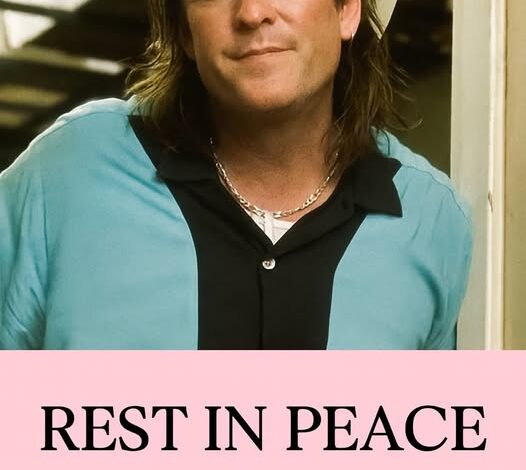
Hollywood has lost one of its most unmistakable screen presences. Michael Madsen, the gravel-voiced actor whose quiet menace and outlaw charisma helped define an era of American cinema, has died at the age of 67. For decades, his face, voice, and stillness carried a specific kind of danger—one that didn’t need volume or spectacle to feel lethal. His passing closes the chapter on a career that shaped the modern cinematic anti-hero and left a permanent mark on film history.
Madsen was found unresponsive at his Malibu home on July 3 and was pronounced dead at the scene. His longtime representatives later confirmed that the cause of death was cardiac arrest. Authorities ruled out foul play. The news arrived abruptly, particularly because those close to him say he was in the middle of a renewed creative surge, actively committed to independent film projects, poetry, and collaborations that excited him in a way reminiscent of his early years in Hollywood.
Born in Chicago, Michael Madsen came from a working-class background that never quite left his performances. He carried grit naturally, not as an affectation. Long before global fame, he studied at the Steppenwolf Theatre Company, where he absorbed the discipline of character-driven storytelling and emotional restraint. That foundation would later distinguish him in an industry increasingly drawn to excess. Madsen didn’t overplay danger—he embodied it.
Over a career spanning more than four decades and more than 300 film and television credits, Madsen became one of the most prolific character actors in Hollywood. Yet volume was never the point. His legacy rests on impact. Few actors could command a scene by doing almost nothing at all—standing still, speaking slowly, letting silence do the work. In an era of escalating spectacle, his restraint felt radical.
That quality found its perfect outlet in his collaborations with Quentin Tarantino, a creative partnership that permanently linked Madsen’s name with some of the most iconic moments in modern film. Their first collaboration, Reservoir Dogs in 1992, didn’t just introduce Tarantino to the world—it cemented Madsen as a cinematic force. His portrayal of Mr. Blonde, also known as Vic Vega, redefined screen villainy. Calm, smiling, almost playful, he delivered violence with a detached cheerfulness that unsettled audiences far more than overt brutality ever could.
The infamous torture scene set to “Stuck in the Middle with You” remains one of the most analyzed sequences in film studies, pop culture criticism, and cinema history courses. It wasn’t the violence alone that shocked viewers—it was the joyless joy of it, the sense that this character required no justification. Madsen didn’t play Mr. Blonde as a monster. He played him as a man who didn’t need permission. That distinction changed everything.
From that moment forward, Michael Madsen became synonymous with a specific archetype: the beautiful threat. The outlaw philosopher. The man who understood his own darkness and wore it without apology. Tarantino returned to him repeatedly, casting him in Kill Bill Vol. 1 and Vol. 2 as Budd, a fallen assassin whose bitterness and regret weighed heavier than his weapon. It was one of Madsen’s most emotionally complex performances, revealing exhaustion beneath cruelty and shame beneath bravado.
He followed that with a standout turn in The Hateful Eight, where his presence once again grounded a film built on tension, paranoia, and moral ambiguity. Even in smaller appearances, such as Once Upon a Time in Hollywood, Madsen carried historical weight, embodying the rough edges of a vanishing Hollywood era.
But to reduce Michael Madsen to Tarantino alone would miss the scope of his influence. He brought depth and humanity to a wide range of critically acclaimed films. In Thelma & Louise, he played Jimmy, a flawed but sincere man whose quiet devotion contrasted sharply with the chaos surrounding him. In Donnie Brasco, his portrayal of mob figure Sonny Black added realism and menace to one of the most respected crime dramas of the 1990s. In Sin City, his stark presence blended seamlessly with the film’s graphic, neo-noir aesthetic.
Casting directors understood something audiences felt instinctively: when Michael Madsen appeared on screen, stakes rose. His characters often lived by personal codes, however warped, and that internal logic made them compelling. He portrayed men who knew the cost of violence and paid it anyway. Men who loved deeply, failed often, and carried the weight of their choices in their posture and eyes.
Off screen, Madsen was a contradiction in ways that surprised those who knew him. He was a published poet, deeply reflective, often introspective. He wrote about regret, love, mortality, and fatherhood with a vulnerability that stood in stark contrast to his tough-guy image. Friends frequently described him as generous, loyal, and far more sensitive than his on-screen personas suggested.
Following news of his death, tributes flooded social media and entertainment news outlets. Actors, directors, and fans alike reflected on his influence not just as a performer, but as a symbol of a different kind of masculinity in film—one rooted in complexity rather than dominance. His sister, Academy Award–nominated actress Virginia Madsen, captured this duality perfectly, describing him as “thunder wrapped in velvet” and “a poet disguised as an outlaw.”
Perhaps the most powerful reminder of who Michael Madsen truly was came from his family. His son Luke shared a message calling him a hero and “a damn good father,” cutting through decades of cinematic violence to reveal the man behind the roles. It was a reminder that legacy is never singular. An actor may be remembered for what he gave the world, but he is defined just as much by what he gave his family.
Michael Madsen leaves behind his wife, his children, and a body of work that continues to influence filmmakers, actors, and audiences worldwide. His films remain staples of streaming platforms, film festivals, and late-night rewatches, ensuring that new generations will continue to discover his singular power.
He didn’t chase likability. He didn’t chase trends. He didn’t dilute his edge. And because of that, Michael Madsen became timeless.
In a Hollywood landscape that often rewards noise over nuance, his legacy stands as proof that silence, restraint, and authenticity can be far more unforgettable. The outlaw poet has exited the frame—but the tension he brought to it will linger for decades to come.