I Soaked My Strawberries in Salt Water and What Crawled Out Will Make You Vomit!
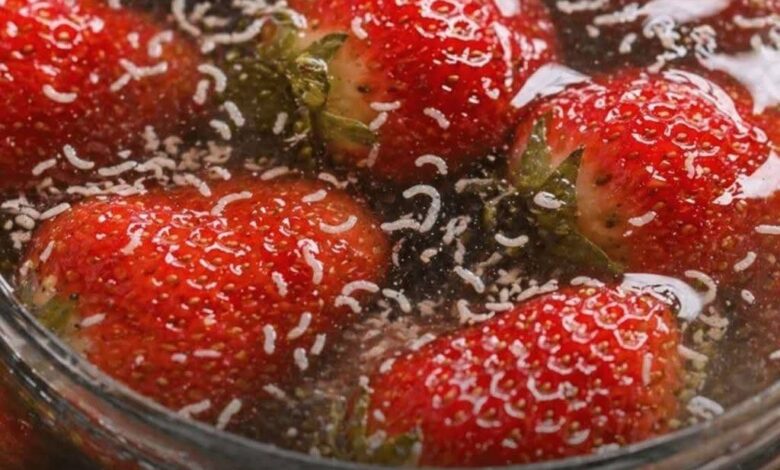
You pop a sweet, juicy strawberry into your mouth, completely unaware of the grotesque nightmare lurking inside. Viral videos are sweeping the internet, showing people soaking fresh berries in simple salt water only to watch in sheer horror as tiny, writhing white worms crawl out of the fruit by the dozen! Are you unknowingly eating live insect larvae with every summer snack? Panic is erupting across social media, leaving millions of consumers ready to throw away their favorite produce forever. The terrifying truth behind what is hiding in your kitchen will turn your stomach completely upside down!
That alarming discovery has shocked countless people who decided to test the viral trend at home. Dropping fresh, seemingly pristine strawberries into a bowl of salt-water solution only to witness tiny white, worm-like creatures wriggling out of the delicate flesh is enough to ruin anyone’s appetite. Naturally, this disturbing visual raises an immediate, panicked question: are these strawberries completely unsafe to consume, or should you march straight to the trash can and toss the entire carton out immediately? The reality of agricultural science is both fascinating and reassuring, though it certainly requires a strong stomach to digest.
To understand what is actually happening, we have to look at what those tiny white creatures really are. Experts explain that they are generally insect larvae, most commonly the offspring of small fruit flies. These opportunistic pests are naturally attracted to soft, sweet, ripening fruit, often laying microscopic eggs on or near strawberries while they are still growing out in the open agricultural fields. When those strawberries are subsequently submerged in a dense salt-water solution, the sudden, dramatic change in their environment triggers an automated survival response, causing any hidden larvae nestled deep inside the fruit to crawl out to escape the salty irritation.
While seeing live critters emerge from your food is undeniably unpleasant and utterly revolting, food safety specialists emphasize that it does not automatically mean every single strawberry is infested, nor does it mean the fruit is completely spoiled or dangerous. Strawberries possess a uniquely delicate, porous surface covered in tiny seeds and microscopic natural crevices, making them far more challenging to clean thoroughly compared to smoother fruits like apples or plums. Because strawberries are almost always eaten raw without any cooking process to kill contaminants, proper and meticulous washing before consumption is an absolute necessity.
Many home cooks swear by the salt-water soak method, combining a bowl of cool water with a small amount of table salt, letting the berries steep for several minutes, and then rinsing them vigorously under a steady stream of clean water. This technique can indeed help flush out stubborn dirt, microscopic insects, and surface residues. However, mainstream food safety authorities point out that there is actually limited scientific evidence proving that salt water is drastically more effective than a simple, thorough rinse under clean running water alone when it comes to eliminating potential biological contaminants.
If you are inspecting your strawberries and notice heavily bruised berries, fuzzy patches of mold, or an off-putting, sour smell, your best course of action is always to discard those compromised fruits entirely. On the other hand, firm, fresh strawberries that show no signs of decay and have been properly and thoroughly washed remain entirely safe, nutritious, and delicious to enjoy. To maximize their shelf life and keep them fresh for as long as possible, store your berries securely in the refrigerator, make sure you resist the temptation to wash them until the exact moment you are ready to eat them, and immediately pick out and discard any moldy berries to prevent spoilage from rapidly spreading to the rest of the batch.
It is also vital to keep things in proper perspective and remember that finding tiny insect larvae is certainly not unique to strawberries alone. Virtually all fresh fruits and vegetables grown outdoors in natural environments are exposed to the elements, meaning they occasionally host small insects or agricultural residue. Careful visual inspection combined with proper washing techniques can drastically reduce this possibility, giving you peace of mind. The recent wave of viral videos has successfully encouraged people to pay much closer attention to how they handle and prepare fresh produce in their everyday lives. While the initial images can be deeply alarming and hard to unsee, food safety experts continually emphasize that smart handling, proper refrigeration, and diligent washing remain your absolute best defenses for reducing contaminants and enjoying fresh fruit safely all year round.