The Silent Hazard Sitting in Your Cup Holder: The Terrifying Truth About What a Plain Water Bottle Can Do to Your Car
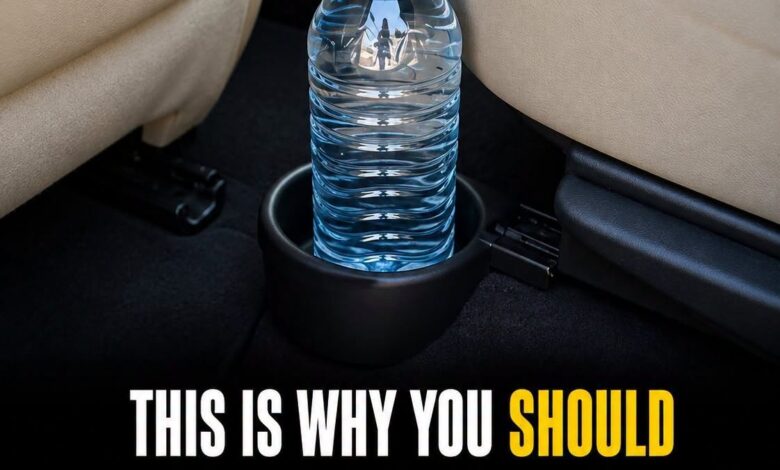
You will not believe the heart-stopping, destructive danger quietly sitting in your car’s cup holder right now, capable of turning an ordinary summer afternoon into an absolute nightmare! Millions of drivers mindlessly leave clear plastic water bottles on their seats or dashboards without realizing they are leaving behind a ticking time bomb. Firefighters and safety experts are issuing urgent warnings about an unsuspecting optical phenomenon that can melt your interior, scorch your upholstery, or ignite a devastating inferno in a matter of minutes. What seems like a harmless hydration habit could actually destroy your vehicle before you even realize what happened!
As summer temperatures soar and sunlight beats down on crowded parking lots, millions of commuters routinely leave clear plastic water bottles resting on passenger seats, central consoles, or dashboards. Most people view a leftover bottle of water as nothing more than mild vehicle clutter or a quick drink for later in the day. However, under the right conditions, this innocent everyday item can trigger a bizarre and dangerous optical effect. When direct, intense sunlight passes through a clear, round plastic bottle filled with liquid, the container transforms into a surprisingly effective magnifying lens. The water acts as a fluid optic, refracting light rays and bending them inward toward a single, highly concentrated focal point.
When this concentrated beam of intense light and thermal energy lands on dark, heat-absorbent materials inside a vehicle—such as leather seats, fabric upholstery, rubber floor mats, or plastic dash panels—the temperature at that precise focal spot can spike dramatically within seconds. In extreme circumstances, the heat generated at the focal point can easily exceed hundreds of degrees, far past the threshold required to scorch or melt synthetic fabrics. If flammable debris, paper receipts, or dry clutter happen to sit directly at that focal point, the intense thermal energy can cause the material to smolder, char, and potentially spark open flames.
The physical mechanics behind this danger are identical to the classic science experiment of using a magnifying glass to burn a leaf under the sun. Inside a closed automobile parked on a hot day, ambient interior temperatures can rapidly climb above 120 degrees Fahrenheit. When this baseline heat is combined with a hyper-focused beam of magnified solar energy, the risk of localized thermal damage escalates significantly. Stories shared by emergency responders and vehicle safety inspectors often describe alarming scenes where car owners return to find melted dashboard panels, charred seat cushions, or mysterious burn holes blasted through their upholstery, all caused by a simple water bottle left exposed on a sunny afternoon.
Beyond localized burns and melted plastic, the rapid build-up of heat inside a smoldering vehicle interior carries additional risks. Intense localized fire can cause sudden pressure spikes or thermal shocks that crack or shatter car windows, compounding the physical damage to the automobile. In catastrophic scenarios where smoldering upholstery catches flame undetected, an entire vehicle can be engulfed in a matter of minutes. Because the source of ignition is a simple bottle of water that often melts or collapses during the incident, fire investigators frequently have to piece together subtle optical clues to determine how an otherwise normal, parked car suddenly burst into flames without any electrical fault or mechanical failure.
While the optical science behind this thermal threat is indisputably real, automotive safety experts and fire department personnel emphasize the importance of context and perspective. In reality, actual full-scale vehicle fires caused exclusively by clear water bottles remain an extremely rare occurrence. The vast majority of automobile fires stem from mechanical breakdowns, fuel line leaks, short-circuiting electrical systems, or improperly discarded smoking materials. For a water bottle to ignite a serious fire, a hyper-specific set of variables must align perfectly: the bottle must be fully spherical or cylindrical, filled with crystal-clear liquid, positioned at the precise angle relative to the sun, and focused directly onto a dry, highly flammable surface for an extended period.
Despite the low statistical probability of a catastrophic vehicle fire, firefighters and automotive safety advocates continue to raise public awareness about the issue. The goal is not to spread panic, but rather to encourage simple, proactive habits that eliminate preventable risks altogether. Raising awareness about this hidden solar hazard serves as an excellent reminder for drivers to maintain a clean, organized vehicle environment during peak heat seasons. Simple adjustments in daily routines can completely eliminate the possibility of an accidental solar ignition while protecting a vehicle’s interior from costly heat damage.
Preventing solar-focused heat damage inside a car requires minimal effort and costs nothing. The most effective step is simply removing clear liquid containers from the cabin whenever parking under direct sunlight. Drivers should make it a habit to take their water bottles with them or store them inside closed compartments like the glove box, center console, or trunk where sunlight cannot reach them. Alternatively, switching from clear disposable plastic bottles to opaque, insulated stainless steel flasks or colored aluminum tumblers completely neutralizes the optical effect, as opaque materials block sunlight from forming a magnifying focal beam altogether.
Additionally, keeping the vehicle cabin free of loose clutter, such as paper receipts, tissues, or dark clothing, significantly reduces the availability of combustible fuel should an unexpected heat point occur. Utilizing reflective windshield sunshades when parking outdoors further shields the interior from oppressive heat, protecting delicate electronic dashboards and preventing direct solar radiation from interacting with items inside the vehicle. By adopting these straightforward safety measures, vehicle owners can enjoy peace of mind throughout the hottest months of the year, keeping their cars safe, cool, and protected from unexpected hazards.