The Hidden Meaning Behind Those Strange Bulging Window Grills Will Change How You Look at City Streets Forever
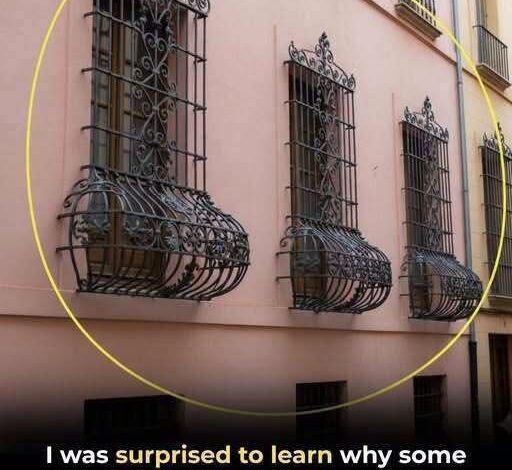
Have you ever walked down a dense city street, glanced up at an apartment building, and noticed something deeply unsettling about the security bars on the windows? Instead of sitting flat and flush against the glass, they bulge outward into a strange, rounded, potbelly shape. Most people glance at them and assume it is just a quirky architectural mistake or a bizarre modern design trend. But if you walk past these peculiar iron cages without knowing their true purpose, you are completely missing a fascinating, highly clever secret that has kept urban residents safe and resourceful for generations.
To the untrained eye, these protruding window bars look awkward and intrusive, casting strange shadows across apartment facades. Yet, they are actually an ingenious piece of historical engineering designed to solve multiple domestic problems at once. Long before modern air conditioning units, ubiquitous security systems, and high-rise developments dominated our skylines, city dwellers faced a constant daily dilemma. They desperately needed cool, fresh air circulating through their homes during stifling summer heatwaves, but leaving ground-floor or lower-level windows open invited immediate danger from intruders.
The traditional solution was simple: install heavy iron security bars across every window opening. While this effectively kept burglars and trespassers at bay, it created a suffocating new set of domestic headaches. Flat, rigid bars pressed directly against the window frame severely restricted how wide a sash could open, trapped cleaning supplies, and made tight rooms feel even more claustrophobic. Residents felt like they were living inside fortified medieval dungeons rather than comfortable homes.
That was when clever blacksmiths and urban homeowners began experimenting with architectural evolution. By forging iron bars with a deliberate, graceful outward curve near the bottom, they transformed a flat prison-like grille into something entirely unexpected: a functional micro-balcony enclosed safely behind heavy-duty ironwork. This subtle adjustment unlocked an incredible amount of hidden physical space right outside the window frame without ever compromising the structural security of the home.
Suddenly, those bulging curves served a brilliant dual purpose. The extra breathing room allowed window sashes to swing or slide open much wider, maximizing the influx of natural cross-breeze and fresh air into compact apartments. But the utility didn’t stop at ventilation. In crowded, densely populated neighborhoods across parts of Europe, Latin America, and the Middle East where outdoor space was virtually non-existent and yards were entirely unheard of, these potbellied cages became miniature agricultural and storage paradises.
Residents began utilizing the outward-curving base as a secure platform for potted plants, blooming flowers, and vibrant herbs, bringing a splash of living nature and color to sterile concrete canyons. Others used the extra depth to safely store small household items, cool food jars in the evening breeze, or set out bird feeders. It transformed a defensive security barrier into an extension of the living space, a tiny window box sanctuary suspended high above the bustling pedestrian traffic below.
Over the decades, what started purely as an ingenious space-saving hack evolved into a rich cultural aesthetic and a staple of traditional urban architecture. Walk through historic districts in Mediterranean coastal towns or vibrant Latin American neighborhoods, and you will see entire apartment complexes lined with these artistic, hand-wrought iron curves, each one uniquely shaped by local artisans and family traditions. They tell a silent story of how communities adapted to cramped city living with creativity and grace.
So, the next time you look up and spot those peculiar, potbellied window grills protruding into the alleyway, you will know they are much more than just a quirky style statement. They represent a brilliant fusion of practical utility, cultural tradition, and clever architectural ingenuity born out of the timeless human need for fresh air, safety, and a tiny touch of nature in a concrete world.