The Hidden Danger in Your Home: Why Some Wall Outlets Are Installed Upside Down and What It Actually Means for Your Safety
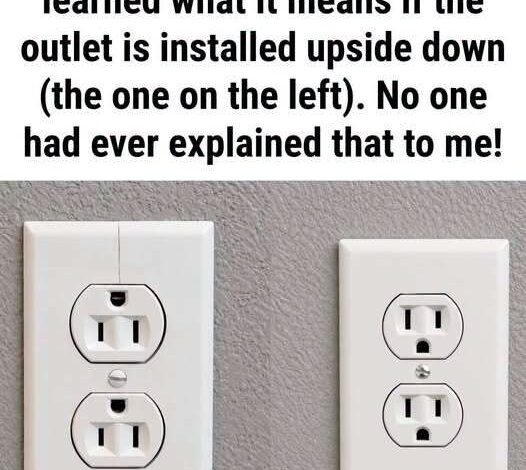
Have you ever walked up to a wall outlet in your home, noticed the single ground hole facing upward, and assumed it was just a sloppy mistake made by a lazy handyman? You are definitely not alone. Millions of people look at these flipped receptacles every single day without realizing the terrifying or clever secrets they might be hiding. Far from being a random installation error, that upside-down orientation is often a deliberate, highly calculated visual warning. What looks unusual at first glance could actually reveal crucial wiring quirks that impact your home.
For decades, homeowners have stared at these inverted wall plates with quiet confusion. Is it an electrical hazard? Did the builder simply have a bad day? To understand the mystery, we have to look back at how residential wiring has evolved over generations. One of the most common historical reasons behind the upside-down installation is the presence of switched outlets. In older homes, long before overhead ceiling fixtures and smart lighting systems became standard in every single room, wall switches were primarily used to control floor and table lamps.
In these classic setups, a single duplex outlet was cleverly split in half. The top half might remain always hot, providing continuous power for essential devices like digital clocks, phone chargers, or medical equipment. Meanwhile, the bottom half was wired directly to a wall switch near the door, allowing families to illuminate an entire dark room with the simple flick of a switch upon entering.
Because having two identical outlets side by side caused endless confusion—leading people to plug lamps into the wrong slot and wonder why the switch didn’t work—electricians developed a clever visual shorthand. They began installing the split-switched outlets completely upside down. This subtle orientation change served as an immediate, unmistakable visual cue to anyone plugging in a cord that this specific receptacle functioned differently from a standard, always-on outlet.
However, this practice was merely a professional convention rather than a strict legal mandate. Across the United States and many other parts of the world, there is no universal national electrical code requiring wall receptacles to face a specific direction. Because the decision is entirely up to local building codes, regional contractor habits, or individual electrician preference, you will find wild inconsistencies from one neighborhood to the next. In some modern custom homes, an upside-down outlet has nothing to do with switches at all; it is simply chosen for aesthetic symmetry or to accommodate bulky power bricks with heavy cords.
There is also another compelling safety argument often cited by certain electricians. If a plug is partially pulled out of a traditional right-side-up outlet—leaving the prongs exposed—and a metallic object like a falling necklace, paperclip, or coin happens to slip down the wall, it could bridge the gap between the live hot and neutral prongs, triggering a dangerous short circuit or electrical arc. By flipping the outlet so the ground pin faces upward, any falling metal object would theoretically strike the grounded prong first, harmlessly diverting the current and preventing a catastrophic hazard. While building inspectors debate how frequently this actually happens, it remains a popular justification among safety-conscious installers.
Because the reasons vary so wildly depending on the decade your house was built and who wired it, an upside-down outlet doesn’t automatically guarantee that it is tied to a wall switch. It could mean it’s a switched receptacle, a safety-oriented modification, or just a stylistic quirk by the previous owner. The only 100% reliable way to know how an outlet is wired is to test it yourself. Plugging in a desk lamp and systematically flipping nearby wall switches will quickly reveal whether that specific socket is controlled or permanently powered.
What initially looks like a bizarre construction blunder is almost always a deeply practical wiring choice. It reflects a fascinating blend of historical convenience, clever troubleshooting cues, safety considerations, and individual installer preference rather than an accidental mistake. Taking a closer look at the little details on your walls can give you a brand-new appreciation for the hidden electrical engineering that keeps your household running safely every single day.