The Nightmare Under Your Floorboards: Why That Single Centipede Is a Terrifying Warning Sign
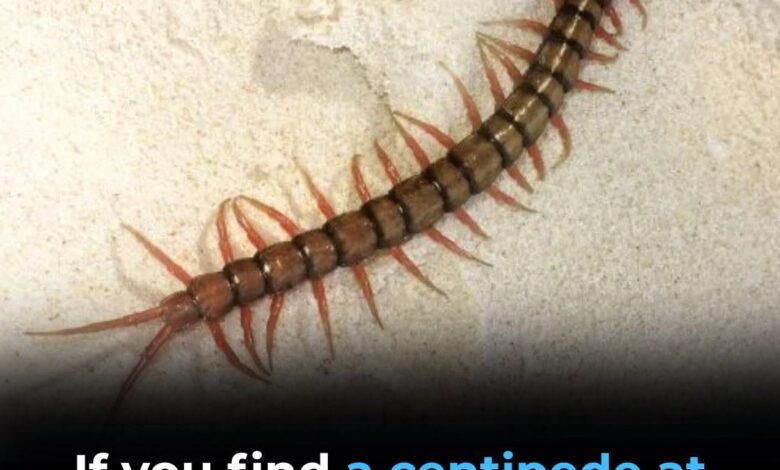
You wake up in the dead of night, walk to the bathroom for a glass of water, and freeze. There, skittering across your floor with a blur of dozens of legs, is a creature that seems to have crawled straight out of a horror movie. You might be tempted to just crush it and go back to bed, but doing so would be a catastrophic mistake. That centipede isn’t just a random intruder; it is a scout, a biological alarm system, and a signal that your home is currently harboring a secret, thriving ecosystem of filth and decay that you never intended to invite inside.
Finding a centipede in your living space is never a coincidence. These creatures are not aimless wanderers; they are highly efficient, nocturnal predators that are laser-focused on one primary objective: hunting. Unlike other common household pests that might be attracted to your pantry crumbs or trash, centipedes are strictly carnivorous. When they infiltrate your home, they do so because your residence has become a five-star hunting ground. Their presence is the ultimate indicator that you have a massive, underlying infestation of smaller, even more problematic pests. If you see a centipede, it means your walls and floorboards are likely teeming with silverfish, ants, cockroaches, spiders, and carpet beetles. They are the top of the food chain in the miniature urban jungle hidden within your baseboards, and if you have one, you almost certainly have hundreds more hiding in the dark.
Beyond the immediate threat of other insects, the presence of a centipede is a glaring red flag regarding the structural health and environmental safety of your home. Centipedes are biological indicators of moisture. They are physiologically incapable of surviving in dry environments; they require high humidity to function and breathe. When you find them in your basement, bathroom, or beneath your kitchen sink, you are effectively seeing a map of your home’s dampest, most vulnerable areas. They gravitate toward leaky pipes, poorly ventilated crawl spaces, and dark, humid corners where mold is likely already beginning to bloom. By ignoring the centipede, you are ignoring the slow, silent rot that is compromising the integrity of your walls and creating a breeding ground for harmful allergens and structural decay.
While the “ick factor” of their many legs is enough to send most people into a panic, the most persistent fear associated with centipedes is their bite. It is important to separate fact from fiction. Centipedes are equipped with venom-injecting claws, and yes, they are capable of biting a human if they feel cornered or threatened. However, they are fundamentally timid creatures that would much rather retreat into the shadows than engage in a confrontation with a giant human. When bites do occur, they are generally not lethal. They typically feel like a sharp bee or wasp sting, followed by localized redness, swelling, and a temporary burning sensation. For the vast majority of the population, a centipede bite is a painful inconvenience rather than a medical emergency. The danger spikes only for those with specific, severe allergies to insect venom, who might experience intense pain or difficulty breathing. If you are ever bitten and notice signs of a systemic reaction, seeking medical attention is the only responsible course of action.
So, how do you win the war against this many-legged invasion? The answer lies in total environmental control. You must launch a multipronged strike against the very conditions that make your home a paradise for these pests. First, you must become a moisture warrior. Invest in high-quality dehumidifiers for your basement and crawl spaces, fix every leaking pipe, and ensure your bathroom ventilation fans are functioning at full capacity. If the moisture is gone, the centipedes have no incentive to stay. Second, you must seal the perimeter. These pests are experts at finding tiny cracks in your foundation, gaps under doorframes, and compromised window screens. A simple weekend of caulking and door-sweep installation can effectively cut off their supply lines from the outside world.
Third, you have to starve them out. If you eliminate the population of ants, spiders, and silverfish, the centipedes will either die off or be forced to move on to a different hunting ground. This requires a rigorous cleaning schedule that reaches into the dark, neglected places of your home—under heavy furniture, deep inside closets, and behind storage boxes. Do not give them a place to sleep, hide, or breed. Remove the cardboard boxes that provide them with both shelter and a food source for their prey. If you are dealing with a severe infestation, consider professional pest control treatments, as they can provide long-term, residual barriers that DIY solutions often struggle to achieve.
Finally, do not underestimate the power of natural deterrents. If you are wary of harsh chemicals, you can create a hostile environment for them using diatomaceous earth. When sprinkled in corners and along baseboards, this fine powder acts as a mechanical insecticide, drying out the pests that traverse it. Essential oils like peppermint, tea tree, and eucalyptus can also act as powerful, non-toxic repellents, providing a scent barrier that centipedes find highly unpleasant.
The appearance of a centipede in your home should be viewed as a call to action. It is a sign that your home’s defenses have been breached and that the environment is currently too damp, too cluttered, or too pest-ridden for your own comfort and health. By addressing these factors, you do more than just get rid of a scary insect; you fundamentally improve the cleanliness, dryness, and structural safety of your living space. Stop looking at them as isolated, creepy intruders to be smashed with a shoe, and start seeing them as the warning light on your home’s dashboard. Taking decisive action today will ensure that your home remains your sanctuary, and not a playground for the hidden, multi-legged hunters of the dark.