The Silent Killer That Stole a Hollywood Icon: Why You Cannot Afford to Ignore Your Body’s Red Flags
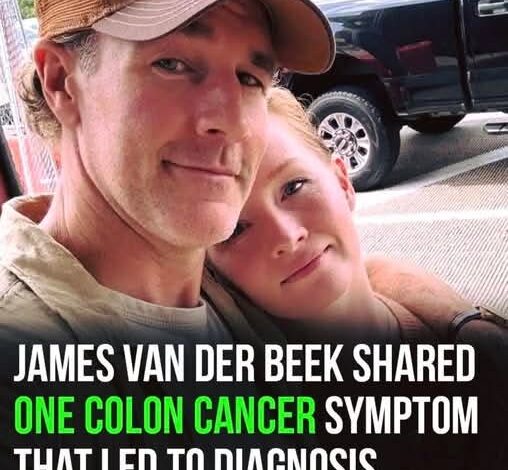
The entertainment world is reeling from an unthinkable tragedy that has left millions of fans in absolute shock. James Van Der Beek, the beloved star of Dawson’s Creek, has passed away at the age of 48 after a grueling three-year battle with colon cancer. His death is not just a personal loss for his family and friends; it is a terrifying wake-up call for an entire generation. Why is a disease once associated with the elderly now aggressively claiming the lives of young, vibrant adults in their prime? The answer is as heartbreaking as it is urgent—and it could be the very thing that saves your life.
For nearly three years, Van Der Beek fought his battle with a courage and grace that inspired those around him. Even as he navigated the harrowing unknowns of chemotherapy and the relentless nature of his diagnosis, he remained a public advocate for awareness. He was candid about his experience, hoping to shatter the stigma and the dangerous misconception that cancer is a disease only for the aged, the sedentary, or the unhealthy. “I’d always associated cancer with age and with unhealthy, sedentary lifestyles,” he confessed to the public, admitting he had been in peak cardiovascular shape when the illness first took root. His death is a sobering reminder that cancer does not discriminate; it does not care about your fitness routine, your diet, or your status in life.
The actor’s journey began with a set of symptoms that were easy to dismiss. He first noticed subtle, persistent changes in his bowel movements—irregularities he initially chalked up to his daily coffee habit. When those changes persisted even after he adjusted his lifestyle, he realized something was fundamentally wrong. That decision—to listen to his body rather than ignore it—led to the discovery of his condition. While the subsequent diagnosis felt like a physical blow, Van Der Beek chose to share his struggle with the world, finding it “cathartic” and necessary to alert others to the rising tide of early-onset colorectal cancer.
Experts like Dr. Will Bulsiewicz, a noted gastroenterologist, have been vocal in their grief, stating bluntly that this tragedy “didn’t need to happen.” The rise of colorectal cancer in younger adults is a disturbing trend that researchers are only just beginning to fully understand. Historically, the medical community viewed this as a disease of the elderly, leading to standardized screening ages that left younger individuals largely unprotected. That paradigm is shifting, but it may be shifting too slowly. The screening age has already been lowered from 50 to 45, yet many still delay the process, waiting for symptoms to manifest before they seek professional help. The reality is that by the time symptoms become obvious, the window for simple, curative intervention has often begun to close.
The medical consensus is shifting toward a more aggressive approach to detection. As Dr. Bulsiewicz emphasizes, if you are 45 or older, you should not be waiting for a sign; you should be scheduling a screening. If there is a history of the disease in your family, the conversation needs to start even earlier. But even if you are nowhere near that age, your vigilance is your primary defense. Any persistent change in bowel habits—whether it is unexplained bleeding, chronic constipation, recurring diarrhea, or abdominal pain that won’t go away—must be treated as a red flag. Unexplained weight loss and persistent anemia are also critical warning signs that should never be brushed aside as “nothing.”
Why are we seeing this spike in younger patients? Researchers are currently investigating a perfect storm of environmental and lifestyle factors. The Western diet, which underwent a massive transformation in the latter half of the 20th century, is under significant scrutiny. The widespread introduction of high-fructose corn syrup and heavily processed foods in the 1970s is a primary suspect. These dietary changes have fueled a massive increase in obesity and metabolic disorders, both of which are documented risk factors for colorectal cancer. Fat tissue is not just a storage unit; it is a source of chronic inflammation that alters hormone levels and creates an environment where cancer cells can thrive. In fact, some studies suggest that obesity can nearly double the risk of early-onset colorectal cancer.
Beyond diet, the modern lifestyle is fundamentally sedentary. The hours we spend sitting, combined with the stress of the modern world, create a physiological environment that is increasingly hospitable to malignancy. While genetics undeniably play a role, the rapid increase in cases suggests that the world we live in is contributing to the problem. As John Marshall, a renowned oncologist at the Georgetown University Lombardi Comprehensive Cancer Center, remarked, the current trend is “shaking us all.” He notes that early in his career, it was nearly unheard of to treat someone in their 20s, 30s, or 40s for colorectal cancer. Now, it is becoming a common, heartbreaking occurrence.
The most important takeaway from this tragedy is the power of the colonoscopy. It is not just a diagnostic tool; it is a preventative one. A gastroenterologist can identify and remove pre-cancerous polyps before they ever have the chance to evolve into a lethal tumor. When we talk about “catching it early,” we are talking about catching it at a stage where it is entirely manageable. We are talking about preventing a diagnosis before it even occurs.
James Van Der Beek’s family has asked for privacy as they process this devastating loss, but they have also left the world with a clear directive: time is sacred. Do not let fear, complacency, or a busy schedule keep you from taking care of your health. Your body has a way of whispering long before it starts to scream. If you feel that something is off, do not wait for it to get better on its own. Do not assume you are “too young” or “too fit.” Book the appointment. Talk to your doctor. Prioritize your screening. By taking these steps, you are not just honoring the memory of a man who fought so hard to raise awareness; you are making a choice to protect yourself and the people who love you. The most important action you can take is the one you take today.