THE JONBENÉT RAMSEY FILES: Is This the Breakthrough That Finally Unmasks the Killer After Three Decades?
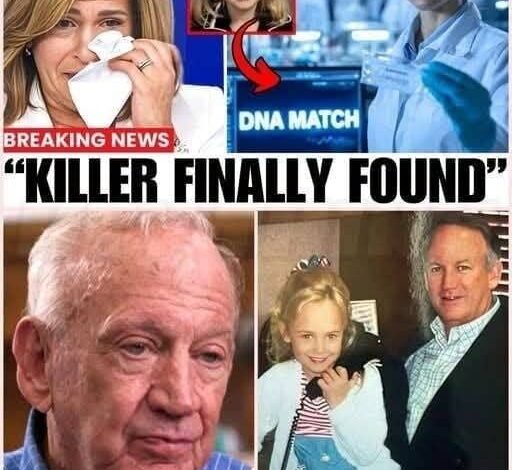
The shadow of JonBenét Ramsey has loomed over the American psyche for thirty years, a ghost story written in blood, mystery, and a catastrophic failure of justice. Millions have obsessed over the grainy images of the six-year-old beauty queen, the bizarre ransom note, and the frantic morning that shattered a family’s life forever. For decades, the public has been fed a diet of speculation, finger-pointing, and dark, unverified theories. But the silence is finally breaking. With revolutionary cold-case DNA technology and forensic advancements once thought impossible, the secrets buried beneath the spectacle are finally rising to the surface.
When the news first broke in December 1996, the world was invited into the intimate, horrific tragedy of the Ramsey household. JonBenét, vibrant and golden, was found dead in the basement of her own home in Boulder, Colorado, hours after a ransom note was allegedly discovered. What should have been a meticulous search for a predator devolved almost immediately into one of the most botched investigations in modern history. The crime scene was compromised, witnesses were separated inadequately, and the investigators, caught in the headlights of a media frenzy, became obsessed with a singular, narrow narrative.
The Ramsey family was cast as the primary villains in a real-life soap opera before the forensic evidence had even been properly collected or analyzed. The media circus transformed their home into a macabre stage, and every detail of their lives—their wealth, their daughter’s pageants, their social standing—was weaponized to construct a narrative of guilt. For years, the public was fed the idea that the parents were shielding a dark, domestic secret. This assumption, fueled by leaks and tabloid sensationalism, cemented itself in the cultural consciousness with a durability that the actual facts of the case could not match.
The tragedy of the case was twofold: not only did a young girl lose her life to a monster who walked free, but a family was systematically dismantled by the weight of public suspicion. Investigators clung to early, flawed theories with a tenacity that ignored the evolving realities of forensic science. As the years turned into decades, the Ramsey family fought back, pushing for the use of emerging technologies to analyze the evidence that had been discarded or overlooked in the initial scramble.
The shift in the case happened quietly, away from the glare of television cameras. As DNA testing became more sophisticated—moving from rudimentary profiles to the granular precision of modern forensic genealogy—the narrative that had long condemned the parents began to erode. Exculpatory DNA evidence, found at the scene and matching neither of the parents nor their son, was brought into the light. This evidence suggested what many had long feared: that an intruder, a shadow in the night, had managed to evade detection while the world looked the other way.
However, the damage was already permanent. The suspicion that had been cultivated by talk shows, true-crime documentaries, and infinite internet forums had left a scar on the American public’s perception of the case. JonBenét’s death became more than a murder; it became a cautionary tale about how easily a tragedy can be hijacked by a culture hungry for a culprit. We wanted a villain, and when we were offered one, we were unwilling to let it go, even when the data told a different story. The case endures today not just because of the horror of the crime, but because it forces us to confront the darker instincts of a society that prizes spectacle over objective truth.
Now, we stand at the precipice of a new era for the JonBenét Ramsey investigation. The advancements in cold-case technology provide a genuine path toward answers that were once beyond our reach. Forensic genealogy, which has successfully solved countless “unsolvable” cases across the country, is now being applied to the evidence that has remained in cold storage for nearly thirty years. The hope is no longer just a vague aspiration; it is a technical possibility. Every stray fiber, every drop of biological material, is being re-evaluated through the lens of modern science. The killer, if they are still alive, is no longer protected by the limitations of 1996 technology.
This development brings a brutal, lingering question to the forefront: when justice has been corrupted for so long by misinformation, spectacle, and incompetence, can the truth ever truly recover? The pursuit of justice for JonBenét is no longer just about identifying a name or a face. It is about correcting a historic failure. It is about holding the systems that fumbled the case accountable and proving that even after three decades, the truth is not entirely lost to time.
For the Ramsey family, the prospect of an answer is a double-edged sword. To have their name finally cleared by scientific certainty would be a reprieve from a thirty-year nightmare, yet it would not bring back the daughter who was taken from them in the dark. For the public, the resolution of this case would be a moment of reckoning. We are forced to look back at how we consumed this tragedy, how we turned a dead child into a punchline or a conspiracy theory, and how we allowed our need for a villain to blind us to the possibility of an actual monster.
As investigators push forward with this new phase of the case, the goal is clear: to look past the media distortions and the sensational headlines, and to focus entirely on the facts. The technology is there, the evidence is available, and the potential for a final, definitive conclusion has never been higher. We are waiting to see if science can finally do what the initial investigation failed to do: provide the closure that JonBenét, her family, and the truth have been denied for far too long. The spectacle is fading, and for the first time in thirty years, the truth might finally have the room it needs to breathe.