The Secret Truth About Your Bananas: Stop Eating Them Until You Read This Life-Changing Information
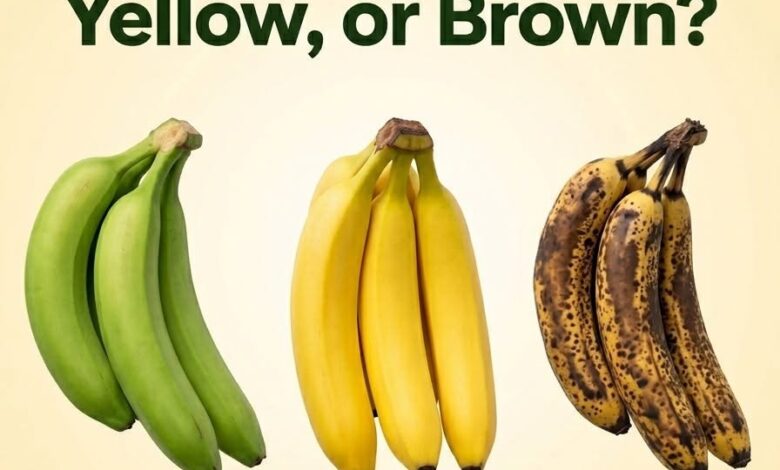
You have been lied to your entire life about the fruit sitting in your kitchen bowl. You think you’re making a healthy choice by grabbing that quick, convenient snack, but depending on the color of its peel, you could be accidentally spiking your blood sugar or missing out on a massive, hidden boost of immunity. That humble banana is a shapeshifter, a biological chameleon whose nutritional value transforms as it ripens. The difference between a green, yellow, and brown banana is not just about taste—it is the difference between cellular protection and digestive chaos. Discover the shocking truth before you peel your next one.
Bananas are the quintessential global snack, celebrated for their affordability, portability, and natural sweetness. They are a staple in smoothie jars and gym bags everywhere, but we often treat them as a static commodity. We grab whichever one looks “ready,” rarely stopping to consider that a banana’s nutritional profile is a moving target. As the fruit matures, it undergoes a complex chemical metamorphosis, where complex starches are systematically dismantled into simple sugars. This transformation doesn’t just alter the flavor; it fundamentally changes how your body processes energy, manages blood glucose, and absorbs vital antioxidants.
If you are a creature of habit, you likely gravitate toward the vibrant yellow banana. It is the gold standard—soft, sweet, and perfectly balanced. However, if your health goals involve stabilizing your blood sugar or improving your gut health, you might be overlooking the “under-ripe” green banana. These less mature fruits are powerhouses of resistant starch. Unlike the sugars found in ripe fruit, resistant starch behaves more like soluble fiber. It bypasses digestion in the small intestine, acting as a prebiotic that feeds the beneficial bacteria in your colon. By choosing green, you are effectively opting for sustained energy. Because your body has to work harder to break down those starches, you experience a slower, more deliberate release of glucose. This makes green bananas an indispensable tool for anyone trying to curb hunger pangs, maintain stable energy throughout the workday, or manage metabolic health.
As the banana transitions from green to yellow, it reaches its peak of convenience. The conversion process has turned that dense starch into glucose, fructose, and sucrose. This stage is the ideal fuel for the high-intensity athlete or the busy professional who needs immediate, accessible energy. The fiber content remains sufficient to aid digestion, but the bioavailability of the sugar is much higher. It is a perfect pre-workout snack, providing the literal fuel your muscles need to perform at their best.
Then, there is the brown, spotty banana—the one most people reflexively toss into the trash. It is a tragic error of judgment. As a banana develops those dark, sun-like freckles, it is actually entering a state of nutritional peak. Research suggests that as the peel darkens, the concentration of antioxidants within the flesh increases dramatically. Compounds such as dopamine and catechins, which are vital for fighting inflammation and oxidative stress, become significantly more potent. If you are struggling with a sluggish immune system, or if you simply want to provide your body with better tools to combat the environmental stressors of modern life, those spotted bananas are your best friends. Furthermore, because the starch has been almost entirely converted to simple sugars, the brown banana is the gentlest version of the fruit for your digestive tract. For older adults, those recovering from illness, or anyone who frequently suffers from indigestion, this stage of the banana offers maximum nutrient absorption with minimum metabolic effort.
It is vital, however, to acknowledge that bananas are not a panacea for every dietary ill. For a small subset of the population, bananas can trigger sensitivities. Some may experience oral itching or mild swelling, particularly those with existing latex allergies, due to the presence of specific proteins that cross-react in the body. Additionally, while the sugars in ripe bananas are natural, they are still sugars. For individuals living with diabetes, the glycemic impact of a brown banana is significantly higher than that of a green one. The solution, however, is not to avoid them, but to pair them intelligently. If you crave the sweetness of a fully ripened banana, combine it with a source of protein or healthy fat—such as a handful of almonds, a dollop of Greek yogurt, or a smear of natural peanut butter. This simple pairing slows the absorption of sugars, turning a potential spike into a sustained, balanced snack.
So, how should you curate your banana consumption to align with your personal health trajectory? The “healthiest” banana is ultimately the one that meets your immediate biological needs. If you are preparing for a long, grueling afternoon and need to stay satiated, reach for the green. If you are heading to the gym or rushing between meetings, the yellow is your tactical advantage. And when you are feeling run-down, or if your digestion needs a softer touch, welcome the brown, spotted banana as the superfood it truly is.
We must stop viewing our food as mere sustenance and start viewing it as the highly specialized biological data that it is. Every bite we take is a command to our cells. By understanding the ripening process, we gain the ability to use our food as medicine. The next time you find yourself standing in the kitchen, contemplating that bowl of fruit, remember that you aren’t just choosing between colors—you are choosing between specific physiological outcomes. Treat your bananas with the respect they deserve, observe the state of their development, and select the one that will help you be the best version of yourself today. The brown spots aren’t a sign of decay; they are a sign of potential. Don’t throw away your vitality—eat it.